Have you ever felt someone’s eyes on you from across a room, and before they even spoke, you already felt smaller? Or maybe you’ve had a conversation where the other person’s gaze made you say things you never planned to say. I remember sitting across from a coworker once, and his eyes stayed locked on mine just a beat too long. My chest tightened. My words came out wrong. When I walked away, I couldn’t explain what happened. But something had shifted, and I didn’t like it. That’s when I started digging into the dark psychology of eye contact.
Quick Eye Contact Awareness Today
If you want to understand what people are really saying with their eyes, try these:
- Notice where people look during conversation. It reveals their true focus.
- Watch what happens after group laughter. The glance that finds you means something.
- Track your own blink rate. It changes when power shifts.
- Observe the look-down after eye lock. It’s rarely innocent.
- Trust your gut when a gaze feels wrong. Your body knows before your brain does.

What Is the Dark Psychology of Eye Contact Really?
The dark psychology of eye contact is the silent power people use to influence your emotions without speaking a single word. Eyes reveal signals the mind catches faster than language. In the wrong hands, it becomes a tool of control. In the right hands, it feels like connection. Most people cannot tell the difference until it’s too late.
I’ve been on both sides of that gaze. I’ve been the one who looked away first, feeling exposed. And I’ve been the one who held eye contact a little too long, watching someone else squirm. Neither felt good, honestly. But understanding what was happening changed how I move through the world.
People use eye contact to create emotional pull, subtle dominance, vulnerability, attraction, trust, fear, attention loops. A single look can build or break your internal balance. How many times have you left a conversation feeling drained without knowing why?
Why Does Dark Psychology of Eye Contact Feel Like Someone Is Reading You?
Because they are. Sort of. The eyes bypass the walls you’ve built over years. Walls block words. They do not block a gaze. When someone looks at you a certain way, your nervous system responds before your logic does. Your heart rate changes. Your breath shifts. Your guard lowers without permission.
I used to think I was imagining it. Then I noticed a pattern. Every time I felt “seen” by someone with intense eyes, I’d overshare. I’d tell them things I hadn’t told my closest friends. What was that about? It’s because eye contact creates a false sense of intimacy. It feels private. It feels intentional. It feels directed only at you. So you respond emotionally first and logically later.
Have you ever had someone look at you and you felt both understood and stripped at the same time? That’s the dark psychology of eye contact working exactly as designed.
How Nonverbal Control Works Through Eye Contact
Nonverbal control is often stronger than verbal manipulation. Think about it. Words can be argued with. A stare cannot. Nonverbal control shows up as:
- A slow, unwavering stare that makes you feel small
- A soft, warm gaze that makes you drop your boundaries
- A scanning look that makes you feel judged
- A sudden intense glance that makes you freeze
Eye contact directs your reactions. You think you are choosing how to feel. You are not. I learned this the hard way in a negotiation once. The other person never raised their voice. Never made a threat. But his eyes did all the talking, and I walked out with a deal I regretted.
The most unsettling part? People who do this often don’t even know they’re doing it. It’s instinct. It’s practice. It’s the dark psychology of eye contact operating below conscious thought for both people.
The Dominance Signals Hidden Inside a Single Look
Dominance does not always come from words. Most of it comes from the eyes. Here are common dominance signals I’ve learned to watch for:
| Signal | What It Means | What to Do |
|---|---|---|
| The unbroken stare | Testing you, marking territory | Look away calmly, then back |
| The delayed blink | Display of control | Blink naturally, don’t match them |
| Top-to-bottom scan | Evaluating your worth | Hold your ground, don’t fidget |
| Sideways glance with silence | A quiet warning | Ask directly: “What’s that look?” |
The unbroken stare is used to test you—to see if you flinch, to mark psychological territory. The delayed blink is a subtle display of control. People who blink less appear more powerful. Have you noticed that?
The look that scans you from top to bottom makes you feel evaluated. Makes you question your worth. And the sideways glance followed by silence? That’s a quiet warning. A silent challenge. Dominance is not always loud. Sometimes it is just a gaze that lasts one second too long.
Why Do People Look at Your Mouth Instead of Your Eyes?
This one surprised me when I first read about it. People who stare at your mouth instead of your eyes are fantasizing. Not always in a romantic way. Sometimes they’re imagining what you’ll say next. Sometimes they’re picturing something else entirely. Either way, it’s not neutral.
I tested this once at a dinner party. I was talking to a man who kept glancing at my mouth. Every time he did, the conversation felt heavier. More charged. I changed the topic and watched his gaze shift. It did. That’s when I realized the dark psychology of eye contact includes where someone does NOT look, not just where they do.
When someone looks at you after group laughter, they are seeking your validation. They want to share the moment with you specifically. That can be sweet. Or it can be calculated. Context matters. The person who locks eyes then looks down? That is flirting or manipulating. Sometimes both. It creates a loop. You wonder what they meant. You think about them. The look-down has done its job.
When a Look Makes You Lose Yourself
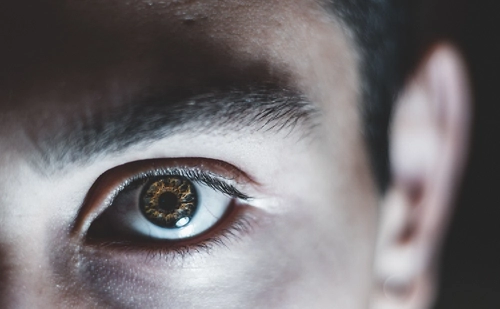
Some eyes feel safe. Some eyes feel dangerous. The most dangerous are the ones that feel like home. You lose yourself because the gaze gives you something you crave: recognition, validation, fascination, intensity, attention, mystery. You think you are connecting. Sometimes you are surrendering.
I had a friend who could charm anyone with a single look. People would tell her their deepest secrets within minutes. She wasn’t malicious, but she had power she didn’t fully understand. The dark psychology of eye contact gave her an edge she never asked for. And the people around her? They walked away feeling both drawn in and drained.
So how do you protect yourself? You start noticing. You watch where eyes land. You track how a gaze makes your body feel. You ask yourself: is this person looking at me because they see me, or because they want something from me?
The dark psychology of eye contact isn’t evil. It’s just information. Once you know what to look for, you stop being a passenger in your own conversations. You start choosing who gets to hold your gaze. And that, I’ve learned, makes all the difference.
FAQ
Q: How can I tell the difference between confident eye contact and manipulative eye contact?
A: Confident eye contact feels steady and warm. It usually comes with relaxed body language and a slight smile. Manipulative eye contact often feels intense, cold, or probing. It may be accompanied by still, controlled posture and a lack of warmth. Trust your body—if a gaze makes you feel uneasy, that’s information.
Q: What should I do if someone uses prolonged eye contact to intimidate me?
A: You don’t have to match their intensity. Look away briefly—to the side, not down—and then return your gaze. This shows you’re not intimidated without escalating the tension. If they persist, you can say calmly, “Is there something you wanted to say?” Directness often diffuses the power play.
Q: Why does eye contact sometimes feel overwhelming in social situations?
A: Eye contact can feel intense because it’s highly intimate. For sensitive people or those with social anxiety, it can feel like too much input. You can soften your gaze, look at the person’s forehead or between their eyes, or take breaks by looking away naturally. You don’t have to hold eye contact constantly to be engaged.
Q: Is avoiding eye contact always a sign of dishonesty?
A: No. Many people avoid eye contact due to shyness, cultural norms, anxiety, or neurodivergence. It’s not a reliable sign of dishonesty on its own. Context matters. Pay attention to clusters of behavior—what else are they doing with their body and voice?
Q: Can I use eye contact intentionally to build connection without being manipulative?
A: Yes. Warm, soft eye contact—especially during listening—builds trust. The difference is intention. If you’re using eye contact to genuinely connect and understand someone, it’s connection. If you’re using it to control or extract something, it’s manipulation. The goal is to stay on the connection side.
One Last Thing
I still think about that coworker sometimes. The one whose eyes made me feel small. I never confronted him. But I learned something from that moment. I learned that my body knew the truth before my mind caught up. My chest tightened for a reason. My words stumbled for a reason. The dark psychology of eye contact is real, but so is your ability to notice it. Next time someone’s gaze feels like it’s pulling something out of you, trust that feeling. Look away. Breathe. And remember you get to choose who sees you.
References
- Navarro, J. (2008). What Every BODY Is Saying: An Ex-FBI Agent’s Guide to Speed-Reading People. HarperCollins.
- Ekman, P. (2003). Emotions Revealed: Recognizing Faces and Feelings to Improve Communication and Emotional Life. Times Books.
- American Psychological Association. (2016). The eyes have it: How eye contact shapes social interaction. Monitor on Psychology, 47(9), 42–48.