Self-expression is often described as a performance. Speak up. Make yourself heard. Learn to command a room. That advice always felt exhausting to me. Worse, it felt dishonest. If expressing myself meant becoming someone louder, brasher, and more performative, then I wanted no part of it.
It took me years to understand that real self-expression has nothing to do with volume. It has nothing to do with confidence, either. It is about honesty. Can you say what you actually mean, instead of what you think people want to hear? Can you create what you actually care about, instead of chasing what gets approval? Can you take up space without apologizing for existing?
The hardest part was never learning how to express myself. It was unlearning all the reasons I had stayed quiet in the first place. These three books helped me do exactly that, each one approaching self-expression from a completely different angle.
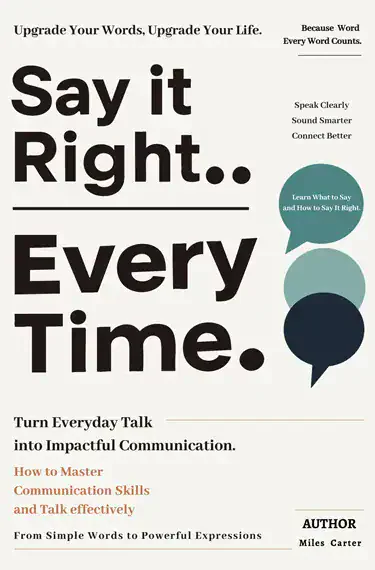
Book One: Say It Right..Every Time. by Miles Carter
I picked this up thinking it was a communication book. It turned out to be something closer to a permission slip. The book is built on a simple premise: you already have something worth saying. The problem is not your voice. The problem is everything that gets in the way of it. Fear of conflict. Fear of judgment. Fear of being too much or not enough.
The chapter “From People-Pleasing to Owning Your Voice” hit me hardest. It explains that self-expression is not a personality trait you are born with. It is a skill you practice, starting with small, low-stakes moments. The book gives you actual scripts for stating opinions, setting boundaries, disagreeing without distance, and sharing ideas so people actually listen. It also has a section on speaking with credibility and kindness, which taught me that being honest does not require being harsh.
What I loved most is that it treats expression as a form of self-respect, not performance. Every time you say what you mean, you reinforce that your thoughts matter. Every time you stay silent to keep the peace, you teach yourself the opposite. This book gave me the words and the courage to stop shrinking. It is the one I return to whenever I feel myself slipping back into silence.
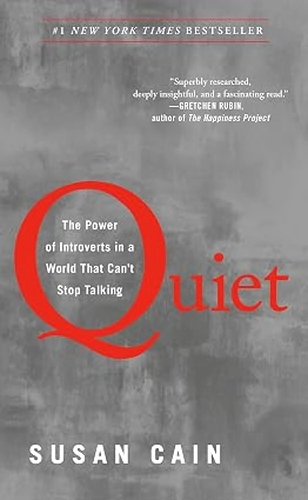
Book Two: Quiet by Susan Cain
This book changed how I see myself. Cain argues that we live in a world that prizes extroversion, where talking is valued over thinking and charisma is mistaken for competence. For those of us who are quieter or more introspective, this can feel like a fundamental flaw. Cain reframes it as a different kind of strength.
What I appreciated most is her insistence that self-expression does not look one way. You do not have to be loud to be heard. You do not have to dominate a conversation to have influence. Some of the most powerful forms of expression are quiet: writing, listening deeply, asking the right question at the right moment. This book gave me permission to stop trying to be someone I am not and start working with who I actually am.
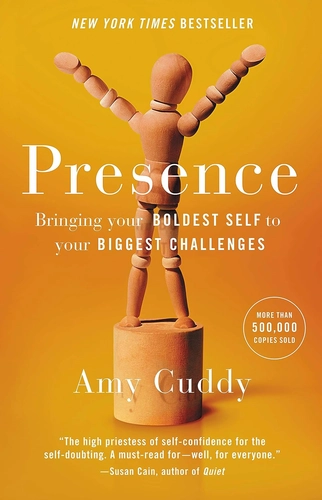
Book Three: Presence by Amy Cuddy
Cuddy is a social psychologist known for her research on body language and power. Her core idea is simple: how you carry yourself shapes how you feel, and how you feel shapes how you express yourself. You do not need to wait until you feel confident to speak up. You can start with your body.
The book includes practical techniques like power posing before high-stakes moments, but the deeper message is about authenticity. Cuddy argues that presence is not about pretending to be someone else. It is about removing the barriers that stop you from being fully yourself. When you stop worrying about how you are being perceived, you free up energy to actually connect and communicate.
What stayed with me is her concept of “self-nudging.” Small adjustments in posture, breath, and self-talk can shift you out of a defensive state and into an open one. This book gave me physical tools for expressing myself when my mind was too anxious to help.
Why Start With the First One
The other two books are insightful. Quiet will help you understand and embrace your introverted nature. Presence will give you body-based techniques to feel more grounded. But both are books you absorb over time. They are frameworks and philosophies.
Say It Right..Every Time. is different. It is the book you grab five minutes before a conversation you are dreading. The one with actual scripts for actual moments. It does not ask you to change your personality or wait until you feel confident. It meets you where you are and hands you the words. If you have spent your life staying quiet because you did not know how to speak up without causing damage, this book will show you the way. It costs less than a dinner out. The cost of staying silent is your truth, your relationships, and your peace.