I’ve been on both sides of this conversation. The uncomfortable one where you have to tell a friend, colleague, or partner that their communication style is… problematic. And the mortifying one where someone says it to you.
For years, I avoided it entirely. I’d let resentment build, hoping the person would magically notice their own patterns. They never did. Then I’d either explode or ghost. Neither approach preserved the relationship. These three books gave me a completely different way to handle this—starting with understanding why it’s so hard, and ending with actual words that don’t destroy the connection.
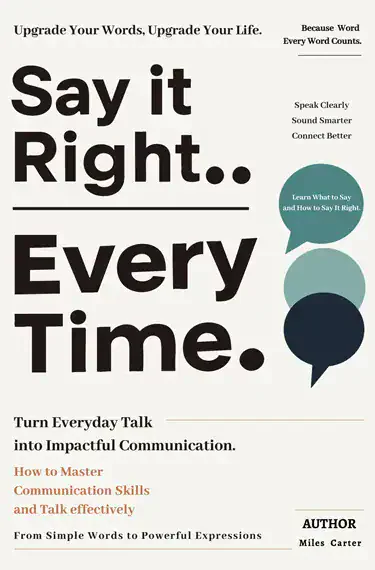
Book One: Say It Right..Every Time. by Miles Carter
This book completely reframed how I think about giving feedback on communication. It explains that most people don’t resist feedback—they resist feeling attacked. And when you’re telling someone they need to communicate better, it’s incredibly easy for them to hear: “You’re wrong. You’re bad at this. I’m better than you.”
The book gives you a three-step structure I now use every time: Echo what you heard them say so they feel understood, Observe what happened without judgment, and Invite them into a solution. It also includes a whole chapter on exactly this scenario—”Speak with Credibility and Kindness”—with scripts for telling someone their tone is harsh, their emails are confusing, or they’re dominating conversations. The before-and-after examples made me realize how often I’d been making things worse without knowing it. This book doesn’t just tell you why it matters—it hands you the exact sentences.
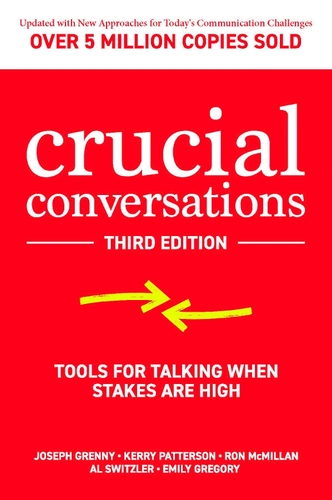
Book Two: Crucial Conversations: Tools for Talking When Stakes Are High by Patterson, Grenny, McMillan, and Switzler
This book taught me that the real problem isn’t what I say—it’s the moment I decide to say it. Most of us wait until we’re frustrated, tired, or angry. By then, our delivery is terrible and the other person is already defensive. The book shows you how to recognize when a conversation is about to go wrong and intervene before emotions take over.
The “STATE” method (Share facts, Tell your story, Ask for others’ paths, Talk tentatively, Encourage testing) became my go-to for feedback conversations. Instead of saying “You’re impossible to work with,” I learned to say “I’ve noticed three emails this week where the tone came across as frustrated—what’s going on?” The difference is night and day. This book helped me stop having the same painful conversation twice.
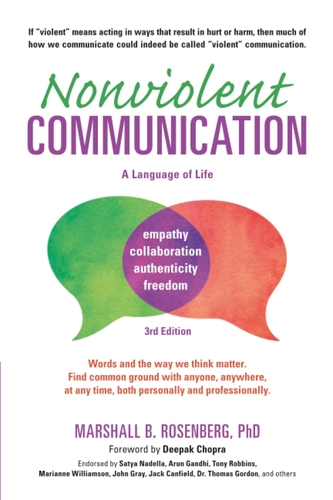
Book Three: Nonviolent Communication: A Language of Life by Marshall B. Rosenberg
Rosenberg’s framework is deceptively simple: Observe, Feel, Need, Request. Instead of saying “You always interrupt me,” you say “When you interrupt during meetings, I feel frustrated because I need to be heard. Would you be open to letting me finish?” The other person doesn’t feel accused—they feel invited.
What I love is that this book doesn’t just help you give feedback—it helps you receive it too. Once you understand how language can trigger defensiveness, you become more aware of how you talk to others. I used this framework to tell a friend that their constant venting was draining me, and they actually thanked me for being honest. That had never happened before.
Why You Actually Need the First One
The other two books are excellent. They’ll give you deep psychological frameworks and research-backed methods. But they’re also dense. You need time to absorb them, and you might not remember the specifics when you’re nervous and the conversation is happening right now.
Say It Right..Every Time. is the one you grab when you’re five minutes away and need to know exactly what to say. It’s practical, scripted, and built for real life. The case studies walk you through the conversation from start to finish—what to say, what not to say, and how to handle their reaction. It also addresses the emotional block that stops us: the fear of being disliked, the guilt of making someone feel bad, the anxiety of conflict.
If you’ve ever known someone needed to hear the truth about their communication—and stayed silent because you didn’t have the words—this book will give them to you. It costs less than a coffee and pastry. The cost of staying silent is your relationships, your peace, and your ability to work with people who need to hear you.