I once watched someone drop a glass in a restaurant and freeze. Not in embarrassment. In genuine panic. The same look people get when they miss a flight. The glass cost about three dollars. Nobody cared. The waiter had it cleaned up in ninety seconds. And the person stood there for another two minutes with their face gone pale.
I did not think they were being dramatic. I recognized the reaction. I had been there. I had felt my whole system flood over a typo in an email. Over a delayed response. Over a dish left in the sink. The size of the event and the size of the reaction had nothing to do with each other. And that is not a character flaw. It is a design problem.
Quick Things to Try Today:
Ask what the actual consequence is. Not the imagined one. The real one.
Put a number on it. Out of ten, how bad is this, realistically.
Check your body. Poor sleep, low blood sugar, and caffeine lower the threshold for everything.
Do one small repair. Clean it, send the correction, fix the thing. Action reduces the charge.
Move on to the next task within ten minutes. Do not let the moment expand.
Notice when your reaction is bigger than the event. That gap is the signal.
Why Small Things Set Off Big Alarms
The nervous system does not rank problems by size. It ranks them by how much they feel unresolved or out of control.
A small thing that goes wrong in a way you did not plan can trigger the same response as a large thing. The spilled drink. The misworded email. The slightly cold reply. None of these are threats. But they are disruptions. And the brain treats disruption as danger.
There is also a threshold problem. When you are already tired, hungry, stressed, or carrying a lot, the threshold for what registers as a crisis gets much lower. A small thing that you would shrug off on a good day becomes the final straw on a bad one. The thing is not bigger. The container is smaller.
That is why the same person can be calm about a major event and fall apart over a minor one. The major event was expected. The minor one was not. And expectation is a big part of what the brain is tracking.
The Scale Problem
Most people have no reliable scale for problems. Everything gets processed at the same volume. A missed deadline and a missed bus feel the same. A rude comment and a rude look feel the same. The brain does not have a filing system that says this matters and this does not.
The fix is to build one. Not perfectly. Just well enough to create a distinction.
Ask three questions.
What actually happens if this goes wrong? Not what might happen. What actually happens. Most of the time, the answer is something small and recoverable.
How much will this matter in a week? In a month? In a year? This is not a trick question. It is a calibration question. It forces the brain to project forward.
Who will actually care? Not who might notice. Who will care enough to remember. The answer is usually one or two people, or nobody.
The Body Makes It Worse
You cannot calibrate when your system is flooded. And your system is more easily flooded when it is depleted.
Sleep debt, skipped meals, too much caffeine, alcohol, chronic stress, and physical pain all lower the threshold. They make small things feel large. They make the alarm louder than the event deserves.
Before you work on your mindset, check the basics. Are you sleeping. Are you eating. Are you moving. Are you drinking too much caffeine. These are not lifestyle suggestions. They are the operating conditions for the thing you are trying to fix.
The Repair Habit
There is a specific trap with small things. You let them sit. The typo stays in the email. The dish stays in the sink. The message stays unanswered. And then you carry it. It becomes a background hum that you cannot name.
The fix is to repair quickly. Not perfectly. Just quickly. Send the correction. Wash the dish. Reply with one line. The repair does not need to be good. It needs to be done.
Completion closes the loop. An open loop keeps the alarm active. A closed loop lets the system settle.
When to Take It Seriously
Not every small thing is small. Sometimes the small thing is a signal. A repeated small thing is a pattern. A small thing in a relationship that keeps happening is not small. It is data.
The test is repetition. One spilled cup is nothing. A hundred spilled cups and a partner who never helps clean them is not about the cups. The cups are just the visible part.
The skill is knowing which one you are in. A single incident, processed at the wrong volume, is a calibration problem. A repeated pattern, dismissed as nothing, is a denial problem. They need opposite responses.
A note if the small things keep getting bigger:
Sometimes the problem is not the spilled glass. It is that the alarm has been running for so long that it no longer knows the difference between a minor disruption and a real threat. The scale is not broken because you are weak. It is broken because the system has been under pressure for too long.
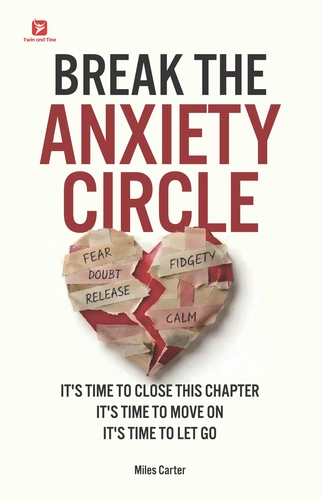
Break the Anxiety Circle by Miles Carter is built around that exact loop. It covers overthinking, the exhaustion of constant mental chatter, and why the small things start to feel like the whole world. One section is specifically about overthinking and peace, another about what to do when thoughts keep you awake, and another about action as the antidote to anxiety. If your reactions have stopped matching the size of the events, this is a useful place to understand why, and what to do about it.
What Actually Helps
Name the gap. “This feels bigger than it is.” That sentence alone creates a small distance between the event and the reaction.
Ask what the real consequence is. Not the catastrophic one. The real one. Most of the time, it is small and fixable.
Repair quickly. Do the small thing that closes the loop. Do not let it sit.
Check the body first. Sleep, food, caffeine, stress. A depleted system produces a louder alarm.
Lower the stakes out loud. “Nobody is going to remember this tomorrow.” Say it to yourself. It is usually true.
Notice the pattern. If the same small thing keeps bothering you, it is no longer small. It is a signal about something larger.
FAQ
Q: Why do small things bother me more than big things?
Because small things are unexpected disruptions, and the brain responds to disruption more than to scale. Big things often have a plan attached. Small things do not. The lack of a plan is what makes them feel threatening.
Q: How do I stop overreacting to small things?
Start with the body. A rested, fed, regulated system has a higher threshold. Then build a scale. Ask what actually happens, how much it will matter in a week, and who will actually care. Most small things fail all three tests.
Q: Is this a sign of anxiety?
It can be. It can also be a sign of stress, burnout, or simply a depleted system. If it is persistent and affects your daily life, talking to a professional is a reasonable next step.
Q: What if the small thing keeps happening?
Then it is not small. Repetition changes the meaning. A one-off is a calibration problem. A pattern is a signal. Treat it accordingly.
Q: How do I stop the spiral in the moment?
Name the gap. “This feels bigger than it is.” Then ask what the real consequence is. Then repair the thing if you can. The spiral shrinks when the loop is closed.
One Last Thing
The glass in the restaurant was not the problem. The person who froze was not broken. They were just running a system that had no scale. Everything registered as important. Nothing registered as small.
The scale is not something you are born with. It is something you build. Slowly, with small calibrations, until a spilled glass is a spilled glass and not a verdict on your entire life.