
You are not overwhelmed by small things.
That is the first thing worth unlearning. You have probably told yourself a hundred times that you are being too sensitive, too dramatic, too easily rattled. You spilled a cup of coffee. You got a text with a period at the end. You opened your inbox and saw one email you did not want to read. And suddenly you felt like you could not breathe.
It does not make sense. Not on paper. The thing itself is small. You know it is small. And yet the feeling it produces is not small at all.
Here is what is actually happening: the small thing is not the source of the overwhelm. It is the trigger. And the source is something you have been carrying for a long time.
The Cup Is Already Full
Think of your capacity as a cup. Not a perfect metaphor, but a useful one.
The cup is not filled by the small thing. The cup has been filling for weeks. Months. Years. It is filled with the conversation you have not had. The boundary you did not set. The sleep you have not been getting. The needs you have not voiced. The help you have not asked for. The rest you have not taken.
The small thing is not the water. It is the last drop. And the last drop is always the one that spills.
When you look at the spill and ask “Why am I like this?”, you are looking at the wrong end of the problem. The small thing did not create the overwhelm. It revealed it. It pulled the curtain back on what was already there.
Why You Think You Should Not Feel This Way
Most people who get overwhelmed by small things share a common trait: they judge themselves for being overwhelmed.
I should be able to handle this. Other people handle worse. I am too sensitive. I am overreacting. I am making a big deal out of nothing.
This self-judgment is not helpful. It does not make the feeling go away. It just adds shame on top of it. And shame makes the cup heavier.
You are not too sensitive. You are not overreacting. You are responding to a load that has been accumulating for longer than you have been willing to acknowledge. The sensitivity is not the problem. The sensitivity is the signal.
The Question That Changes Everything
The next time a small thing triggers a reaction that feels disproportionate, pause. Instead of asking “Why am I upset about this?” ask a different question:
What have I been carrying that made this the last straw?
This question does not blame you. It does not blame anyone else. It simply acknowledges what is already true: the small thing is not the whole story. The small thing is the surface. The real story is underneath it.
You might not have an answer immediately. That is okay. The question itself is a shift. It moves you from self-judgment to curiosity. And curiosity is a much better place to start.
How to Stop Being Overwhelmed by Small Things: 3 Shifts That Change Everything
1. Empty the Cup Before It Spills
Most people try to manage overwhelm after it has already happened. They breathe, they ground, they wait for the feeling to pass. These strategies are useful, but they are reactive.
The more effective approach is to empty the cup regularly. Not once a year. Not when it is already overflowing. Regularly.
This means having the conversations you have been avoiding before they become resentments. Setting the boundaries before they become crises. Taking the rest before you collapse. Asking for help before you are desperate.
Emptying the cup is not a luxury. It is maintenance. And maintenance prevents the small things from becoming the last straw.
2. Lower the Background Noise
Overwhelm often comes not from one big thing, but from many small things happening at a low hum. The unread notifications. The mess on the counter. The email you keep avoiding. The conversation you keep replaying.
These things are not dramatic. They do not feel like problems. But they occupy space in your mind, and that space adds up.
Try this: identify three small things that have been sitting in the background of your life. Not the big issues. The small, annoying, persistent ones. And do them. Or decide not to do them and let them go.
The goal is not to eliminate every minor inconvenience. It is to reduce the background noise so your cup is not filled before the day even begins.
3. Stop Asking “What Is Wrong With Me?”

This is the hardest shift. When you get overwhelmed by small things, the first instinct is often self-diagnosis. Why am I like this? What is wrong with me? Why can’t I just be normal?
But this question keeps you stuck. It treats the overwhelm as a personal failing rather than a signal. It turns a message into a character flaw.
Instead, try asking: “What is too much right now?” The answer might be a specific relationship, a specific responsibility, a specific deadline. Or it might be more general—too many demands, too little rest, too much happening at once.
The question is not about what is wrong with you. It is about what you are carrying. And what you are carrying can be changed.
When the Small Things Are Not the Problem
If you have been overwhelmed by small things for a long time, the pattern may be pointing to something deeper. It may be anxiety that has become chronic. It may be depression that has been mistaken for sensitivity. It may be trauma that has never been given space.
The small things are not the problem. They are the doorway. And walking through that doorway may require more than a few breathing exercises.
This is where Break the Anxiety Circle by Miles Carter can help—not by promising that you will never feel overwhelmed again, but by giving you a way to understand what is actually happening when the small things become too much.
How Break the Anxiety Circle Helps You Understand Overwhelm
This is not a book about positive thinking. It does not tell you to just relax or to stop being so sensitive. It does not promise that if you breathe deeply enough, the overwhelm will disappear.
It looks at the patterns behind the noise: the overthinking, the self-blame, the people-pleasing, and the difficulty letting go that keep you running on empty. It explores why small things trigger big reactions—not because the small things are the problem, but because they are the last straw.
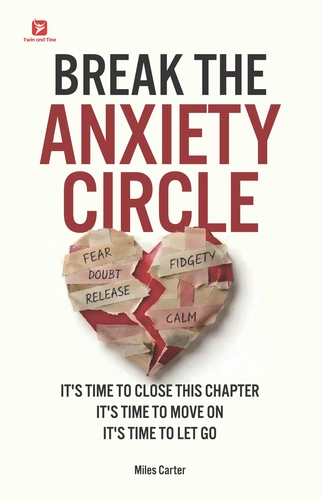
Miles Carter writes for the person who is tired of fighting the same thoughts over and over. The one who looks fine on the outside but is exhausted on the inside. The one who knows something is wrong but cannot name what it is.
What makes this book different is that it does not treat overwhelm as a personal failure. It treats it as a signal. And signals can be understood. Patterns can be interrupted. The cup can be emptied.
If you have been trying to manage overwhelm by trying harder to be less sensitive, this book offers a different way. Not more effort. A different understanding.
Final Thoughts: A Summary on Why You Feel Overwhelmed by Small Things
You are not overwhelmed by small things. You are overwhelmed by everything the small things represent—the unspoken needs, the unset boundaries, the rest you have not taken, the conversations you have not had.
The small thing is not the problem. It is the last straw.
If you are ready to go deeper, Break the Anxiety Circle by Miles Carter offers a practical, honest guide to understanding the patterns that keep you running on empty—and finding a different way to respond when the cup is full.
FAQ: Being Overwhelmed by Small Things
Why do small things overwhelm me more than big things?
Because big things are often anticipated. They are recognized as hard, and you prepare for them. Small things arrive unannounced, when your cup is already full. They are not the source of the overwhelm. They are the last straw.
Does being overwhelmed by small things mean I am too sensitive?
No. Sensitivity is not a flaw. It is a signal. It tells you that something is too much—even if that something is not what you are looking at.
How do I stop being overwhelmed by small things?
You cannot stop the small things. You can change how full your cup is before they arrive. Empty it regularly. Lower the background noise. Stop asking what is wrong with you and start asking what is too much.
Can anxiety make small things feel overwhelming?
Yes. Anxiety keeps your nervous system on high alert, which means you have less capacity for anything else. The small thing is not the problem. The baseline is.