
I said something stupid at a dinner party three years ago. Nothing cruel. Nothing offensive. Just a joke that landed wrong, followed by a silence that lasted maybe two seconds before someone changed the subject. I replayed that silence for weeks. I reconstructed the entire evening. I imagined conversations where the host confided to someone else that I had been a bit much.
None of that happened. I invented the second act, the third act, and the reviews. And the more I replayed it, the more certain I became that the moment had been as bad as I remembered. The memory did not stay a memory. It became a case file.
That is what regret over words does. It takes one sentence, spoken in a moment that no longer exists, and turns it into a permanent exhibit about your character. And the trial never ends, because you are the judge, the prosecutor, and the only witness.
Quick Things to Try Today:
- Write down the sentence you regret. Just the sentence. Not the context, not the story, not the analysis.
- Ask what the actual consequence was. Not the imagined one. The real one.
- If there was no consequence, decide the lesson in one line. Then close it.
- If there was a consequence, repair it once. One apology. One correction.
- Set a limit on the replay. Ten minutes a day. Then move.
- Notice when you are writing someone else’s reaction. You do not know what they thought.
- Say the sentence out loud. It is usually smaller in the air than in your head.
Why Words Stick More Than Actions
A mistake in a spreadsheet gets fixed. A mistake with a sentence gets carried.
There is a reason for that. Words are social. They happen between people, and they cannot be edited after the fact. You cannot reach into the conversation and delete a clause. You cannot send a patch note to the person who heard it. The sentence is out there, and the only thing left is the story you tell about it.
That story is where the regret lives. Not in the sentence. In the meaning you assigned to it. The sentence was one second. The meaning has been running for months.
The Replay Is Not Repair
Most people dwell on words they regret because it feels like responsibility. You are not hiding from it. You are thinking about it. That must count for something.
It does not. The replay is not repair. Repair is a finite action. You address the thing and then you stop. The replay has no endpoint. You can run it a thousand times and the conversation does not improve.
The difference is simple. Repair asks what can be done. Replay asks what it means about you. One is a task. The other is an identity audit. And the audit never ends, because there is always a new angle to examine.
What Regret Is Actually About
Regret over words is rarely about the words. It is about one of a few deeper things.
The fear that you are too much. You said something loud, or honest, or strange. The regret is not about the sentence. It is about the belief that people prefer you smaller.
The fear that you are not careful. You said something careless. The regret is not about the content. It is about the feeling that you cannot be trusted.
The fear that they now see the real you. You let a guard down. The regret is about exposure. The sentence revealed something, and you are not sure you wanted it revealed.
The fear of consequences you cannot control. You said something and you do not know how it landed. The regret is about uncertainty. The replay is a way of trying to control an outcome that is already gone.
None of these are solved by thinking harder. They are solved by understanding which fear is yours, and addressing that instead.
What Actually Closes the Loop
Separate the sentence from the meaning. Write down what you said. Then write down what you are telling yourself it means. The first is a fact. The second is a story. Most people find the story is much longer than the sentence.
Check the actual consequence. Not the one you imagined. The one that happened. Was there a silence. Did someone look uncomfortable. Did anyone say anything. Most regret is built on invisible consequences that never materialized.
Repair if repair is needed. One apology. One correction. Specific and short. “I wanted to go back to what I said last week. It came out wrong and I did not mean it that way.” That is complete. You do not need a paragraph of self-analysis. That turns the other person into your therapist.
Decide the lesson in one line. “Pause before jokes with new people.” That is the takeaway. You do not need a five part reflection. You need one behavior change.
Accept that you cannot edit the past. This is the part that takes time. The sentence is out there. You cannot unsay it. You can only choose what you do next.
A note if the replay has become a habit:
If you have been doing this for years, the problem is usually not the words. It is the inner voice that uses them as evidence. Every awkward sentence becomes proof of something larger. Every silence becomes a verdict. The replay becomes a way of living inside the fear of judgment rather than addressing it.
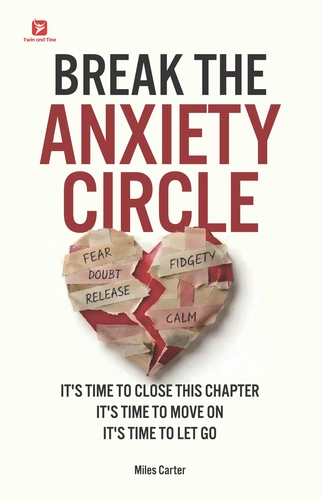
Break the Anxiety Circle by Miles Carter covers this pattern in detail. It looks at why overthinking does not resolve, why small comments can expand into full character assessments, and how to break the loop between a thought and the response it triggers. One section deals specifically with casual words that make you overthink, and another with the exhaustion of constant mental chatter. If you keep replaying conversations and wish you could stop, this is a useful map of the mechanism underneath.
When the Words Did Cause Harm
Not every regret is unnecessary. Sometimes you said something that actually hurt someone. In that case, the work is not to stop regretting it. The work is to repair it properly.
Repair is not a performance of guilt. It is a specific acknowledgment and a change. “I said that, it was unfair, I understand why it landed badly, and I will not do it again.” That is enough. You do not need to repeat it. You do not need to explain your intention in detail. Intention matters, but it is not the headline.
Once you have repaired, the loop becomes unnecessary. The item is handled. The remaining work is to let it be handled.
When the Other Person Has Moved On
This is common. You are still carrying the sentence. They have forgotten it. Or they noticed it and did not think anything of it. Or they were mildly annoyed and then went back to their day.
The mismatch between your memory and their memory is the clue. If they have moved on, the loop is not about the relationship. It is about you. And it will not resolve through more conversation with them. It resolves through changing your relationship with the memory.
FAQ
Q: Why do I keep replaying things I said years ago?
Because the brain holds on to unresolved social moments. If the moment had no clear resolution, it stays open. The replay is an attempt to finish it. The fix is to give it a resolution yourself, in one sentence, and then stop feeding it.
Q: How do I stop regretting something I said when I cannot take it back?
Accept that you cannot edit the past. Repair if repair is needed. Then decide the lesson and close the loop. You do not have to feel good about it. You just have to stop carrying it.
Q: Is it normal to regret things you said even if no one else cared?
Yes. It is very common. The regret is often about your own self-image, not about the other person’s reaction. The other person was a background character. You are the one running the courtroom.