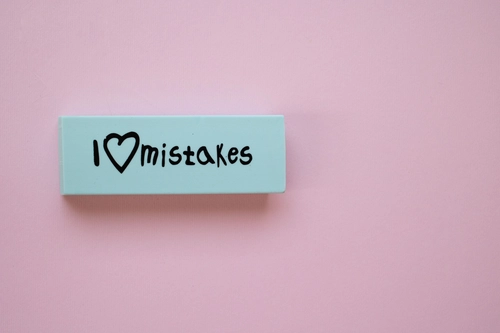
I sent an email last month with the wrong name in it. Not a big deal. One letter off. The person replied normally. Nobody mentioned it. And for the next two days, my brain kept returning to it like a tongue to a chipped tooth.
I replayed the moment I hit send. I imagined them reading it. I imagined them noticing. I imagined them thinking something about me. None of that happened. I invented the entire second act and then reacted to my own invention.
That is what dwelling is. It feels like reviewing evidence. It is actually writing fiction. And the more you reread the draft, the more real it becomes.
Quick Things to Try Today:
- Name the mistake in one sentence. Then stop adding sentences.
- Ask what the actual consequence was. Not the imagined one.
- Do one small repair if repair is possible. Then close it.
- Set a ten minute limit on the replay. When it ends, move.
- Write it down once. Do not write it down again.
- Notice when you are rehearsing a reaction that never happened.
- Tell one person. Say it out loud and let it leave your head.
Why Small Mistakes Stick
Big mistakes get processed. They have consequences, conversations, and closure. Small mistakes do not. They slip through the system without a resolution.
That is exactly why they stick. The brain does not like unresolved items. A small mistake with no consequence is still an open loop. The brain keeps returning to it, looking for the closing scene that never came.
There is also a shame component. Small mistakes are often about self-image, not outcome. The typo did not hurt anyone. But it threatened the idea that you are careful, competent, or in control. The replay is not about the typo. It is about defending that idea.
And there is a practice component. The more you replay, the better you get at replaying. The pathway strengthens. After enough repetitions, the dwelling becomes automatic. You do not decide to do it. It just starts.
The Difference Between Reflection and Rumination
Reflection has a question and an exit. What happened. What did I learn. What would I do differently. Then it ends.
Rumination has a question and no exit. What happened. What does it mean about me. What if they noticed. What if this is a pattern. What if I am actually like this. The question changes shape but never resolves.
The test is simple. After you think about it, do you feel clearer or heavier. Clearer means reflection. Heavier means rumination. One moves. The other loops.
Most dwelling is rumination disguised as responsibility. You tell yourself you are holding yourself accountable. You are actually punishing yourself. Accountability has an action attached. Punishment just repeats.
What Actually Closes the Loop
Name it in one sentence. Not a paragraph. Not a full analysis. One sentence. “I sent the email with the wrong name.” That is the whole event. Everything after that sentence is interpretation.
Ask what the consequence was. Not what it might be. What it was. Most of the time, the answer is nothing, or something small and already resolved. If the answer is real, deal with it. If it is not, you have your evidence.
Repair if repair is possible. Send the correction. Apologize once. Fix the thing. Repair is an action, and action closes loops. What repair is not is a long explanation of how terrible you feel. That turns the other person into your therapist.
Decide the lesson in one line. “Check names before sending.” That is it. That is the takeaway. You do not need a five part reflection. You need one behavior change.
Set a boundary on the replay. Ten minutes a day, maximum. When the timer ends, you move. This sounds artificial and it works. The brain learns that the mistake has a designated slot and does not get to interrupt everything else.
Stop rehearsing their reaction. You do not know what they thought. You are inventing it. If you must imagine something, imagine the most boring possible reaction. They glanced at it. They moved on. That is almost certainly what happened.
When the Mistake Is a Pattern
Sometimes the small mistake is not small. It is the fifth time. The same kind of error, in the same kind of situation, with the same kind of consequence.
In that case, the dwelling is pointing at something real. Not the individual mistake, but the pattern underneath it. Maybe you are rushed. Maybe you are overloaded. Maybe you are avoiding something. Maybe the role is not a good fit.
The fix is not to stop thinking about it. It is to look at the pattern directly. What is the common thread. What condition keeps producing this. Then change the condition, not just the self-criticism.
A note if the replay has become a habit:
If you have been doing this for years, the problem is usually not the mistakes. It is the inner voice that uses them as evidence. Every small error becomes proof of something larger. Every replay becomes a rehearsal for a verdict you are already expecting.
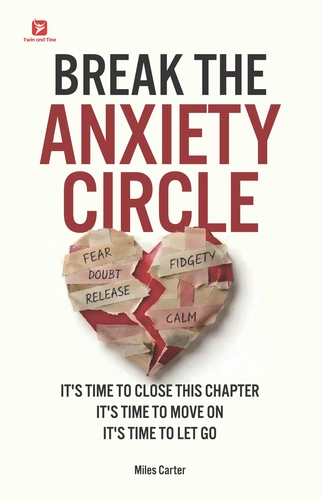
Break the Anxiety Circle by Miles Carter is built around that pattern. It looks at the loop between overthinking and self-judgment, including why thoughts keep you awake, why small things expand, and why action tends to quiet the mind more reliably than analysis does. It is not about being kinder to yourself in a vague way. It is about understanding the mechanism that turns a minor error into a full character assessment, and how to interrupt it.
What Not to Do
Do not confess repeatedly. One apology is enough. Repeating it turns the other person into a manager of your guilt. That is not repair. That is a request for reassurance.
Do not turn it into a character flaw. “I am so careless” is not a lesson. It is a label. Labels do not change behavior. Specific corrections do.
Do not compare yourself to people who seem flawless. You are comparing your inner replay to their outer presentation. They have their own version. You just cannot see it.
Do not wait until you feel forgiven. Forgiveness from yourself is not a prerequisite for moving on. You can move first and feel better later. That is usually the order.
FAQ
Q: Why do I dwell on small mistakes more than big ones?
Because small mistakes often have no clear resolution. Big mistakes get processed through consequences and conversations. Small ones slip through without closure, and the brain keeps returning to them looking for the ending.
Q: How do I stop replaying a mistake over and over?
Name it in one sentence. Identify the actual consequence. Repair it if possible. Decide the lesson in one line. Then set a limit on the replay. The loop closes when the item has a conclusion, even a small one.
Q: Is dwelling on mistakes a sign of perfectionism?
Often, yes. It is also common in anxiety, shame-based patterns, and high-pressure environments. The common thread is that the mistake is being used as evidence about your worth, not just information about the task.
Q: What if the mistake actually did cause harm?
Then repair properly. Acknowledge it specifically, without over-explaining, and state what you will do differently. Then let it be. Repair is a finite act, not an ongoing performance of regret.
Q: How long does it take to stop dwelling?
There is no fixed timeline. The first shifts come from closing loops faster. Progress looks like a shorter replay, not the absence of one. You will still notice mistakes. They just will not follow you around all week.
Q: What if I cannot stop thinking about it at night?
Write it down before bed. One line. Then write the lesson. Then close the notebook. If it returns at 3am, write it again and return to bed without solving anything.
One Last Thing
The email with the wrong name did not matter. Nobody remembered it. I was the only one still in the room, still holding the moment, still explaining myself to an audience that had already left.
The mistake was small. The story I built around it was not. And the story is what I had to put down. Not the mistake. The story.