For years, my brain felt like a browser with thirty tabs open—and half of them were frozen. I’d lie awake replaying conversations, worrying about things that hadn’t happened, and spiraling over details no one else even noticed. The more I tried to “just relax,” the worse it got.
What finally helped wasn’t learning to think less. It was learning to think differently—and having a plan for when my mind went off the rails. Here are three books that gave me that plan.
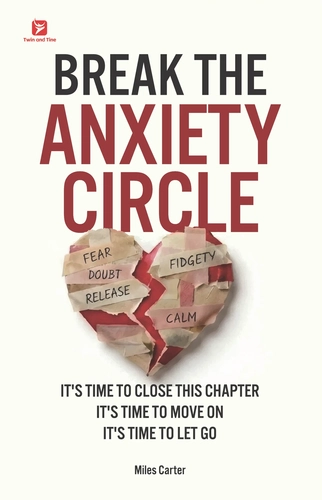
Book One: Break the Anxiety Circle by Miles Carter
This book became my go-to because it actually works when you need it. It explains that anxiety and overthinking are feedback loops: thought triggers fear, fear triggers physical response, physical response confirms the thought. Push it away and it tightens. Try to “logic” it and it gets louder.
Instead of telling you to calm down, it gives you concrete steps to interrupt the spiral—things you can actually do when your mind starts spinning. Small, physical actions that break the loop and give your brain a chance to reset. It also addresses the shame that comes with overthinking: that voice that says “why can’t you just stop?” This book helped me stop fighting myself and start working with my brain instead.
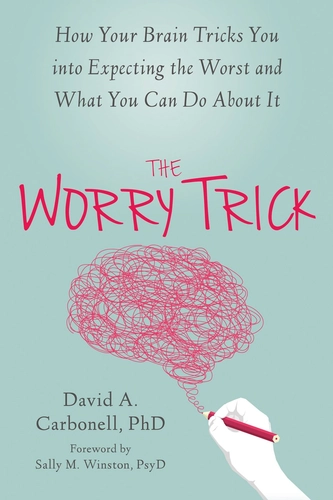
Book Two: The Worry Trick: How Your Brain Tricks You into Expecting the Worst and What You Can Do About It by David A. Carbonell
This book changed how I see my anxious thoughts. Carbonell argues that trying to control overthinking is what keeps it alive. When you try to stop a thought, your brain interprets the effort as proof that the thought is dangerous—and it comes back stronger.
His approach is counterintuitive: instead of fighting, you observe. You label it: “I notice I’m having the thought that [insert worry].” Just naming it creates distance. He also teaches “thought defusion”—imagining your worry as a radio playing in the background. You don’t have to turn it off. You just stop letting it control what you do. This book taught me that I don’t have to eliminate anxious thoughts to feel better. I just have to stop feeding them.
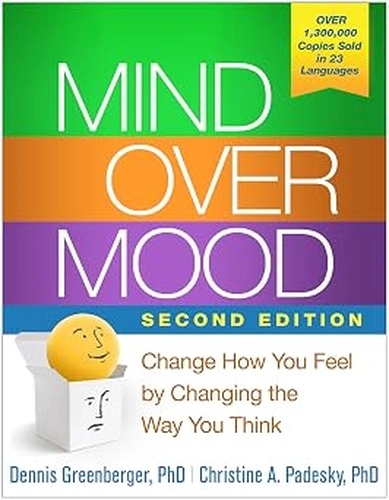
Book Three: Mind Over Mood: Change How You Feel by Changing the Way You Think by Dennis Greenberger and Christine A. Padesky
This is a classic CBT workbook that’s been helping people for decades. It’s based on a simple idea: thoughts create feelings, and feelings create actions. If you want to feel better, you have to change how you think—but you need a system to do it.
The book walks you through identifying automatic negative thoughts, examining the evidence for and against them, and creating more balanced alternatives. The exercises feel like mental push-ups—they strengthen your ability to see your thoughts clearly instead of being ruled by them. I learned to catch my own distortions: catastrophizing, mind-reading, all-or-nothing thinking. This book gave me a framework I still use daily. It helped me understand that my thoughts aren’t facts. They’re just thoughts.
Why You Actually Need the First One
The other two books are excellent. The Worry Trick will change your relationship with anxious thoughts. Mind Over Mood will give you a deep framework. But they’re both books you need time to absorb. When you’re in the middle of a spiral, you don’t have time for that.
Break the Anxiety Circle is different. It’s the book you grab when it’s happening. The techniques are simple enough to remember even when your brain is scrambled. The language is warm and human. And it addresses the frustration that other books miss—that voice that says “why can’t I just stop?” This book helps you let go of that judgment so you can actually calm down instead of fighting yourself.
If you’ve ever felt trapped in your own head, stuck on a loop you couldn’t break—this book will help. It costs less than a therapy copay. The cost of staying stuck? That’s your peace, your sleep, and your ability to enjoy your own life.