For years, I had no idea what to do with my anxiety. When it hit, I’d freeze. I’d try to distract myself—scrolling endlessly, watching shows I didn’t care about, eating things I didn’t want. Or I’d try to “logic” my way out of it, telling myself I was being irrational. Neither worked. The anxiety always came back. Sometimes worse.
I didn’t need someone to tell me to “just breathe.” I needed someone to tell me how. What do you actually do when your heart is racing and your mind won’t shut up? These three books gave me answers I could use—right in the moment, not just in theory.
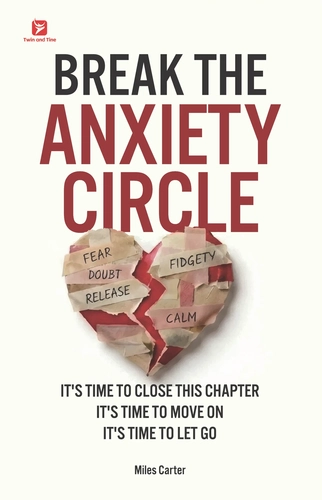
Book One: Break the Anxiety Circle by Miles Carter
This book became my first line of defense. It explains that anxiety isn’t a weakness—it’s a feedback loop. A thought triggers fear, fear triggers a physical response, the physical response confirms the thought, and the loop tightens. The harder you try to push it away, the worse it gets. Reading that alone made me feel less broken.
But what I really needed was the how. The chapter “Action Is the Antidote to Anxiety” gave me small, physical steps to interrupt the spiral—things I could actually do when I felt panic rising. Another chapter taught me to recognize when I’m ruminating and how to redirect without fighting my own brain. The language is practical and warm. It doesn’t shame me for being anxious—it just gives me tools. This is the book I’ve grabbed more times than any other. When I feel that familiar tightening in my chest, I don’t freeze anymore. I have a plan.
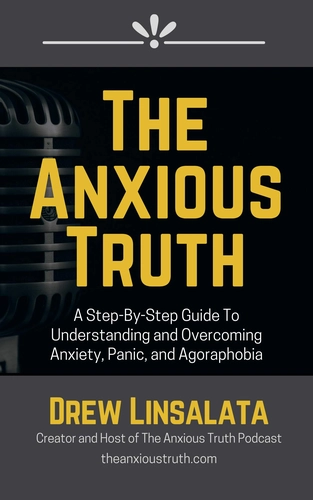
Book Two: The Anxious Truth by Drew Linsalata
This book takes a radically different approach. Linsalata, who recovered from severe anxiety himself, argues that most anxiety “treatment” makes things worse by trying to make you comfortable. His core message: anxiety isn’t dangerous. It’s just uncomfortable. And the only way out is through.
He walks you through what actually happens in your nervous system during an anxiety response—and why your body’s alarms aren’t trying to hurt you. The book gives you a step-by-step framework for gradually exposing yourself to feared sensations and situations. Not to torture yourself, but to teach your brain that you’re safe. This book reframed anxiety from “something I need to fix” to “something I need to practice.” It helped me stop running from my feelings and start moving through them.
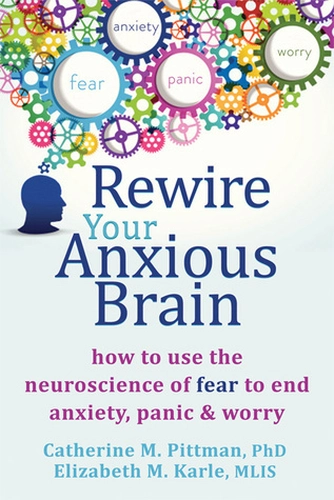
Book Three: Rewire Your Anxious Brain by Catherine M. Pittman and Elizabeth M. Karle
This one is for the people who need to understand the why behind their anxiety. Pittman and Karle, both neuroscientists, explain how anxiety originates in two different parts of the brain: the amygdala (the alarm system) and the cortex (the thinking brain). Understanding which one is driving your anxiety matters—because the solution is different for each.
If your amygdala is driving the bus (panic attacks, physical symptoms, sudden fear), you need body-based techniques—not logic. If your cortex is the culprit (worry, rumination, overthinking), you need cognitive strategies. This distinction changed how I approach my own anxiety. I stopped trying to “think my way out” of a panic attack and started using breathing and grounding techniques instead. For rumination, I used cognitive exercises. The book is full of practical exercises drawn from neuroscience, not just theory.
Why You Actually Need the First One
The other two books are excellent. The Anxious Truth will teach you to face your fears. Rewire Your Anxious Brain will give you neuroscientific insight. But they’re both books you need time to work through. When you’re in the middle of a spiral, you don’t have time for chapters and exercises.
Break the Anxiety Circle is different. It’s the book you grab when the spiral starts. The techniques are simple and memorable—you can use them even when your brain is scrambled. The language is kind without being condescending. And it addresses the shame that other books miss: the voice that says “you shouldn’t feel this way” or “you’re too sensitive.” This book helps you let go of that judgment so you can actually deal with the anxiety instead of fighting yourself too.
If you’ve ever felt trapped in your own head, stuck in a loop you couldn’t break—this book will help. It costs less than a therapy copay. The cost of staying stuck? That’s your peace, your sleep, and your ability to enjoy your own life.