It’s 11 PM. You should be sleeping, but your brain is still replaying a conversation from three days ago. You analyze every word, imagine what you should have said, and then fast-forward to a dozen worst-case scenarios for tomorrow.
You know overthinking isn’t helping. But telling yourself to stop only makes it worse.
The secret isn’t to fight the thoughts—it’s to replace the loop with something else. Here’s what to do instead.
What is overthinking?
Overthinking is the habit of repeatedly analyzing the same thoughts, decisions, or events without making progress. It feels like problem-solving, but it’s actually rumination—a mental treadmill that drains your energy and keeps you stuck.
It’s not a character flaw. It’s a learned pattern, often driven by anxiety, perfectionism, or a deep need to feel in control. The good news: patterns can be changed. You don’t have to silence your mind—you just have to give it a different job.

How replacing overthinking can help you
When you replace rumination with action, you break the anxiety loop. Your mind stops spinning, your body relaxes, and you regain a sense of agency. You won’t solve every problem by doing something else—but you’ll stop suffering twice (once in your head, once in reality). And you’ll start trusting yourself to handle what comes.
Tip 1: Ask “What can I control right now?”
Instead of replaying the past or predicting the future, ground yourself in the present. Ask: What is within my control at this moment? Maybe it’s writing one sentence, making one phone call, or simply taking a deep breath. Then do that one thing. Action is the antidote to anxiety.
Tip 2: Set a “worry window”
Give your overthinking a designated time—15 minutes a day, say at 5 PM. When anxious thoughts show up outside that window, tell yourself: “Not now. I’ll deal with you later.” When the window arrives, worry freely. You’ll often find the thoughts have lost their urgency.
Tip 3: Move your body
Overthinking lives in your head. Physical movement pulls you back into your body. Stand up, stretch, take a walk around the block, or do 10 jumping jacks. Even two minutes of movement can interrupt the spiral and change your brain chemistry.
Tip 4: Write it down—then throw it away
Get the loop out of your head and onto paper. Write down every worry, every “what if,” every harsh judgment. Then ask: Is this a fact or a fear? Sometimes just seeing it in black and white makes it look less threatening. You can even crumple the paper and toss it—a symbolic “letting go.”
Tip 5: Use the 5-4-3-2-1 grounding technique
When your mind is racing, anchor yourself in the present using your senses:
- 5 things you can see
- 4 things you can touch
- 3 things you can hear
- 2 things you can smell
- 1 thing you can taste
This simple exercise pulls you out of the future and into the now.
Tip 6: Do one small thing you’ve been avoiding
Overthinking often masks avoidance. You’re not really thinking—you’re procrastinating on something that feels scary. Pick the smallest possible step: open the document, write the first sentence, send the email. You don’t have to finish. Just start. Momentum kills rumination.
Tip 7: Talk to yourself like a friend
Would you tell a friend they’re stupid for worrying? Probably not. So why say it to yourself? When you catch the spiral, pause and ask: What would I say to someone I love who was feeling this way? Then say that to yourself. Self-compassion isn’t weakness—it’s the fastest way out of the loop.
Tip 8: Get structured support—or a book that guides you
If overthinking is a constant companion, willpower alone won’t cut it. You need tools, practice, and maybe a new way of understanding your mind.
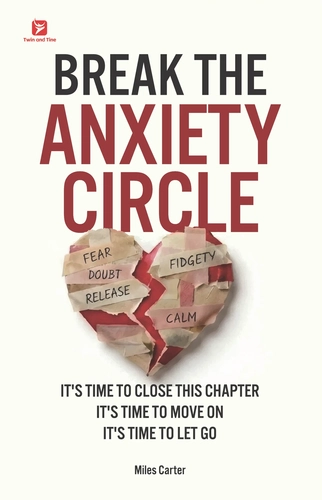
Miles Carter’s Break the Anxiety Circle is exactly that kind of guide.
It’s written for people trapped in the overthinking loop—exhausted from anxiety, people-pleasing, and emotional exhaustion. It doesn’t offer vague advice. It walks you through:
- Chapter 1: Loving yourself—so you stop searching for worth in others’ approval
- Chapter 2: Releasing the past—so old regrets stop fueling present fear
- Chapter 3: Taming emotional reactions—so you respond with awareness instead of panic
The book’s opening chapter sets the tone: real change starts when you stop looking for validation outside yourself and begin building a relationship with the person you actually are. From there, it guides you through releasing old baggage and responding to your emotions with clarity instead of impulse.
That’s the shift. You don’t have to fix every thought. You just have to take the next small step—and let the rest unfold.
If your overthinking traces back to childhood wounds—abandonment, neglect, or feeling “not enough”—Miles Carter’s Let It Unfold offers a 15-week healing journal with daily exercises for self-acceptance, mindfulness, growth, inner shadows, and gratitude.
You can’t stop thoughts from appearing. But you can choose what you do next. Instead of overthinking, take one small action. Breathe. Write. Move. Reach out. Let the thought pass—and step into the life waiting on the other side.