I found out last spring that a close friend once believed I might cheat on my husband. She told me after her divorce, casually, like it was nothing. Her ex had claimed he saw me on a dating app. That was a lie. He lied about a lot of things.
My first thought? “That’s sad, but at least she’s honest.” Then I sat with it. And the real question hit me. If I never knew she thought that, when did she stop? Did she ever stop? Do I even want this friendship? I honestly could not tell.
That moment taught me something uncomfortable. I had no idea how to trust my own judgment.
Quick Ways to Start Trusting Your Judgment Today
Notice the first twinge in your body before you explain it away.
Ask yourself what you feel before you ask anyone else.
Give yourself permission to say, “That hurt my feelings.”
Make one small decision without consulting anyone.
Sit with being wrong and notice that you survive it.
Why Is It So Hard to Trust Your Own Judgment?
Here is what I noticed about myself. When someone hurts me, I feel it. Then within seconds, I start explaining their side. Maybe I am overreacting. Maybe I am too sensitive. Maybe they meant well.
I am excellent at building cases for other people. Give me five minutes and I will find the reason behind anyone’s behavior. It is a skill. It is also a way to avoid my own feelings.
Some people call this being empathetic. I call it losing the plot.
The tricky part is that empathy genuinely helps sometimes. Understanding intent matters. But when you do it every single time, before you even know what you feel, you stop being a person with opinions. You become a translator for everyone else.
There is another layer too. A lot of us were taught that being good means being easy. Not difficult. Not dramatic. Not the one who makes things awkward.
So we swallow the small stuff. We explain it away. We move on.
Then one day something small happens, and we explode. And everyone, including us, is confused. Where did that come from?
It came from the twenty things you never let yourself feel.
How Do You Actually Start Trusting Your Own Judgment?
The 0-to-100 Check-In
Think of your emotional reaction like a dial. 0 is calm. 100 is “I need to leave this room right now.” Most of us only notice when we hit 100.
The goal is to catch the 20. The 40. The 60.
Here is what that looks like in practice. Someone says something. You feel a small twinge. Instead of brushing it off, you pause. You ask yourself one question.
“What just happened in my body?”
Maybe your chest tightened. Maybe your jaw clenched. Maybe you got the urge to check your phone.
That twinge is information. It does not mean you are right. It does not mean the other person is wrong. It means something landed. And you get to decide what to do with it.
I started doing this with my journal. Not a fancy one. Just notes on my phone, password protected. When I felt off about something, I would type it out. Bad grammar. No structure. Just the raw thing.
A few weeks in, I noticed a pattern. Every time I felt that twinge, I immediately started writing the other person’s defense. “She probably meant…” “He has been stressed lately…” “I am sure it was not personal…”
I was writing their case before I even finished stating mine.
That was the moment things shifted for me. Not dramatically. Just enough.
The Two-Question Rule
When I am about to ask a friend what they think, I stop. I ask myself two questions first.
What do I feel? What do I want to do about it?
Simple. Not easy.
The point is not to never ask for advice. The point is to know your own answer before you hear someone else’s. That way, when your friend says “I would cut her off,” you can actually evaluate that. You can think, “Hmm, that does not match what I want.” Or you can think, “Yes, that is exactly what I have been avoiding.”
Either way, you are choosing. Not just collecting votes.
The Permission Slip
Most of us are waiting for permission to feel what we feel. We want someone to say, “Yes, that was hurtful. You are not crazy.”
Here is the thing. You can give yourself that permission.
Try this. When something bothers you, say it out loud to yourself. Just once. “That hurt my feelings.” Or “I did not like that.” Or “I am angry.”
Notice what happens. Does it feel true? Does it feel like an exaggeration? Does it feel like relief?
For me, it felt like relief. And also terror. Because if I admitted it hurt, then I had to decide what to do about it. And deciding meant possibly losing a friend.
But here is what I have learned. The fear of losing people keeps you stuck. It makes you small. It makes you agree to things you do not agree with. It makes you stay in friendships that drain you.
And the irony? The people worth keeping are the ones who can handle your honesty.
What About When You Are Not Sure You Are Right?
This is the part that trips me up. What if I am overreacting? What if I am the problem?
Here is a way to check. Ask yourself: “If my best friend told me this exact story, what would I think?”
Most of us are way harder on ourselves than we would ever be on someone we love. That double standard is worth noticing.
Another check: “What would I tell my younger self?”
That one helps too. My younger self was a mess of people-pleasing and second-guessing. If she came to me with this story, I would say, “You are allowed to be hurt. You are allowed to want distance. You do not have to justify it.”
So why is it so hard to say that to myself?
Because I have spent years practicing the opposite. And practice works both ways.
The Committee Meeting Problem
I used to make decisions by committee. One conversation with a friend. Then a text to another friend. Then I would bring it up to my husband. Then I would circle back to the first friend to see if she still agreed.
It felt like I was being thorough. I was actually outsourcing my life.
I remember one friend saying, “If it were me, I would be done.” Another said, “That is ridiculous, do not even worry about it.” Their certainty made me feel better. It also made me realize something scary. If they had said the opposite, I would have changed my mind.
That is not having a judgment. That is renting one.
And renting gets expensive. You pay in second-guessing, in replaying conversations, in needing one more person to agree before you can move.
Overthinking often starts with one small question and turns into hours of replaying conversations, imagining worst-case scenarios, blaming yourself, or searching for answers you may never get.
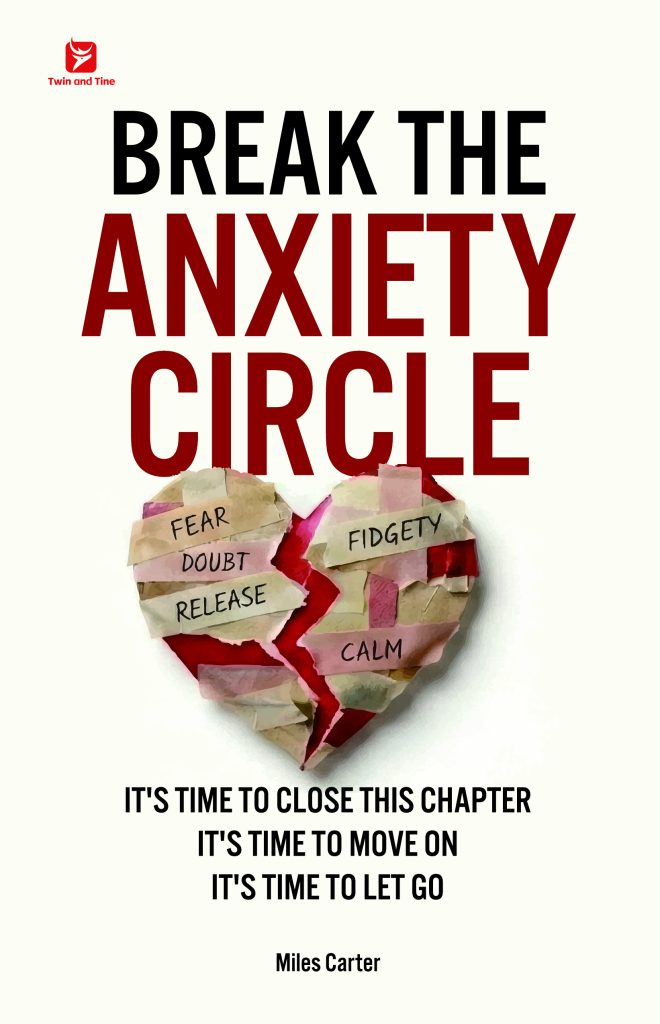
Break the Anxiety Circle helps you recognize the patterns that keep anxiety, self-doubt, people-pleasing, and emotional attachment going. It shows you how to respond differently when your mind gets pulled back into the same loop.
Recognize the thought patterns that keep overthinking, self-blame, and anxiety going.
Stop chasing closure, reassurance, and approval when they only pull you deeper into the loop.
Use simple reflections and practical tools to respond more calmly when your mind starts spiraling.
So I started doing something different. I made the decision first. Then I told people.
For example, with the friend who told me about her old suspicions, I decided I needed space. I did not ask anyone if that was okay. I just did it. I said, “I need some time to process this.”
Some people thought I was being dramatic. Others understood. But the decision was mine. And it stuck.
Was it the right decision? I do not know. But it was my decision. And that matters more than being right.
How Do People Learn to Trust Their Own Judgment?
They practice. That is it. That is the whole answer.
They make small calls. They notice how those calls feel. They adjust. They make bigger calls. They survive being wrong. They learn that being wrong is not the end of the world.
I have seen this shift in myself and in others. One person described realizing that “wrong” does not mean “bad.” It just means “not right this time.” She started treating her judgments like experiments. Try it. See what happens. Adjust.
Another started small. She picked a restaurant without asking anyone. Then she picked a movie. Then she told a friend no to something small. Each time, she survived. Each time, it got easier.
I wish there was a shortcut. There is not.
But here is what helps. Remind yourself that you are not trying to be perfect. You are trying to be present. To your own life. Your own feelings. Your own decisions.
That is the goal. Not certainty. Just ownership.
FAQ
Q: How do I trust my own judgment when everyone around me disagrees?
A: Start by noticing that disagreement is not proof you are wrong. It just means you see it differently. Ask yourself: “If no one else had an opinion, what would I choose?” That answer matters.
Q: Can I learn to trust my judgment if I have always relied on others?
A: Yes. Start with low-stakes decisions. What to eat. What to wear. What to watch. Practice noticing what you want before you ask anyone. Then work up to bigger things.
Q: How do I know if I am being fair to someone or just unfair to myself?
A: Ask what you would tell a friend in the same situation. If you would be angry for them, you are probably allowed to be angry for yourself. The double standard is a clue.
Q: What if I make a decision and later regret it?
A: You will. Everyone does. The goal is not avoiding regret. It is learning that you can survive it. Regret is information, not a verdict on your character.
Q: How do I stop needing everyone to agree with me?
A: You do not have to stop wanting support. You just have to stop requiring agreement. Tell people what you have decided. Let them react. Their reaction is not your responsibility.
Q: How do I trust my judgment when I have been wrong before?
A: Being wrong before does not disqualify you. It qualifies you. You have learned something. That is what judgment is made of.
One Last Thing
I still think about that friend sometimes. I do not know if I made the right call. I do not know if I will ever know.
But I know this. I made a call. I sat with my own feelings long enough to hear them. I did not hand the decision to a committee. I did not wait for permission.
And that, for me, is what trust feels like. Not certainty. Just a quiet voice that says, “This is what I want. This is what I am doing.”
I am learning to listen to it. Some days it is loud. Some days it is barely a whisper. But it is there. And it is mine.
References
Brown, B. (2010). The Gifts of Imperfection. Hazelden Publishing.
Tawwab, N. G. (2021). Set Boundaries, Find Peace. TarcherPerigee.
American Psychological Association. (2022). Making decisions without second-guessing yourself. Retrieved from apa.org.