I remember the moment I realized I was bad at managing conflict. Two people on my team were openly clashing. One was senior, one was newer. Both were good at their jobs. But they could not be in the same room without things getting tense. I told them to work it out themselves. They didn’t. I tried to mediate and made it worse. I ended up having to move one of them to another team.
That’s when I started looking for actual help. Not theory. Specific, practical help. These three books gave me the words I was missing.
1. Say It Right…Every Time by Miles Carter
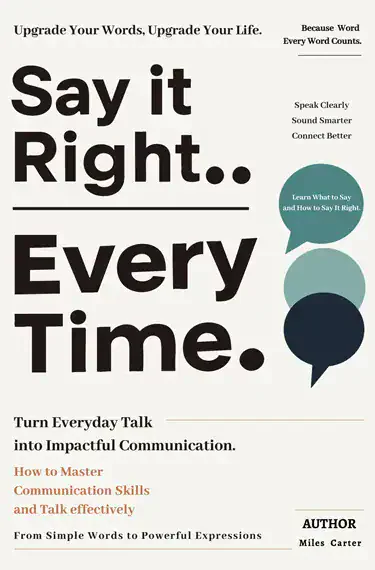
This book is a practical communication guide focused on workplace scenarios. What makes it different is the side-by-side comparisons. It shows you exactly what to say versus what not to say.
One section I used immediately was about giving corrective feedback. I’d been saying “I need you to do better” and wondering why people shut down. The book showed me a cleaner alternative: “Here’s what I observed, here’s the impact, and here’s what I need going forward.” I used that structure in a conversation with a team member who was consistently late with deliverables. He didn’t get defensive. He just fixed it.
The book also covers how to respond when an employee pushes back. I’d been trying to win arguments with logic, but the book points out that people get defensive when they feel attacked. It gave me better language: “I hear you” and “Let me make sure I understand where you’re coming from.” I started using these phrases in every tense conversation. They didn’t change the outcome, but they changed the atmosphere.
There’s also a chapter on setting boundaries with employees. I used to over-explain my decisions, thinking it would make people understand. The book taught me that clear, brief explanations work better. “This is the decision. Here’s why. I’m happy to answer questions.” Less is more.
2. Crucial Conversations by Patterson, Grenny, McMillan, and Switzler
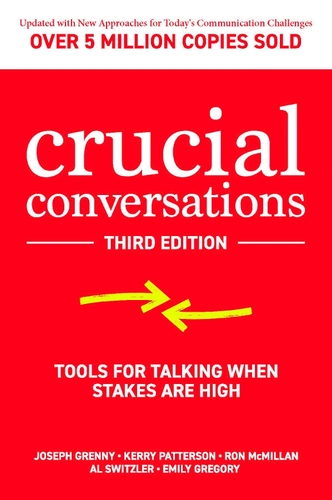
This is the gold standard for high-stakes workplace conversations. The core insight: when emotions run high, people either clam up or get aggressive. Neither works. The book gives you a framework to stay constructive.
What I used most was “starting with facts.” I had two employees who were constantly in passive-aggressive conflict. Instead of saying “you two have a problem,” I said “I’ve noticed three times this week where one of you left the room during the other’s presentation.” Facts are neutral. They don’t trigger defensiveness the way accusations do. That simple shift turned a blame session into a problem-solving conversation.
The book also teaches how to make the conversation feel safe. When people feel attacked, they stop listening. I started using phrases like “I’m bringing this up because I want us to work well together, not because I want to blame anyone.” That one sentence changed how people received feedback.
3. The 5 Dysfunctions of a Team by Patrick Lencioni
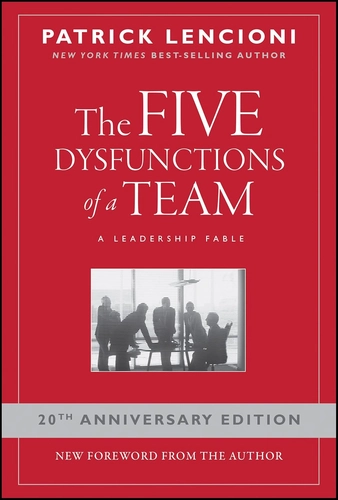
This is a fable, but the lessons are real. Lencioni argues that conflict in teams often stems from an absence of trust. When people don’t trust each other, they avoid conflict. Then they fake harmony. Then they fail to commit. Then they avoid accountability. And finally, they don’t get results.
Reading this helped me see that my job wasn’t to resolve every conflict. It was to create a culture where productive conflict could happen safely. I started having team conversations about how we wanted to disagree with each other. That changed the dynamic more than any one-on-one mediation ever did.
One last thought
Employee conflict is inevitable. But it doesn’t have to be destructive. If you’re managing people and feeling unprepared for the hard conversations, start with Say It Right…Every Time. It gave me the language I needed before I even knew I needed it.