Every couple thinks their problem is communication. They say it in therapy, in arguments, in quiet moments of frustration. We just need to communicate better. So they try. They talk more. They explain themselves more carefully. They repeat the same points in louder voices. And nothing changes.
Here is what nobody tells you. Most couples are not failing to communicate. They are communicating constantly. Every sigh, every silence, every eye roll, every time you check your phone mid-sentence. The problem is not the volume of communication. It is the translation. You are speaking, but the other person is hearing something you never said. And they are doing the same thing back to you.
The books below taught me how to close that translation gap. Not by talking more, but by understanding what happens between the words.
Book One: Say It Right..Every Time. by Miles Carter
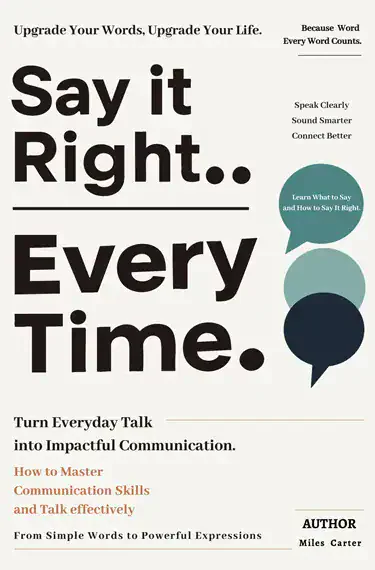
I did not expect a communication book to change my relationship. I expected tips on phrasing and conflict resolution. What I got was a complete reeducation in how I show up with the person I love.
The chapter on the Echo Technique was the first thing that landed. It taught me to reflect back what my partner said before responding. Not parroting. Actually making them feel understood before I launched into my own perspective. I had been skipping that step for years. I was so focused on being heard that I never paused to confirm I had heard them first. The shift was immediate. Arguments that used to spiral suddenly had a landing strip.
The sections on disagreeing without creating distance and saying boundaries with calm power became my reference points. I learned that I could be honest about what I needed without making my partner the villain. I learned that “I feel overwhelmed when this happens” lands completely differently than “you always do this.” Same truth. Different outcome.
What I love most is that this book treats communication as a skill you build, not a personality trait you either have or you don’t. It gave me specific words to use in the moments that used to go sideways. My partner noticed the difference before I even told them I was reading it.
Book Two: The Seven Principles for Making Marriage Work by John Gottman
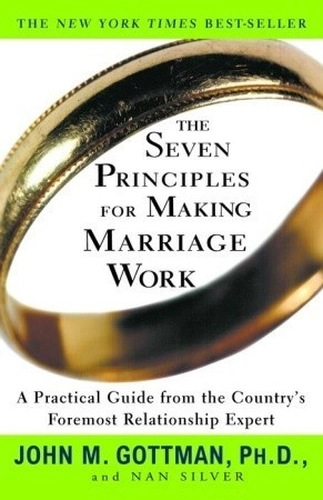
Gottman is the researcher who famously learned to predict divorce with over ninety percent accuracy by watching how couples argue. Not what they argue about. How. His findings are sobering and incredibly useful.
The most important thing I took from this book is the concept of the Four Horsemen: criticism, contempt, defensiveness, and stonewalling. These four patterns predict relationship failure more reliably than anything else. And I recognized all of them in my own behavior. I had been criticizing when I thought I was expressing needs. I had been defensive when I thought I was explaining myself. I had stonewalled when I thought I was just taking space.
Gottman does not just describe the problem. He gives you alternatives. Softened startups instead of harsh openings. Expressing needs instead of complaints. Taking breaks before flooding takes over. These are practical, research-backed shifts that change the entire trajectory of a conversation. This book is not warm and fuzzy. It is science. But that is exactly what makes it trustworthy.
Book Three: Hold Me Tight by Sue Johnson
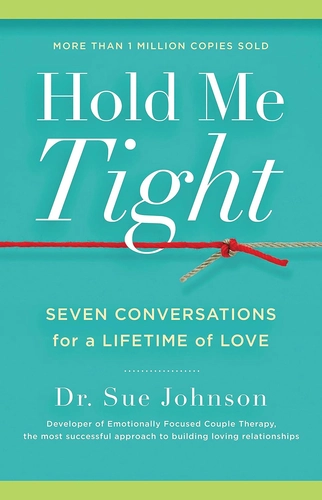
Johnson developed emotionally focused therapy, and this book is its most accessible form. Her central argument is that most relationship conflict is not about the surface issue. It is about attachment. Underneath every fight about dishes or texting or being late is a deeper question: are you there for me? Do I matter to you? Can I count on you?
That reframe changed how I hear my partner. When they expressed frustration about something small, I stopped defending myself against the surface complaint and started listening for the attachment question underneath. Usually, it was there. And usually, answering that question directly dissolved the conflict faster than any argument ever had.
The book walks you through seven conversations designed to rebuild emotional connection. The one on forgiveness was the hardest and most valuable. It showed me how to move past old wounds without pretending they did not happen. Johnson writes with warmth and clarity, and her examples are so specific that you will see your own relationship in them. This book taught me that communication is not just about words. It is about safety.
The Difference That Matters
The Seven Principles gives you research and patterns. Hold Me Tight gives you the emotional architecture underneath the conflict. Both are essential for understanding why communication breaks down in relationships. But both are books you absorb over weeks, ideally together with your partner.
Say It Right..Every Time. is the one you can use tonight. The next time a conversation starts to go wrong, you do not need to remember a research study. You need a phrase. A pause. A way to say the hard thing without setting off a chain reaction. This book hands you those words. It costs less than a dinner date. And unlike dinner, you will use it for years.