There is a particular kind of frustration that comes from reading finance books when you are just starting out. You open a book recommended by someone who has been doing this for years. They tell you to save 20% of your income. They tell you to max out your retirement accounts. They tell you to invest in index funds.
And you close the book thinking: I cannot do any of this yet.
Most finance books assume you already have money to work with. They skip the part where you are still figuring out the basics. They skip the part where you are still paying off debt. They skip the part where you have never seen a 401(k) form in your life.
The three books below do not make that assumption. They start where you actually are—and they give you a path forward. They cover different angles of the same problem: how to go from where you are now to building real wealth.
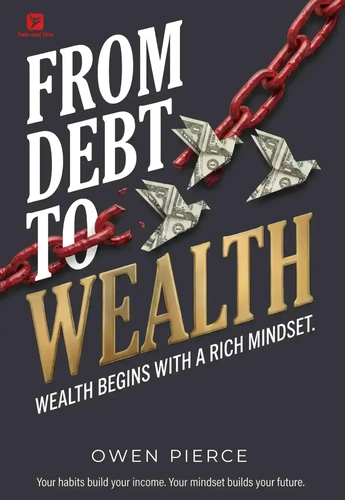
1. From Debt to Wealth by Owen Pierce
This book solves a problem that most finance books pretend does not exist: what if you are already in debt? What if you do not have savings? What if you are tired of wondering where your money went at the end of every month?
Pierce starts with a question that most books avoid: why does your income never seem to be enough? The answer is not that you are bad with money. It is that you have been playing by rules that were never designed to make you wealthy. You work harder, you earn a little more, but your expenses grow right along with it. You buy things to feel better and end up deeper in the hole. The cycle is not about willpower. It is about habits you were never taught to break.
The book walks you through a complete reset. How to break the paycheck-to-paycheck cycle. How to eliminate bad debt without feeling deprived. How to build savings when you have never been able to keep them. How to stop the bleeding before you worry about investing.
If you are still figuring out how to get out of debt or stop living paycheck to paycheck, this is where you start. Nothing else works until you break the cycle.
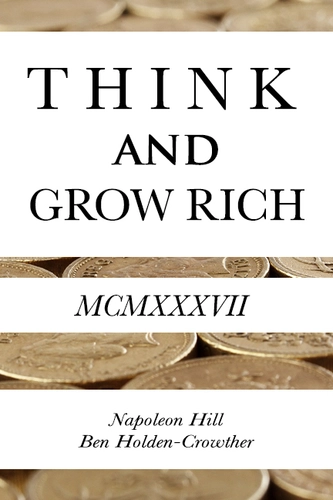
2. Think and Grow Rich by Napoleon Hill
This book is almost a hundred years old. It was first published in 1937. It is still in print because the core insight has not aged a day.
Hill spent years interviewing some of the wealthiest and most successful people of his era. Andrew Carnegie, Henry Ford, Thomas Edison. He wanted to understand what they had in common. What he found was not a financial strategy. It was a psychological framework. They all shared a specific mindset: a burning desire, a clear goal, and an unshakable belief that they would achieve it.
The book outlines a set of principles based on that research. Desire. Faith. Persistence. The power of a clear plan. The importance of taking action despite fear. Hill does not tell you which stocks to buy or how to balance a budget. He tells you how to think differently about what is possible.
This book is not a replacement for practical advice. It is the foundation that makes the practical advice stick. Without the right mindset, you will not follow through on the steps. With it, the steps start to feel obvious.
For someone who is just starting out and has never thought about wealth as something they could actually build, this book cracks the door open.
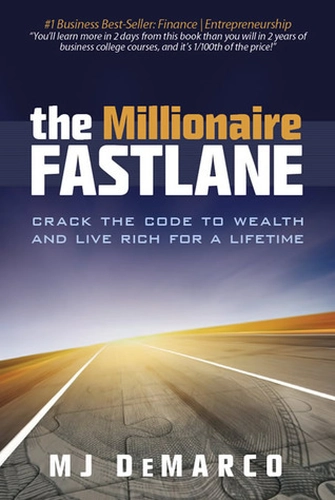
3. The Millionaire Fastlane by MJ DeMarco
If you have read any personal finance advice, you have heard the same thing over and over: get a good job, save money, invest slowly, retire at sixty-five. It is the default script. And for most people, it does not work.
DeMarco wrote this book for people who are tired of that script. His argument is blunt: saving your way to wealth on a regular salary is almost impossible. You cannot out-save a limited income. If you want real wealth, you need to build systems that generate money, not just trade your time for a paycheck.
He calls the traditional path the “slowlane.” It works, eventually, but it takes decades and assumes nothing goes wrong. The “fastlane” is different. It is about building assets—businesses, intellectual property, systems—that produce income without your constant labor. It is not a get-rich-quick promise. It is a get-rich-faster framework.
This book is not for everyone. It is for people who are impatient with the slow-and-steady advice. For people who feel like they are running in place. For people who suspect that the traditional path might not lead anywhere. It is the most radical book on this list, and for the right reader, it is the most useful.
These three books approach wealth-building from different starting points.
Pierce’s book assumes you are in the hole and need a way out. It gives you the practical steps to stop the bleed.
Hill’s book assumes you are ready to think bigger but do not know how to believe it is possible. It gives you the mental framework to shift your assumptions.
DeMarco’s book assumes you are tired of waiting and want a faster path. It gives you a roadmap for building assets that generate income.
The right book depends on where you are right now. If you are still in debt, start with Pierce. If you are debt-free but stuck in a scarcity mindset, read Hill. If you are ready to speed things up, pick up DeMarco.
All three will move you forward. But you only need to start with one.