I once told someone I felt like they did not care about me. I thought I was expressing a feeling. I was not. I was delivering a verdict and calling it a feeling.
What I actually felt was lonely. I felt left out. I felt like I was doing most of the reaching and getting little back. Those are feelings. But what came out of my mouth was a conclusion about their character. And you cannot have a conversation with a conclusion. You can only defend against one.
That is the gap most of us fall into. We think we are sharing our feelings. We are actually sharing our interpretations, our accusations, and our stories, and then we are surprised when the other person gets defensive.
Quick Things to Try Today:
Replace “I feel like you” with “I feel” plus an actual emotion word.
Name the feeling in one word before you explain anything.
Say what you need in one sentence. Not a paragraph.
Use “when X happened, I felt Y” instead of “you always do X.”
If you cannot name the feeling, say that. “I am not sure what I feel yet.”
Notice when you are about to say “I feel like you.” That is a clue.
Why “I Feel Like You” Is Not a Feeling
“I feel like you do not care.” “I feel like you are avoiding me.” “I feel like you think I am stupid.”
None of these are feelings. They are thoughts about the other person, dressed up with the word feel. The word gives them permission to sound vulnerable, but the content is still an accusation. The other person hears it as one.
A feeling is about your internal state. Lonely. Anxious. Sad. Angry. Embarrassed. Overwhelmed. Disappointed. Those are feelings. They describe what is happening inside you. They do not describe what the other person is doing or who they are.
The test is simple. If the sentence could start with “I think” and mean the same thing, it is not a feeling. “I think you do not care” works. So it is a thought, not a feeling.
Why This Is So Hard
Most of us were never taught the difference. We were taught to say “I feel” because it sounds more polite, and then we attached whatever we wanted to the end of it. “I feel you are being unfair” passes the politeness test. It does not pass the honesty test.
There is also a protection mechanism underneath. Accusations feel safer than vulnerability. If you tell someone they do not care, you are making a statement about them. You are not exposing what is happening inside you. Vulnerability is riskier. It says this is what I feel, and I cannot blame you for it, and I am asking you to meet me here anyway.
That is the part that takes courage.
The Formula That Actually Works
There is a structure that helps, and it is simpler than most communication advice.
When [specific thing happened], I felt [emotion word]. What I need is [specific request].
That is it. Three parts. Not a paragraph. Not a long story. One sentence if you can manage it.
“When you did not reply to my message yesterday, I felt anxious. What I need is a quick text if you are going to be offline for a while.”
“When you corrected me in front of the team, I felt embarrassed. What I need is for that to happen privately next time.”
“When you cancelled last minute, I felt disappointed. What I need is more notice if plans change.”
Notice what these have in common. They are specific. They describe a behavior, not a character. They name one feeling. They make one request. And they do not include the word “always” or “never,” which are the two words that turn any conversation into a fight.
When You Do Not Know What You Feel
This is more common than people admit. You know something is wrong, but you cannot name it. You feel heavy, or tight, or off, and the words do not arrive.
You are allowed to say that. “I know something is bothering me. I do not have the words yet. Can I have a few minutes?”
Naming the feeling is a skill. It takes practice. If you are out of practice, start with a smaller set of words. Happy. Sad. Angry. Scared. Tired. Confused. Those six cover most of what people feel. Start there. The more precise words can come later.
The hardest part of expressing feelings is not knowing what you feel. It is finding the words that land the way you intended, without turning into an accusation or disappearing into vagueness. Most people have the feeling. They just do not have the language.
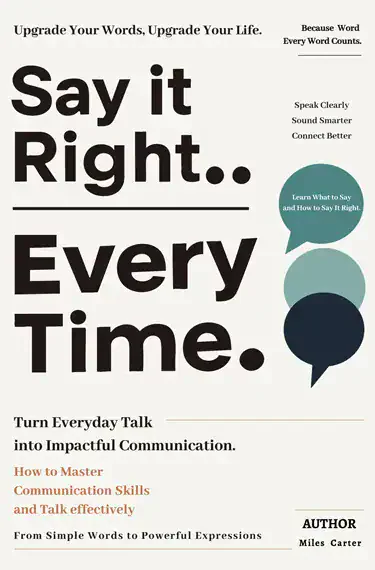
Say It Right Every Time by Miles Carter is built around that gap. It is a practical communication guide for the conversations that are hardest to get right, including expressing feelings, asking for what you need, and handling conflict without making it worse. Instead of vague advice, it shows what to say and what often goes wrong, with scripts and side-by-side examples. If you keep leaving conversations thinking “that is not what I meant,” this is a useful place to start.
What to Do If the Other Person Gets Defensive
It will happen. You will say it clearly, and they will still get defensive. That does not mean you did it wrong.
When someone gets defensive, the conversation has shifted from your feeling to their reaction. You do not have to follow. You can return to the point. “I am not accusing you. I am telling you what I felt. That is all.”
You can also let the defensive reaction be. They may need time. You do not need them to accept your feeling in the moment. You just need to have said it.
What to Do If You Are the One Getting Defensive
Take a breath. Notice that your body is reacting. Say what is happening. “I notice I am getting defensive. Give me a second.”
That one sentence does more than any argument. It names the dynamic without escalating it. Most people will soften. If they do not, you can ask for a pause. “Can we come back to this in an hour?”
The Difference Between Expressing and Dumping
Expressing a feeling is specific, contained, and directed at one thing. Dumping is everything at once. All the resentment from the last six months. All the things you never said. The conversation becomes a trial.
The fix is one thing at a time. One incident. One feeling. One request. If there is a pattern, you can name the pattern after you have named the specific moment. Not before.
“When you interrupted me in the meeting, I felt dismissed. This has happened a few times and I want to talk about it.” That is a pattern statement. It is still specific. It is still contained. It does not need the whole history attached.
What If You Are Afraid of the Reaction
Then say that too. “I am nervous to tell you this because I am worried about how you will react.” That is honest. It is a feeling. It is also a request for care.
You are not responsible for managing their reaction. You are responsible for saying it clearly and kindly. Their reaction is theirs. That is the hardest part of expressing feelings. You say the thing, and then you let go of the outcome.
FAQ
Q: How do I express my feelings without starting a fight?
Name one specific situation, one feeling, and one request. Avoid “always” and “never.” Avoid character judgments. Stay with what happened and what you felt.
Q: What if I do not know what I feel?
Say that. “I know something is bothering me but I do not have the words yet.” It is honest, and it buys you time. Naming feelings is a skill that improves with practice.
Q: Is it manipulative to say how I feel?
No. Expressing a feeling is not manipulation. Manipulation is using a feeling to control someone’s behavior. You can share what you feel and still respect their choice to respond however they choose.
Q: What if the other person dismisses my feelings?
You do not need them to validate what you felt. You felt it. That is true regardless of their response. Their dismissal is information about them, not a verdict on your experience.
Q: How do I express feelings when I am already upset?
Lower the temperature first. Take a pause. Breathe. Then say one sentence. The feeling does not need to be calm to be expressed clearly, but it is easier when the body is less activated.
Q: Can I express feelings in writing instead of face to face?
Yes. Writing can be clearer for some people. It gives you time to choose your words and it removes the pressure of an immediate reaction. It is not avoidance. It is a different medium.
One Last Thing
I still catch myself about to say “I feel like you.” The habit is old. But I hear it now before it leaves my mouth, and I change it. Sometimes I change it mid-sentence. “I feel like you do not care” becomes “I feel lonely when we do not talk.” Same situation. Different sentence. Different conversation.
The feeling was always real. The words were the problem. And the words are something I can work on.