I was sitting in a meeting when someone cut me off mid-sentence. Not a quick interruption. A full override. He kept talking for two minutes as if I had never opened my mouth. Nobody said anything. I said nothing. I just sat there with my face getting hot and my hands shaking under the table.
I replayed that moment for weeks. Not the content of what I had been saying. The silence. The fact that I let it happen. The fact that I did not know what to do in the moment, and so I did nothing, and the nothing became a story about myself that I could not stop telling.
That is the real problem with disrespect. The event is often small. The aftermath is enormous. You are not just reacting to what happened. You are reacting to the fact that you did not respond. The silence is what stays with you.
Quick Things to Try Today:
Name the feeling in your body before you name the response. Hot face. Tight jaw. Shaking hands.
Take one breath before you speak. It changes the tone of everything that follows.
Use one sentence. Not a speech. One clean sentence.
Do not explain your no or your line. One sentence is a full answer.
Notice whether this is the first time or a pattern. That changes what you do.
Do not wait for the perfect words. Say the simplest version.
Why the Silence Happens
Most people freeze for a specific reason. The body goes into a stress response, and the part of the brain that produces language gets less blood flow. You literally cannot find the words in that moment. This is not weakness. It is physiology.
There is also a social reason. Many of us were taught that naming disrespect is rude. That it makes things awkward. That it is better to let it go. So in the moment, there are two voices. One says say something. The other says do not make a scene. The second voice usually wins, because it is older and it has more practice.
Then there is the calculation. You weigh the cost of speaking against the cost of silence. The cost of silence is invisible in the moment. It shows up later, in the replay, in the resentment, in the way you start avoiding the person. The cost of speaking is visible immediately. Your face gets hot. The room goes quiet. Someone might get upset. So you choose the invisible cost, not knowing how much interest it will accrue.
The First Time and the Pattern Are Different Problems
This distinction matters more than anything else in this article.
A one-off rude comment from someone having a bad day is not the same as a repeated pattern aimed at you. They look similar in the moment. They require completely different responses.
First time: Name it once, calmly, privately if possible. One sentence. Then move on. Most people do not realize they did it. Most will adjust. Some will even apologize.
Pattern: You have already named it once. Now you escalate. Do not repeat yourself. Move up a level. Say it in front of a witness. Put it in writing. Involve someone above you.
The mistake most people make is treating every instance as if it were the first time. They let it slide for months, then explode over something small. Small, early, calm beats big and late every time.
Type of behavior
What it looks like
What to do
One-off rudeness
Snappy tone, careless comment
Let it go, or name it lightly
Repeated small jabs
Same person, same pattern
Name it once, privately
Public put-downs
In front of others, on purpose
Address it right there, calmly
Targeting or bullying
Persistent, aimed at you
Document, report, escalate
What to Say in the Moment
You do not need a speech. You need one sentence. Something that says I noticed, and I am not okay with it, without giving the other person a reason to escalate.
A few options.
“That came out sharp. Can we try that again?”
“I was still talking.”
“I am not going to be spoken to that way.”
“Let me finish.”
“That comment was not okay.”
The tone matters more than the words. Calm, flat, and brief. No heat. No apology. No long explanation. The shorter it is, the more weight it carries.
If you cannot find the words, you can buy time. “Hold on.” “Wait.” A single word that interrupts the momentum. Sometimes that is enough to change the direction of the exchange.
The hardest part of responding to disrespect is not knowing what you want to say. It is finding the words in the moment, when your body is flooded and your mind is blank. That gap between intention and speech is where most of us freeze.
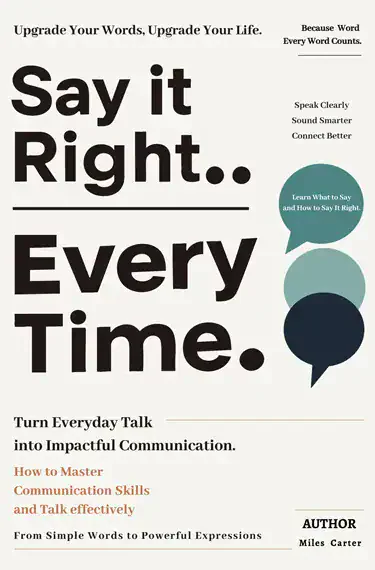
Say It Right Every Time by Miles Carter is built around that gap. It is a practical guide for the conversations that are hardest to get right: handling rude comments, staying grounded when someone is disrespectful, and responding without losing your cool. Instead of vague advice, it shows what to say and what often goes wrong, with scripts and side by side examples. There is a section specifically on staying grounded when someone is rude, one on responding to rude comments at work, and one on strategic pausing when saying nothing is the smarter move. If you keep replaying conversations wishing you had said the right thing, this is a useful place to start.
What to Do After the Moment
Do not replay it for hours. Pick one thing you did well. Pick one thing you would do differently. Then close the file. Replaying does not improve anything. It just extends the stress.
Check what actually happened. Did the relationship end. Did the room turn on you. Did anyone even notice. The evidence matters. Your nervous system needs proof that the thing it feared did not happen.
Repair if you need to. If you said something badly, you can return to it. “Let me try that again. That came out wrong.” Repair is not weakness. It is skill.
Document if it is a pattern. Date, what was said, who was around. Not dramatic. Just facts. If it escalates later, the record is your proof.
Do not wait for the next time to prepare. Think about one sentence you could use if it happens again. Having it ready reduces the freeze.
When the Person Has Power Over You
A rude peer is annoying. A rude manager feels like a trap. The calculation changes when the person controls your work, your schedule, or your future.
In those situations, the goal is not to win the moment. It is to protect yourself and gather information. Document everything. Ask for a private conversation. Frame it as a request for clarity, not an accusation. “I want to do good work here. Lately I am picking up some tension in how feedback comes to me. Can we talk about it?”
If nothing changes, escalate. HR, a skip level, a mentor. You are not being dramatic. You are being thorough.
What Not to Do
Do not match the heat. Matching anger with anger feels satisfying for about three seconds, then the whole thing becomes a fight and nobody remembers who started it.
Do not over-explain. A long explanation signals that your line is negotiable. It is not.
Do not apologize for having a reaction. You are allowed to be bothered. You do not need to excuse it.
Do not wait until you are furious. The longer you wait, the bigger the response. Small, early, calm.
FAQ
Q: How do I respond to disrespect without making it awkward?
Keep it short and calm. One sentence. “That came out sharp. Can we try that again?” Awkward fades. Being treated badly does not.
Q: What if I freeze in the moment and say nothing?
That is normal. It happens because your language centers go offline under stress. If it happens, you can still address it later. “I want to go back to something from earlier. That comment did not sit right with me.”
Q: Should I call out disrespect in front of others?
If it happened in front of others, yes, if it is safe to do so. Calmly, briefly. If the room is unsafe, address it privately afterward and document it.
Q: What if the person denies it or says I am too sensitive?
You do not need them to agree. You said what you said. Their denial is information about them, not a verdict on your experience. You can repeat the line and leave it there.
Q: When should I escalate?
When it is a pattern, when you have already named it once, or when the person has power over you and the behavior continues. Document first, then escalate. Your note is your proof.
Q: Is it ever better to just let it go?
For one-off rudeness from someone having a bad day, yes. For a pattern aimed at you, no. The difference is whether it repeats.
One Last Thing
I still think about that meeting sometimes. Not the interruption. The silence after it. The version of me who did not know what to say.
I know what to say now. It took practice, and it took a few conversations that went badly, and it took learning that the awkward moment is survivable. The line is short. The tone is calm. The discomfort passes. And the person who stays with you afterward is not the one who stayed silent. It is the one who spoke.