Most workplace problems are not actually work problems. They are communication problems wearing a disguise. The project that stalled because two teams never aligned. The promotion you did not get because nobody knew what you were doing. The colleague who undermines you in meetings and smiles at you in the hallway.
We assume competence speaks for itself. It does not. In an office, your work only matters as much as your ability to explain it, defend it, and get others to care about it. That is not cynical. That is how organizations function. These three books taught me how to operate inside that reality without becoming someone I did not recognize.
Book One: Say It Right..Every Time. by Miles Carter
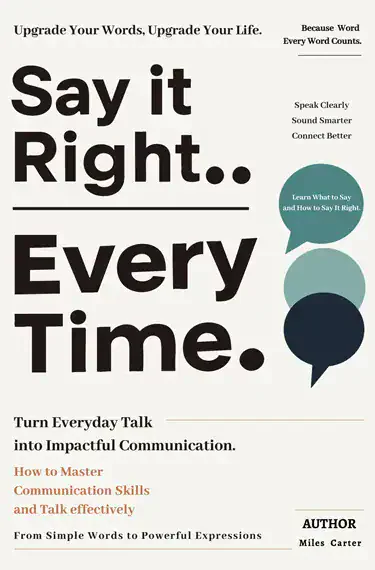
This is the book I reach for before any conversation I am dreading. A performance review. A disagreement with my manager. Asking for a raise. Giving feedback to someone who outranks me.
What makes it different is that it does not just talk about communication in the abstract. It hands you the exact words. The chapter on speaking with credibility and kindness taught me how to be direct without being abrasive. The section on disagreeing without creating distance gave me a script I have now used a dozen times. And the chapter on saying no without guilt saved me from overcommitting more times than I can count.
I keep this book in my desk drawer at work. Not because I need to read it cover to cover again, but because I need to open it five minutes before a meeting and find the phrase I am missing. It is the closest thing to having a communication coach sitting next to me. Practical, specific, and built for the moments that actually matter.
Book Two: Radical Candor by Kim Scott
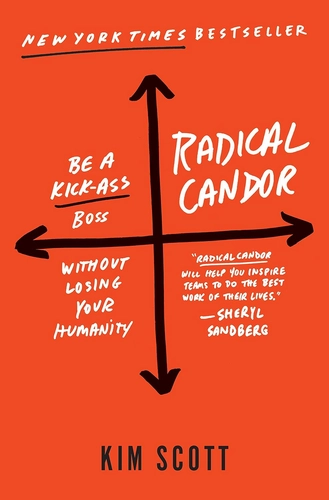
Scott was a manager at Google and Apple, and this book is about how to care personally and challenge directly at the same time. Most workplace cultures reward one or the other. You get managers who are nice but never honest, or honest but never kind. Radical candor is the combination.
The framework is simple but hard to practice. When you care about someone as a person and tell them the truth about their work, they can hear it. When you skip the caring part, it becomes obnoxious aggression. When you skip the honesty, it becomes ruinous empathy. I recognized myself in both failure modes. I had been soft on people I liked and harsh on people I did not. This book showed me how to be consistent.
What I appreciated most is that it applies upward, not just downward. You can be radically candid with your boss too. It just requires more skill.
Book Three: Simply Said by Jay Sullivan
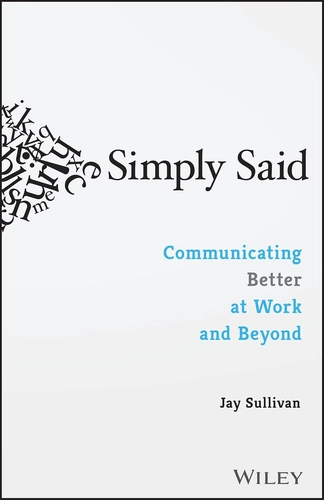
This book is about getting to the point. Sullivan argues that most workplace communication fails because we bury the important part under context, caveats, and throat-clearing. We write long emails. We give meandering updates. We present for twenty minutes before saying what we actually want.
His core rule: lead with the conclusion. Then give the reasoning. Then stop. I started doing this in emails and meetings, and the difference was immediate. People responded faster. They stopped asking clarifying questions. They started treating me like someone who had things under control.
Sullivan also covers listening, presence, and how to handle Q&A without getting defensive. It is a short book with no wasted pages. If you have ever been told you ramble, this is the fix.
Why Start With the First One
Radical Candor gives you a philosophy. Simply Said gives you a structure. Both are valuable. But both require you to remember their frameworks when you are under pressure, and under pressure, frameworks disappear.
Say It Right..Every Time. is different. It is the book you open in the elevator before the meeting starts. It gives you phrases, not concepts. Scripts, not theories. It does not ask you to remember a quadrant or a model. It just hands you the words.
If you have ever left a meeting wishing you had said something different, this is the book that will change that. It costs less than a work lunch. But unlike lunch, you will use it for the rest of your career.