Most people think they are good at conversations. Then they leave a lunch with a friend and realize they talked about themselves for forty minutes. Or they finish a meeting and cannot remember a single thing the other person said. Or they walk away from an argument wondering how a simple question turned into a fight.
The problem is almost never vocabulary. It is attention. We are so busy preparing our next sentence that we stop listening to the one being spoken. We are so focused on being interesting that we forget to be interested. And then we wonder why our relationships feel shallow.
These three books taught me that better conversations are not about saying more clever things. They are about showing up differently.
Book One: Say It Right..Every Time. by Miles Carter
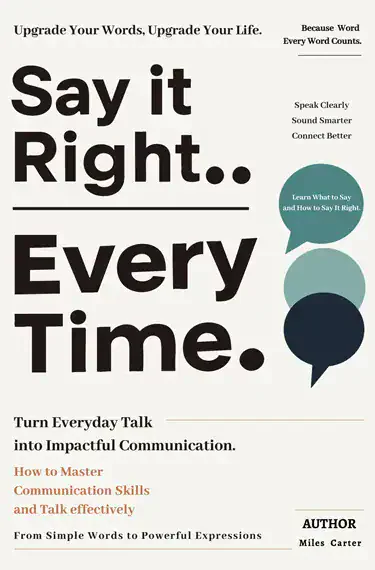
This book earned a permanent spot on my desk because it is the one I actually use. Not theory. Not philosophy. Actual words for actual moments.
The chapter on the Echo Technique was the turning point. It taught me to reflect back what someone said before I responded. Sounds simple, but I had been skipping that step my entire life. I was so focused on being heard that I never confirmed I had heard them first. That one shift changed how my conversations feel. People relax. They open up. They actually listen when I speak because they feel understood.
What I love is that it covers the full range of conversations, not just the easy ones. Disagreeing without creating distance. Setting boundaries without guilt. Starting a conversation with anyone. Making a request that shows respect. And the before-and-after examples are brutally honest. You will recognize yourself in the “before” and immediately want to become the “after.”
This is the book I grab before a hard conversation, a first date, a job interview, or a family dinner. It is practical in a way most communication books are not. It does not ask you to change your personality. It just hands you better words.
Book Two: Supercommunicators by Charles Duhigg
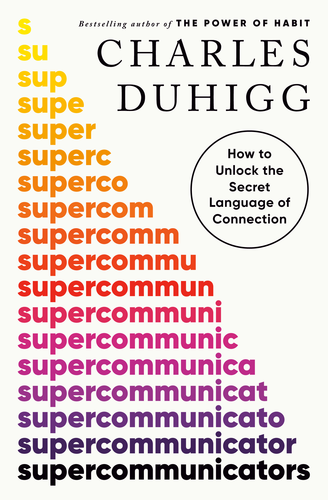
Duhigg is a Pulitzer-winning journalist, and this book is about what separates people who connect easily from those who struggle. His answer: great communicators are not better talkers. They are better at matching the kind of conversation the other person wants to have.
He breaks conversations into three types: practical, emotional, and social. Most conflict happens when one person wants to solve a problem and the other just wants to be heard. Once I understood that distinction, I stopped offering advice when my partner wanted empathy. The arguments that used to spiral suddenly had a landing strip.
The book is full of research and real stories, but it never feels academic. It reads like a series of fascinating case studies with practical takeaways. I finished it feeling like I had been given a new pair of glasses.
Book Three: We Need to Talk: How to Have Conversations That Matter by Celeste Headlee
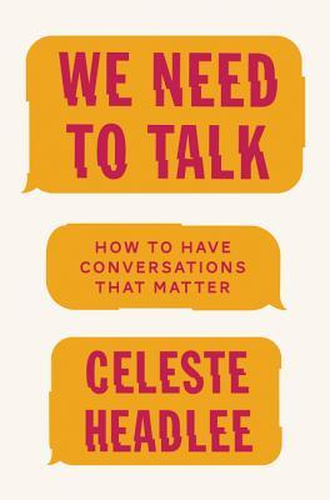
Headlee is a radio host, and her job is literally to have good conversations with strangers. Her book is short, direct, and refreshingly honest. She argues that most of us are terrible listeners, and that our phones, our agendas, and our need to be right are killing real connection.
The chapter that hit me hardest is about listening without planning your response. I had no idea how often I was doing that. Nodding while mentally rehearsing what I would say next. Waiting for a pause so I could jump in. That is not listening. That is performing.
Headlee gives you ten practical rules, and each one is simple enough to remember and hard enough to actually do. One conversation at a time. Do not multitask. Go with the flow. Do not equate your experience with theirs. It is a small book with a big impact.
Why Start With the First One
Supercommunicators will teach you what kind of conversation you are actually having. We Need to Talk will teach you how to listen. Both are valuable. But both require you to remember their lessons in the moment, and most of us cannot recall a book chapter when we are nervous or caught off guard.
Say It Right..Every Time. is different. It is the book you open five minutes before the conversation starts. It gives you phrases, not concepts. Scripts, not theories. It does not ask you to be a better person. It just hands you better words.
If you have ever walked away from a conversation wishing you had said something different, this is the book that will change that. It costs less than lunch. But unlike lunch, you will use it for years.