Most people confuse expression with performance. They think being good at expressing yourself means being eloquent, persuasive, commanding attention. So they study rhetoric, memorize vocabulary, practice their delivery in the mirror. And they still walk away from conversations feeling like nobody actually heard them.
The problem is that expression was never about polish. It is about transfer. Can you take what is inside your head, with all its nuance and contradiction, and put it into someone else’s head intact? That is a mechanical problem, not a theatrical one. Most of us are terrible at it, not because we lack vocabulary, but because we have never learned how the transfer actually works.
I spent years thinking I was bad at expressing myself. Then I realized I was bad at something more specific. I was bad at translating. I knew what I meant. I just could not get it across the gap. These three books taught me how to close that gap, each one through a different medium: spoken words, written words, and creative work itself.
Book One: Say It Right..Every Time. by Miles Carter
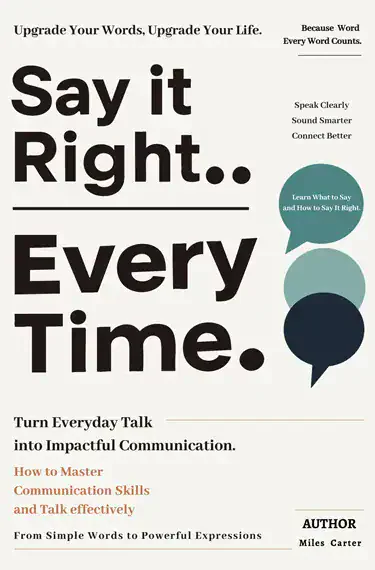
This book is about spoken expression, but it is not about public speaking or persuasion. It is about the daily moments when you need to say something true and you cannot find the words. The conversation with your partner where you need to express a need without starting a fight. The meeting where you need to disagree without alienating everyone. The moment when someone crosses a line and you need to say so without apologizing for existing.
What sets this book apart is that it treats expression as a skill built from specific, learnable components. The Echo Technique taught me to make people feel understood before I try to make myself understood. The sections on boundaries and disagreeing without distance gave me scripts for situations I had been avoiding for years. And the before-and-after examples showed me exactly where my phrasing was sabotaging me.
I keep this book on my desk because it is the one I actually use. When I have something difficult to say, I do not need philosophy. I need words. This book provides them, along with the confidence to deliver them.
Book Two: Bird by Bird by Anne Lamott
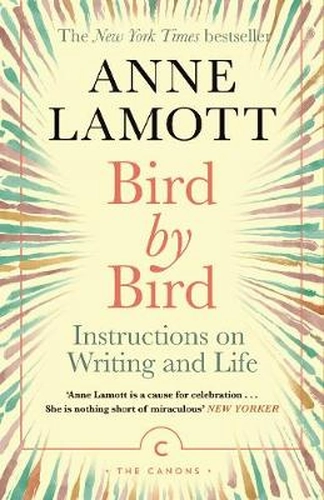
Lamott teaches writing, but what she is really teaching is how to get the truth out of your head and onto the page. Her core insight is that perfectionism kills expression. The inner critic that tells you it is not good enough, not clear enough, not worth saying. That voice silences more people than lack of talent ever has.
The book is structured as practical advice for writers, but every chapter applies to anyone trying to express something real. Her concept of the “shitty first draft” gave me permission to write badly in order to write honestly. Her thoughts on jealousy and comparison helped me stop measuring my expression against other people’s. And her reminder that writing is about paying attention, not being brilliant, shifted my entire approach.
This is not a book about grammar or style. It is a book about courage. The courage to say what you actually think before you know if it is good. I recommend it to anyone who has something to express but keeps freezing at the starting line.
Book Three: The Artist’s Way by Julia Cameron
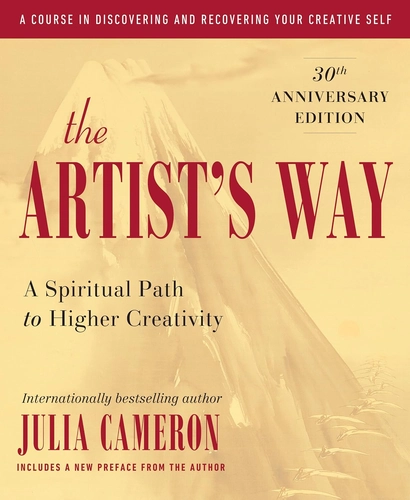
Cameron’s book is about creative recovery, which sounds abstract until you realize that most of us are creatively blocked in ways we do not even recognize. We have ideas we never share. Opinions we swallow. Art we never make. This book is a twelve-week program designed to unblock all of that.
The two core practices are morning pages and artist dates. Morning pages are three longhand pages written first thing, with no editing and no audience. They are not meant to be good. They are meant to clear the pipes. Artist dates are weekly solo excursions to feed your imagination. I was skeptical. Then I did them for a month and noticed something shift. I stopped editing myself before I even started.
What I love about this book is that it treats expression as a natural human capacity that gets buried, not a talent that only some people have. It does not teach you how to be creative. It removes the debris that was covering your creativity all along.
Why Start With the First One
The other two books are transformative, but they work on a longer timeline. Bird by Bird helps you write. The Artist’s Way helps you create. Both are twelve-week journeys, not overnight fixes.
Say It Right..Every Time. is the one you can use tomorrow. The next time you need to express something difficult, you do not need to complete a creative recovery program. You need a phrase. A pause. A way to say the thing without setting off a chain reaction. This book hands you that. It costs less than a workshop. And unlike a workshop, you will keep using it for years.