People believe they spend money for rational reasons. The price is right. The need is real. The value makes sense. This belief is almost entirely false. Studies consistently show that most purchases are emotional decisions dressed up in logical clothing. You do not buy the expensive jacket because it is better made. You buy it because of how you imagine you will feel wearing it. You do not order takeout because you are hungry. You order it because you are tired, bored, or lonely, and the delivery app is the fastest available comfort.
The gap between what we think drives our spending and what actually drives it is where most financial suffering lives. Closing that gap requires understanding the hidden forces at work every time you open your wallet. These three books explore those forces from different angles. One is practical and behavioral. One is evolutionary. One is deeply personal. Together they reveal why we spend the way we do, and what we can actually do about it.
Book One: From Debt to Wealth by Owen Pierce
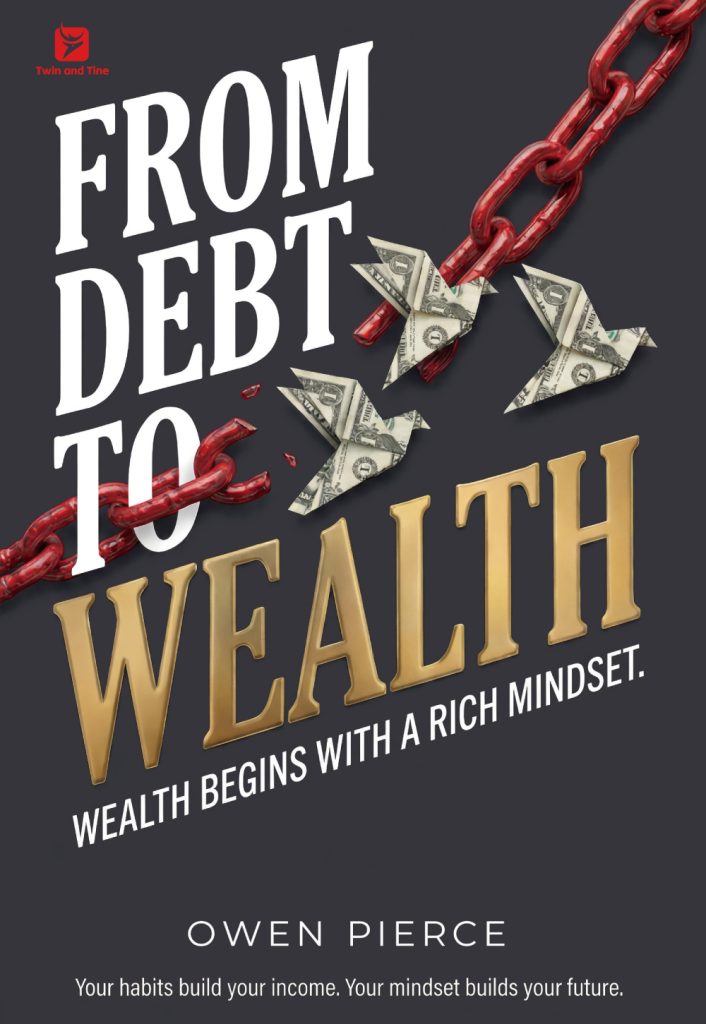
This book approaches the psychology of spending from a place most finance books ignore. It does not start with budgets or spreadsheets. It starts with a question: what are you really buying when you spend? Pierce argues that every purchase is an attempt to solve an emotional problem. Status anxiety. Fear of missing out. The need for comfort. The desire to feel successful. Once you understand the emotion underneath, the spending loses much of its power.
The chapter on luxury hit me hard. Pierce writes that luxury is often a display of money you do not have. That sentence made me think about every expensive thing I have ever bought to impress people who were not even paying attention. The book also explains why mindful spending is not about restriction. It is about alignment. When your spending matches your actual values, you stop feeling guilty because you stop wasting money on things you do not care about.
What I appreciate most is that this book does not shame you for past mistakes. It helps you see the patterns clearly, then gives you a practical framework to change them. The chapters on money habits and conscious spending are worth the price alone. This is the book I return to whenever I feel my spending drifting out of alignment with what actually matters to me.
Book Two: Predictably Irrational by Dan Ariely
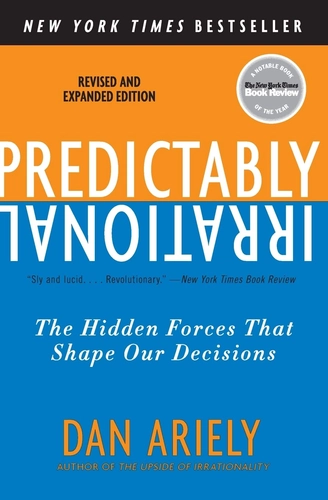
Ariely is a behavioral economist, and this book is a tour through all the ways our brains sabotage our financial decisions. The chapter on anchoring explains why seeing a higher price first makes everything else seem reasonable by comparison. The chapter on the cost of zero explains why free shipping makes us buy things we did not want. The chapter on social norms shows how money can actually ruin relationships.
What makes this book useful is that it names the tricks your brain plays so you can start noticing them in real time. I stopped falling for the classic decoy pricing trick after reading this. I started asking myself whether I would want the item at all if it were not on sale. Ariely writes with humor and clarity, and the experiments he describes are genuinely surprising. This is not a book about budgeting. It is a book about seeing your own irrationality clearly enough to make better choices.
Book Three: Spent: Sex, Evolution, and Consumer Behavior by Geoffrey Miller
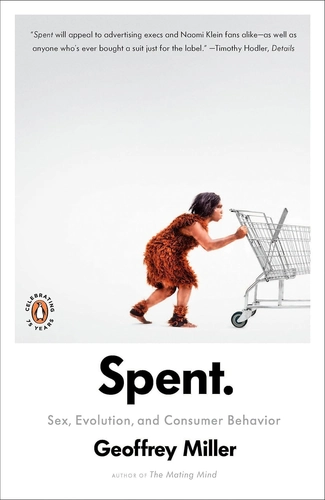
Miller is an evolutionary psychologist, and his argument is uncomfortable but compelling. He proposes that much of modern consumer behavior is driven by ancient evolutionary instincts. We buy things to signal traits that would have mattered for survival and mating: intelligence, creativity, status, generosity. The problem is that the signals no longer work the way they used to. Nobody is impressed by your new car in the way your brain hopes they will be.
The chapter on wastefulness and status was especially eye-opening. Miller argues that many purchases are less about the object and more about what the object says about us. Once I saw that, I started noticing how much of my own spending was performative. The book is dense and academic at times, but the insights are worth the effort. It changed how I think about advertising, branding, and my own desire to buy things that promise to make me someone I am not.
Why Start With the First One
The other two books are brilliant. Predictably Irrational will show you the cognitive biases behind your spending. Spent will explain the evolutionary programming underneath it all. But both are observational. They describe what is happening and why. They do not give you a path forward.
From Debt to Wealth does. It takes all of that psychological insight and translates it into a practical framework for changing your behavior. It does not just tell you that spending is emotional. It shows you how to identify the emotion and respond differently. It does not just explain why luxury purchases fail to deliver lasting happiness. It helps you redirect your money toward things that actually do.
If you have ever looked at your bank statement and felt genuinely confused about where your money went or why you bought half the things you did, this book will make sense of it. It costs less than one of those impulse purchases you forget about a week later. But unlike those purchases, this one might actually change how you spend for the rest of your life.