I remember staring at my reflection in the elevator mirror, trying to look warm and approachable before a big networking event. My mouth curved upward in what I thought was a pleasant grin. My eyes, though, looked terrified. They were wide, frozen, almost panicked. It gave me that “unsettling” look, and I cringed. How do I smile with my eyes?
The answer changed everything for me. It wasn’t about opening them wider. It was about letting them soften and narrow, letting the corners crinkle. It felt strange at first, but the difference in how people responded was immediate.
Quick Eye Smile Today
If you want to look warmer and more approachable, try these:
- Relax your forehead and eyebrows.
- Squint slightly, just a touch, like you are looking at something bright.
- Let your cheeks lift toward your eyes.
- Think of a memory that makes you genuinely happy.
- Hold eye contact for two seconds, then glance away.
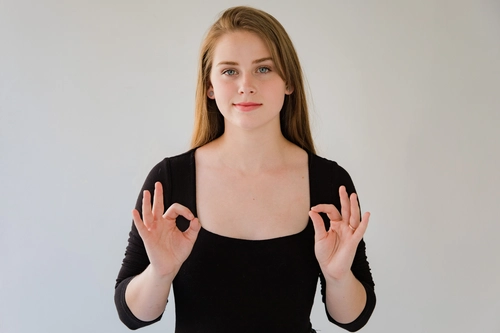
Why Does My Smile Look Fake When I Smile With My Eyes?
We all know the feeling. You are at a party, a work function, or a family dinner, and you plaster on a polite smile. Your mouth performs perfectly, but your face feels disconnected. Why does that happen?
Because your mouth is easy to control. Your eyes are not. The muscles around your eyes, specifically the orbicularis oculi, are mostly involuntary. They only fire when you feel real amusement or joy. That is why a forced smile looks flat. It lacks the squint, the crinkle at the corners, the little “crow’s feet” that signal authenticity.
I remember asking a photographer friend how he gets people to look natural in portraits. He said, “Forget the mouth. Focus on the eyes. If the eyes are dead, the photo is dead.” He told me to think of a private joke or a happy memory right before the shutter clicks. It worked. The eye crinkle, or the Duchenne smile as it is called in research, is the secret ingredient. Your eyes look friendly when they narrow slightly, creating small pillows under the lower lid.
How Do I Control My Eyes to Look Friendly and Approachable?
So, how do you control a muscle you cannot consciously flex? You trick it. You use your mind and your cheek muscles to pull the eyes along for the ride.
Here is the technique that worked for me. Instead of focusing on my eyes, I focus on my cheeks. I lift my cheekbones as high as I can. This action naturally pushes the lower eyelids up and creates that squint. It is the same motion as a full, genuine laugh. Try it in the mirror right now. Lift your cheeks without moving your mouth. See how your eyes change? They become smaller, warmer, and a little bit mischievous.
Another approach is the “squinch” method. This involves lowering your eyelids just a fraction, like you are looking at a soft light. Then, you add a slight smile with your mouth. The key is to not overdo it. If you squint too hard, you look suspicious or like you are in pain. The goal is a gentle narrowing, a soft focus.
Here is a quick practice routine that helps with looking more approachable:
| Step | Action | Feeling |
|---|---|---|
| 1 | Relax your jaw and forehead. | Let go of tension. |
| 2 | Think of a happy moment. | Recall a funny story. |
| 3 | Lift your cheeks gently. | Imagine smiling with your cheekbones. |
| 4 | Let your eyelids lower 10%. | Soften your gaze, don’t stare. |
| 5 | Look at the person’s eyes. | Then, briefly look at their left eye. |
The “Happy Place” Reconnection Practice for Genuine Eye Smiles
You cannot fake a Duchenne smile forever. People can tell. The research on facial expressions shows that a genuine smile involves a specific set of muscles that are hard to control voluntarily. So, the best tool is not a physical trick. It is a mental one.
I call it the “Happy Place” Reconnection Practice. Before I walk into a room or greet someone, I take a breath and run through this mental checklist. It takes about five seconds.
First, I ask myself, “What is one thing I love about this person or this moment?” It could be their laugh, their new haircut, or the fact that I am about to eat a really good sandwich. Then, I recall a specific, vivid memory. For me, it is the feeling of my kids jumping on me when I get home from a trip. That feeling of warmth and surprise is powerful. It automatically brings a genuine smile to my face.
When you use this practice, your eyes will naturally do the work. The corners will crinkle. The lower lids will lift. You will get that “twinkle” that people find so approachable. You are not forcing a smile. You are remembering what a smile feels like.
What If I Look Like I Am Squinting Too Much?
This is a common worry. You try the technique, and you feel like you are making a weird face. I felt the same way. The secret is to be subtle. The eye smile is not a full squint. It is a gentle lowering of the eyelid.
Think of it as looking at someone from across a room and recognizing them. You do not scream. You just soften your gaze and lift your brow slightly. That is the look you are going for. If you feel like you are overdoing it, you probably are. Dial it back by 50%. Check a mirror. Your eyes should look relaxed, not strained.

How Do I Smile With My Eyes in a Photo?
Cameras are tricky. The bright light makes you want to squint, which is the opposite of what you want. For photos, do not try to squint. Instead, try the “laugh” technique. Think of a funny memory right as the photo is taken. Do not just say “cheese.” Say something that makes you chuckle, like “gophers” or “pickles.”
You can also try looking just past the camera lens. This softens your focus and prevents that wide-eyed deer-in-the-headlights look. And remember, practice in the mirror. Take a selfie, laugh genuinely, and see what your eyes look like. That is your goal.
FAQ
Q: How do I smile with my eyes without looking unnerving?
A: The key is to avoid opening your eyes wide. Wide eyes with a big grin can look manic. Instead, let your cheeks do the work. Lift your cheekbones, which will naturally lower your upper eyelids and lift the lower ones. Think of a warm memory, and let your gaze soften. Less is always more.
Q: Can you learn to smile with your eyes if you are not a naturally happy person?
A: Yes, you can. It is a skill like any other. You are not trying to force happiness. You are practicing a physical movement. By lifting your cheeks and softening your gaze, you create the look of a genuine smile. Over time, the physical act can even influence your mood. It is a small, practical trick that anyone can learn.
Q: Is smiling with your eyes the same as a Duchenne smile?
A: Yes, essentially. The Duchenne smile is the term scientists use for a genuine smile that involves the muscles around the eyes. It is often called the “smize” in fashion. It is the difference between a polite, closed-mouth smile and a full, joyful one. The eye crinkle is the defining feature.
Q: How can I practice smiling with my eyes at home?
A: Stand in front of a mirror. Think of a genuinely happy memory. Watch what happens to your eyes. Notice the crinkle, the lift. Then try to recreate that look without the memory. Practice lifting your cheeks and softening your gaze. Do this for a few minutes each day until it feels natural.
Q: Does smiling with my eyes work in professional settings too?
A: Yes, absolutely. In fact, it works especially well in professional settings. A warm, genuine eye smile makes you appear more trustworthy, confident, and approachable. It can help in interviews, client meetings, and networking events. The key is to practice until it feels natural enough to do without thinking.
One Last Thing
The next time you are in front of a mirror, do not criticize your smile. Just look at your eyes. Think of a person you love. Watch the corners of your eyes soften and lift. That is the smile you want to share with the world. It is not about looking perfect. It is about looking human. And that is something we all can do.
References
- Ekman, P., & Friesen, W. V. (1982). Felt, false, and miserable smiles. Journal of Nonverbal Behavior, 6(4), 238–252.
- Gunnery, S. D., & Hall, J. A. (2014). The expression and perception of the Duchenne smile. Emotion Review, 6(4), 313–319.
- Harker, L., & Keltner, D. (2001). Expressions of positive emotion in women’s college yearbook pictures and their relationship to personality and life outcomes across adulthood. Journal of Personality and Social Psychology, 80(1), 112–124.