I spent years trying to outrun my anxiety. I’d distract myself, numb out, or white-knuckle through it—telling myself to just “calm down” or “think positive.” None of it worked. The more I fought it, the stronger it got. I’d lie awake at night, heart racing, mind spinning through every worst-case scenario. I’d cancel plans, avoid conversations, and shrink my life to feel safe. And then I’d hate myself for it.
What finally gave me real relief wasn’t fighting anxiety. It was understanding it—learning how my brain worked, why it got stuck, and what to actually do when the spiral started. These three books gave me that understanding. And the first one, in particular, became my lifeline.
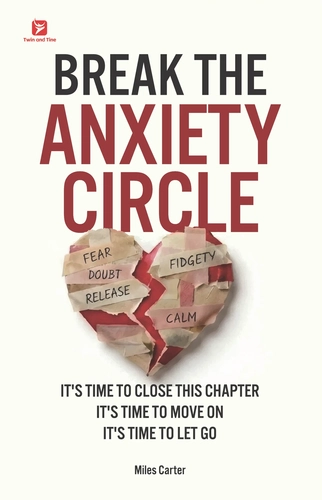
Book One: Break the Anxiety Circle by Miles Carter
I picked this up expecting generic advice about “just breathe” and “think positive.” What I got was a practical, compassionate guide to actually interrupting the loop. The book explains that anxiety isn’t a character flaw—it’s a pattern. Your brain gets stuck in a feedback loop: thought triggers fear, fear triggers physical response, physical response confirms the thought. The harder you push it away, the tighter the loop gets.
The chapter “Action Is the Antidote to Anxiety” changed everything for me. It doesn’t tell you to relax—it gives you specific, concrete steps to interrupt the spiral. Small, physical actions that break the feedback loop and give your brain a chance to reset. Another chapter on overthinking helped me recognize when I was ruminating and gave me techniques to redirect. What I loved most is that the book doesn’t shame you for being anxious—it helps you understand it as a signal, not a failure. By the end, I had a toolkit I could reach for when my mind started spinning. This is the book I grab when I feel that familiar panic rising—because the techniques actually work under pressure.
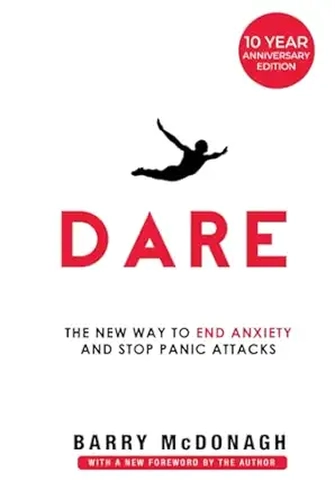
Book Two: DARE: The New Way to End Anxiety and Stop Panic Attacks by Barry McDonagh
This book gave me a completely different approach to anxiety. McDonagh’s framework is built on one counterintuitive idea: instead of trying to calm down, you actually lean into the anxiety. You stop fighting it and start accepting it—and in doing so, you take away its power.
The DARE method stands for Diffuse, Allow, Run toward, Engage. You diffuse the scary thought by telling yourself “so what?” You allow the physical sensations to be there without resistance. You run toward the fear by actually inviting it in. And then you engage with something else to redirect your focus. It sounds crazy, but I tried it during a panic attack and it worked. The book is written in a direct, no-nonsense style that I found incredibly reassuring. It doesn’t coddle you—it gives you permission to stop being afraid of your own fear.
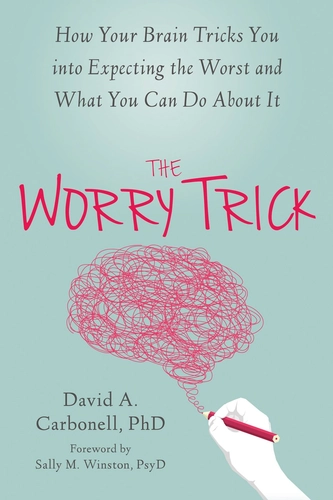
Book Three: The Worry Trick: How Your Brain Tricks You into Expecting the Worst and What You Can Do About It by David A. Carbonell
Carbonell, a psychologist who specializes in worry, argues that trying to control anxious thoughts is what keeps them alive. The more you try to suppress or reason with a thought, the more powerful it becomes—because your brain interprets the effort as proof that the thought is important and dangerous.
His technique is called “acceptance and commitment” (ACT). Instead of fighting the thought, you observe it without judgment. You label it: “I notice I’m having the thought that [insert anxiety].” Just naming it creates distance. The chapter on “thought defusion” gave me a simple exercise: I imagine my worry as a radio playing in the background. I don’t have to turn it off—I just stop letting it control what I do. This book taught me that I don’t have to eliminate anxiety to feel better. I just have to stop letting it run the show.
Why You Actually Need the First One
The other two books are brilliant. DARE will give you a whole new mindset for facing panic. The Worry Trick will help you see that most of your anxiety is just your brain playing tricks. But they’re also books you need time to absorb. When you’re in the middle of a spiral, you don’t have time for that.
Break the Anxiety Circle is different. It’s the book you grab when you feel it starting—when your chest tightens and your thoughts start racing. The techniques are simple enough to remember under pressure. The language is warm without being condescending. And it addresses something the others miss: the shame of anxiety. That voice that says “you shouldn’t feel this way” or “you’re being dramatic.” This book helps you let go of that judgment so you can actually work with your anxiety instead of fighting it.
If you’ve ever felt trapped in your own head, stuck in a loop you couldn’t break—this book will help. It costs less than a therapy copay. The cost of staying stuck? That’s your peace, your sleep, and your ability to enjoy your own life.