I used to be the person who said yes to everything. Yes to helping a friend move on my only day off. Yes to covering someone’s shift even though I was exhausted. Yes to loaning money I couldn’t afford to lose. Yes to plans I didn’t want to make. And every time I said yes when I meant no, I’d go home feeling resentful, drained, and quietly furious at myself for not having the guts to speak up.
The thing is, I wasn’t afraid of the word “no.” I was afraid of what came after it—the disappointment, the awkward silence, the possibility that my friend might like me less or think I was selfish. I’d convinced myself that being a good person meant always being available. But here’s what I eventually learned: saying yes when you mean no isn’t kindness. It’s a slow form of self-abandonment. And it doesn’t make you a better friend—it makes you a resentful one. These three books helped me unlearn that pattern and start setting boundaries without guilt.
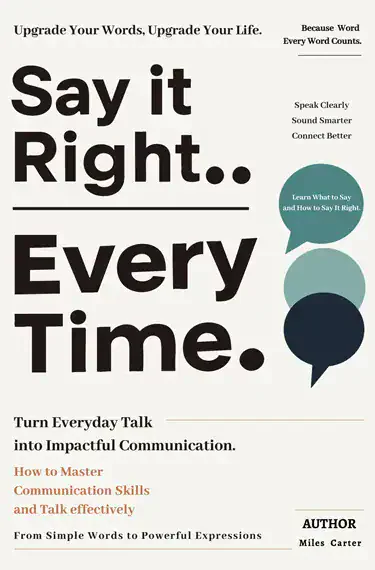
Book One: Say It Right..Every Time. by Miles Carter
I’ll be honest—when I first picked this up, I thought it was going to be another generic communication book. But the chapter on “Say No Without Feeling Guilty (or Guilting Others)” hit me like a truck. It starts by reframing the entire problem: saying no isn’t rejection. It’s simply a clarification of what you can and cannot offer at that moment. And the difference between a friendship-ruining no and a friendship-preserving no is entirely in how you say it.
The book teaches you a three-part structure that I now use constantly: acknowledge + state your boundary + offer an alternative (if appropriate). For example: “I really appreciate you thinking of me for this—I can’t take it on right now, but I’d love to catch up next week instead.” It sounds almost too simple, but having that script in my head changed everything. I stopped freezing up and stammering when a friend asked for something I couldn’t give. I also learned the “Echo Technique”—validating what the other person said before I respond—which softens the blow and makes people feel heard even when you’re saying no.
What I love most is that the book doesn’t just give you phrases. It walks you through why you’re scared to begin with—people-pleasing patterns, fear of conflict, low self-worth—and then gives you concrete tools to address those root causes. By the time I finished it, I felt like I finally had permission to protect my own energy. And surprisingly, my friendships didn’t suffer. If anything, they got better, because I stopped showing up with hidden resentment.
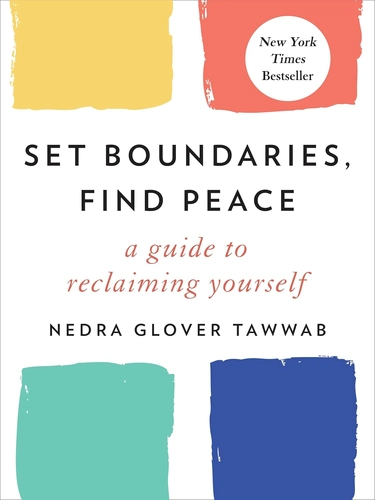
Book Two: Set Boundaries, Find Peace: A Guide to Reclaiming Yourself by Nedra Glover Tawwab
If Say It Right gave me the how, this book gave me the why. Nedra Tawwab is a therapist who specializes in boundaries, and she writes with such warmth and clarity that reading this felt like a therapy session I didn’t know I needed. She explains that boundaries aren’t walls we build to keep people out—they’re the guidelines that tell others how we want to be treated. And if we never communicate them, we can’t expect anyone to guess.
The chapter on “Boundaries with Friends” was especially eye-opening. Tawwab talks about the guilt we feel when we say no to people we love, and she gently reminds us that guilt doesn’t mean we’re doing something wrong—it means we’re doing something different. She also addresses the fear that saying no will end the friendship, and challenges you to ask: “If this person can’t accept my no, were they really respecting me in the first place?” That question alone shifted my entire perspective.
What I appreciated most is how practical this book is. Tawwab includes scripts, exercises, and reflection questions at the end of each chapter. She doesn’t just tell you to set boundaries—she shows you exactly what it looks like. Whether you’re dealing with a friend who always vents without asking about you, someone who borrows money and doesn’t pay it back, or a friend who pressures you to hang out when you need alone time, there’s a specific strategy waiting for you.
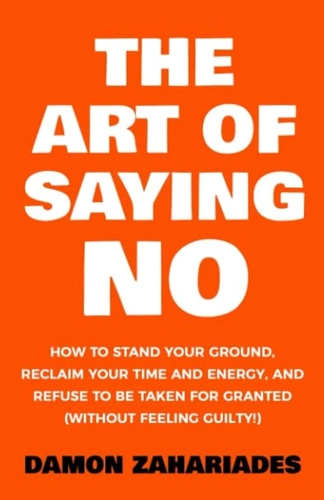
Book Three: The Art of Saying No: How to Stand Your Ground, Reclaim Your Time and Energy, and Refuse to Be Taken for Granted by Damon Zahariades
This one is for the people who want a direct, no-fluff approach. Zahariades is brutally honest about why we struggle to say no—and he doesn’t let you hide behind excuses. He breaks down the psychology of people-pleasing, the hidden costs of saying yes to everything, and the surprising truth that most people actually respect you more when you set clear boundaries.
One concept that stuck with me is the “cost-benefit analysis” of every yes. Zahariades encourages you to ask: “What am I sacrificing by saying yes? Is this really what I want?” He also addresses the common fear that saying no makes you a bad person, and counters it with a simple observation: good people disappoint others sometimes. That’s normal. What’s not healthy is sacrificing your own well-being to avoid disappointing people who wouldn’t do the same for you.
The book is packed with templates—how to say no to a favor, to a social event, to a request for money, to an emotional dump. It doesn’t overcomplicate things. It just gives you permission to prioritize yourself and provides the words to do it cleanly. After reading this, I finally stopped apologizing for having limits. And honestly? The friends who mattered stayed. The ones who didn’t? They were never really friends to begin with.
Why This One Book Stands Out (and Why You’ll Keep It Close)
Here’s the thing about the other two books: they’re excellent. They’ll give you the psychological framework and the permission you need. But they’re also dense. They ask you to do inner work, reflect on childhood patterns, and process your emotions. That’s valuable—but when a friend is standing in front of you right now asking for a favor, you don’t have time for a therapy session. You need words. You need a script. You need to know exactly what to say without stumbling.
That’s why Say It Right..Every Time. lives on my desk, not my shelf.
It’s the book I grab five minutes before a tough conversation. It’s the book I’ve dog-eared and highlighted and returned to again and again because the scripts actually work in real life—not just in theory. It doesn’t just tell you why boundaries matter; it hands you the exact sentences to say, the tone to use, and the common pitfalls to avoid. The before-and-after examples alone are worth the price—you’ll see yourself in the “before” and immediately want to become the “after.”
And here’s something the other books don’t give you: practice. Each chapter includes real-world case studies that walk you through exactly how the conversation plays out—what to say, what not to say, and how to handle pushback. It’s like having a communication coach sitting next to you, whispering the right words in your ear.
If you’re tired of feeling resentful, overcommitted, and secretly angry at yourself for not speaking up—this book is for you. It won’t just teach you to say no. It’ll teach you to say it with grace, confidence, and zero guilt. And you’ll find yourself reaching for it again and again, because every relationship in your life—friendships, family, work—gets better when you finally learn to protect your own energy.
The cost of this book is less than one coffee and a pastry. The cost of staying silent? That’s your time, your peace, and your self-respect. I know which one I’d rather invest in.