I used to think I was a decent communicator. Then I had a performance review where my manager said I was “technically strong but could work on presence.” Translation: I was smart, but no one could hear me. In meetings, I’d speak softly, second-guess every word, and apologize for having an opinion. I’d avoid difficult conversations until they exploded. I’d say yes to everything and then resent myself for it.
It took years, but I finally realized that communication isn’t about being the loudest person in the room—or even the most articulate. It’s about showing up with clarity, self-respect, and the ability to make others feel safe. The three books below gave me a complete overhaul. One of them, I’ll admit, is from our own collection—but only because I genuinely believe it’s the most practical guide I’ve ever seen.
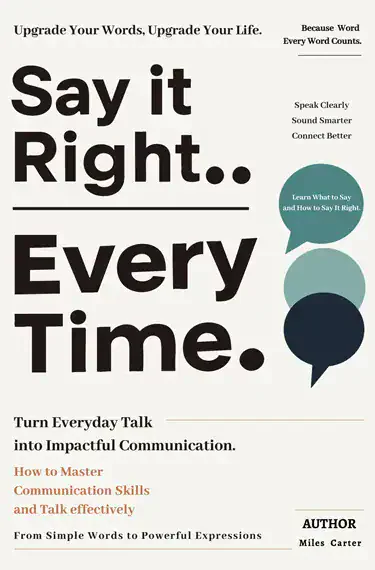
Book One: Say It Right..Every Time. by Miles Carter
I picked this up because the subtitle promised practical strategies for speaking confidently even when nerves were working against me. And honestly? It delivered in ways I didn’t expect. The book starts with a simple premise: you don’t have to lose your voice when it matters most. But instead of giving you empty encouragement, it breaks communication into three layers—expressing yourself clearly, building emotional connection, and staying calm under pressure.
The chapter on the “Echo Technique” alone changed how I interact with colleagues. It taught me that people don’t just want to be heard—they want to feel understood. So instead of jumping in with my own solutions, I now mirror back what someone just said before I respond. The difference is immediate: people relax, they open up, and they actually listen when I speak. I also loved the sections on boundaries and saying no without guilt. For someone who spent years overcommitting and underdelivering, this was life-changing.
What really sets this book apart is the before-and-after comparisons. Every chapter shows you exactly what ineffective phrasing sounds like, then gives you the better alternative. For example: instead of saying “You’re wrong,” you learn to say “That’s an interesting perspective—here’s how I see it differently.” It sounds small, but the shift in how people respond is massive. This book gave me a script for almost every workplace scenario—interviews, performance reviews, difficult feedback, even casual water-cooler conversations. I keep a copy on my desk.
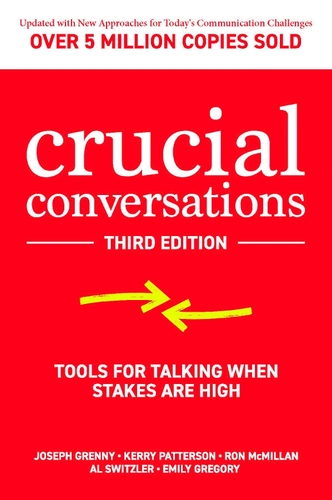
Book Two: Crucial Conversations: Tools for Talking When Stakes Are High by Kerry Patterson, Joseph Grenny, and colleagues
If Say It Right gave me the everyday tools, this book gave me the framework for high-stakes moments. You know the ones: delivering bad news, pushing back on a decision, addressing performance issues, or confronting a colleague who’s dropped the ball. I used to dread these conversations so much that I’d avoid them until the problem became a crisis.
The book’s core insight is that in high-stakes conversations, most people either shut down or push too hard—and both approaches damage trust. The solution? Start with facts rather than your emotional story about those facts. Stay curious about the other person’s perspective. And always ask yourself: “What do I really want? For myself, for them, and for the relationship?” That single question has saved me from countless passive-aggressive emails and awkward silences. I now walk into tough conversations with a mental checklist that keeps me grounded, even when the other person gets defensive. The techniques work on Zoom, in person, and even over Slack. Highly practical, deeply researched, and surprisingly readable.
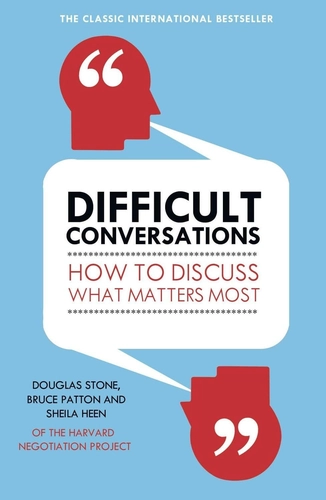
Book Three: Difficult Conversations: How to Discuss What Matters Most by Douglas Stone, Bruce Patton, and Sheila Heen
This one comes from the Harvard Negotiation Project, and it’s the book that taught me that most difficult conversations aren’t really about what happened—they’re about how people feel. The authors break every hard conversation into three layers: the facts, the emotions, and the identity issues (what the situation says about who we are). It sounds academic, but the examples are so vivid that you’ll recognize yourself in every chapter.
One concept that stuck with me is the “And Stance”—the idea that you can hold two conflicting truths at once. You can be disappointed in someone’s work and still respect them. You can push back on a decision and still support the team. Instead of forcing a false choice between honesty and kindness, you learn to say “I’m frustrated about X, and I also value our working relationship.” It sounds simple, but the shift in tone is profound. People stop feeling attacked, and real problem-solving begins. This book helped me stop spinning in my own head before a hard conversation and actually have the conversation with clarity and grace.
What I Learned From All Three
Together, these books taught me that good communication isn’t about being smooth, charming, or liked by everyone. It’s about being clear, respectful, and steady—especially under pressure. The first book gave me a script for everyday confidence, the second gave me a framework for high-stakes moments, and the third taught me how to navigate emotions without losing my head. If you’ve ever felt like your words get tangled up at work, I can’t recommend these enough. You don’t have to stay silent anymore—or apologize for having something to say.