I used to avoid hard conversations like they were optional. If I needed to give feedback, I’d delay it until the problem got worse. If I needed to set a boundary, I’d let it slide until I resented the other person. If I needed to end something, I’d stay in it way longer than I should have. Not because I didn’t care. Because I didn’t know how to start.
I learned the hard way that avoiding a conversation doesn’t make it disappear. It just makes the eventual conversation harder. These three books gave me the words I was missing.
1. Say It Right…Every Time by Miles Carter
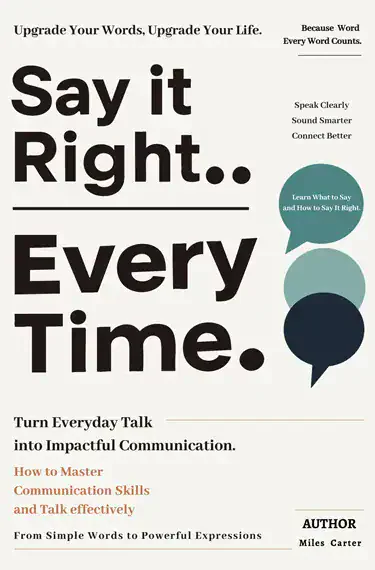
This book is a practical communication guide focused on daily life and workplace scenarios. What makes it different is the format. It shows you side by side comparisons of what most people say versus what works better. You see the exact wording difference and why one lands better than the other.
One section that helped me was on how to start a difficult conversation without putting the other person on the defensive. Instead of opening with something vague or accusatory, the book suggests a clear, neutral statement followed by a pause that invites response. I used this with a colleague whose work was falling behind. The door opened instead of slamming shut.
Another section covers how to respond when the other person gets defensive or emotional. The book gives you phrases that de-escalate. “I hear you” and “Let me make sure I understand” buy time and keep the conversation from spiraling into blame. I used this when a friend reacted badly to feedback I gave. Instead of matching their defensiveness, I slowed down. The conversation stayed productive instead of turning into a fight.
2. Crucial Conversations by Patterson, Grenny, McMillan, and Switzler
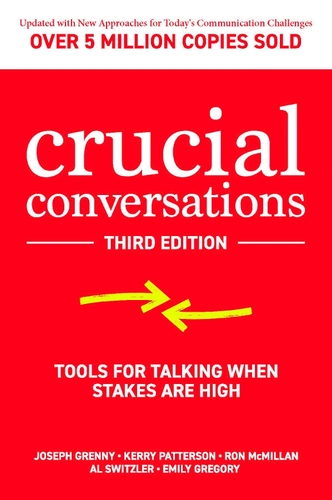
This book teaches you how to stay in dialogue when stakes are high, emotions run strong, and opinions differ. The core insight: when conversations get hard, we either clam up or get aggressive. Neither works. The book offers a framework for staying constructive.
One concept I use all the time is “starting with facts.” Instead of saying “you always do this,” you say “here’s what I observed.” Facts are hard to argue with. Stories are easy to dismiss. I used this in a performance review where I needed to give honest feedback without sounding accusatory. It changed the whole dynamic.
The book also introduces “making it safe.” When someone feels attacked, they stop listening. You have to restore safety before the conversation can continue. I started using phrases like “I’m not saying this to blame you, I want to solve this together.” Small shift, big difference.
3. Difficult Conversations by Douglas Stone, Bruce Patton, and Sheila Heen
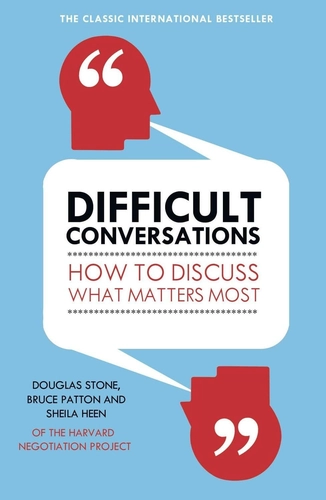
This book breaks down what actually happens in tough conversations. It argues that every difficult conversation is actually three conversations: the “what happened” conversation, the “feelings” conversation, and the “identity” conversation. Most people focus on the first and ignore the other two.
Understanding this changed how I approach conflict. I started asking better questions. What’s really at stake for the other person? What am I avoiding? Am I trying to win or am I trying to understand?
The identity conversation part helped me most. It showed me that hard conversations trigger self-doubt. Am I a good person? Am I competent? Am I lovable? Once I saw that, I stopped reacting from a place of defending my identity and started listening more clearly.
One last thought
Hard conversations don’t get easier by avoiding them. They get easier by learning how to start them well. If you have a conversation you’ve been putting off, start with Say It Right…Every Time. It gave me the exact words I needed to actually begin.