I used to think influence was about being loud, or smart, or having the right title. I’d watch people who seemed to naturally get what they wanted, and I’d wonder what they had that I didn’t. It took me a long time to realize that influence isn’t about being more aggressive. It’s about understanding the mechanisms that already exist.
These three books helped me understand how to build influence without losing myself.
1. Awakening to Human Nature by Owen Pierce
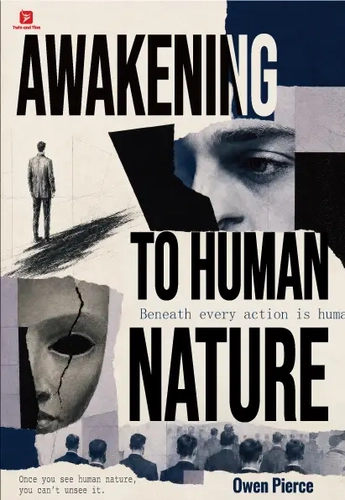
This book is a practical guide to understanding the hidden rules that govern human behavior. It’s organized around seven core areas: cognitive laws, emotional patterns, desire and interest rules, social dynamics, workplace realities, manipulation tactics, and survival wisdom. Each section breaks down a different driver of how people think, feel, and act.
The section on social dynamics helped me see why some people naturally command attention while others get overlooked. It explains that influence isn’t about having the best argument—it’s about understanding the unspoken interests and emotional states that drive people’s decisions. Another part that stuck with me was the material on how self-deception works. Most people don’t lie to others intentionally. They lie to themselves first, rewriting situations to protect their self-image. That’s why direct confrontation rarely changes minds. Understanding this helped me stop trying to win arguments with pure logic and start understanding what the other person actually needed to hear.
2. Influence: The Psychology of Persuasion by Robert Cialdini
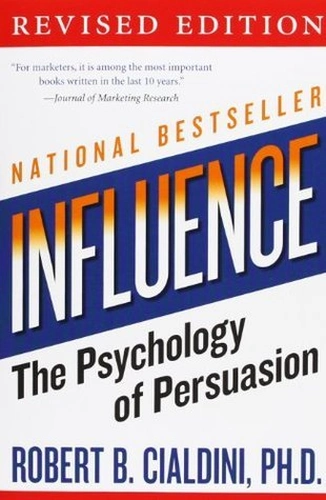
Cialdini breaks down six principles that drive human behavior: reciprocity, scarcity, authority, consistency, liking, and social proof. What made this book valuable wasn’t just the principles themselves, but the understanding that these are automatic. They happen beneath awareness.
I started applying these principles in small ways. I’d offer help before asking for something. I’d phrase requests in ways that aligned with someone’s stated values. People stopped seeing me as just another coworker and started seeing me as someone who understood them. That made a difference. The book also made me more aware of how others were using these principles on me. Once I could see it, I could decide whether to go along or not.
The chapter on scarcity stuck with me. When something feels limited, our brains stop analyzing and start reacting. I started noticing when urgency was manufactured to bypass my judgment and when it was real. That awareness helped me make better decisions under pressure.
3. Never Split the Difference by Chris Voss
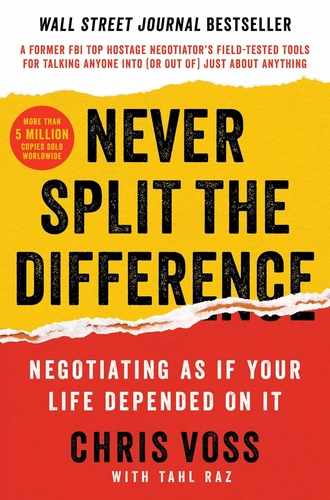
Voss is a former FBI hostage negotiator. This book is about negotiation, but it’s also about influence. He teaches you how to read people under pressure and how to guide conversations toward outcomes that work for everyone.
One technique I still use is mirroring. Repeating the last few words someone says makes them elaborate. I tried this in a tense work conversation and watched the other person open up in ways they normally wouldn’t. It taught me that influence is often about creating space for people to feel heard. That single insight changed how I approach difficult conversations.
Voss also talks about the power of “tactical empathy”—understanding the other person’s perspective and showing them you understand it, not to agree with it, but to build trust. Using this has changed how I navigate workplace tensions and personal conflicts.
One last thought
Influence isn’t about power. It’s about connection. It’s about understanding what moves people and speaking to it. If you’ve ever felt like your voice doesn’t carry as far as you’d like, start with Awakening to Human Nature. It gave me a framework for understanding the people I was trying to reach.