You have probably had this experience. Someone says one thing, but you sense something else underneath. You cannot explain why. You just feel it.
Most of us go through life like this. We interact with people every day, but we have no framework for understanding what is really happening beneath the surface.
The truth is, people rarely tell you why they are actually doing something. Not because they are trying to deceive you. Usually, they do not know themselves. Sometimes there is more underneath than the reason we give on the surface. It might be fear of losing status, uncertainty about change, or simply the need for security.
If you have ever found yourself confused by why someone did what they did—or confused by your own choices—here are three books that helped me make sense of it.
Quick Comparison
| Book | Best For | Focus |
|---|---|---|
| Awakening to Human Nature | Reading people in daily life | Understanding what people are really communicating |
| Influence: The Psychology of Persuasion | Understanding persuasion and compliance | How social forces shape our decisions |
| Predictably Irrational | Understanding yourself | Why your own choices often do not make sense |
1. Awakening to Human Nature by Owen Pierce
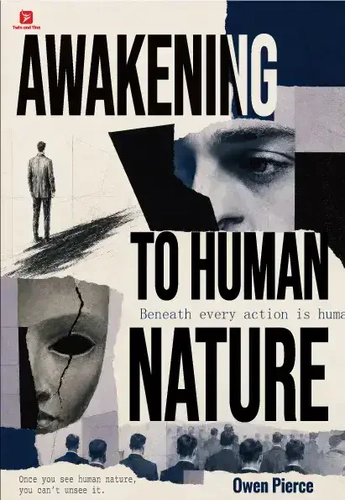
You walk away from a conversation feeling unsettled but cannot explain why. You feel like you missed something obvious. Someone’s words and behavior do not quite match, and you are not sure which one to trust.
Pierce gives you a way to name what you are already sensing. He is not teaching you to read minds. He is teaching you to pay attention to what is already there—the small signals that can give you clues about what someone may be feeling, the patterns that show up when someone is holding back, the moments when what is being said and what is actually happening diverge.
What I found most useful is the shift in how I listen. Most of us listen to words. Pierce trains you to listen to the space between the words. The hesitation. The shift in tone. The moment when someone says “nothing is wrong” but everything about how they say it says otherwise. People often have patterns in how they communicate. When those patterns change, it gives you something to pay attention to.
If you want to make sense of the person in front of you right now, this is where to start.
2. Influence: The Psychology of Persuasion by Robert Cialdini
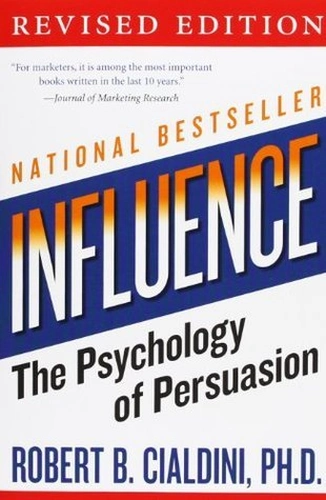
Main focus: How social forces and unconscious triggers drive our compliance.
We like to think we make decisions independently. Cialdini shows that we are heavily influenced by automatic responses to cues like reciprocity, scarcity, social proof, authority, and liking. He explains why we say yes when we don’t mean to, and how subtle shifts in framing can change our behavior.
What makes this book so useful is that it doesn’t just describe these principles—it gives you real-world examples and experiments that prove how powerful they are. You’ll recognise them everywhere once you know them: the free sample that makes you feel obliged to buy, the limited-time offer that creates urgency, the expert opinion that overrides your own judgment.
Understanding these hidden levers helps you see why people do what they do—and why you often fall for the same tricks. Cialdini is not cynical; he simply wants you to be aware of the forces that shape your choices, so you can decide whether to go along or push back.
This is the book for you if: you want to understand the hidden social pressures that drive decisions, and why even smart people get persuaded against their better judgment.
3. Predictably Irrational by Dan Ariely
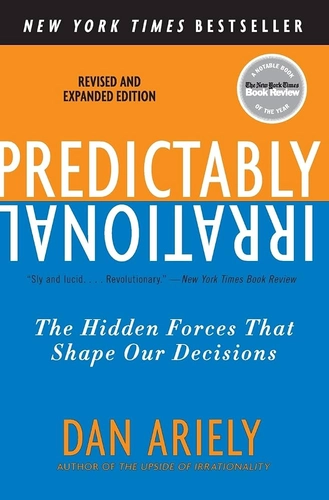
Most of us believe we make decisions rationally. We weigh options, consider pros and cons, and choose the best one. Ariely argues that this is not how it works at all.
He runs experiments. He shows you how the word “free” makes you behave irrationally. He shows you why you overvalue things you already own. He shows you why you buy things you do not need because you saw them on sale. The data is convincing. The examples are memorable. And the implications are uncomfortable.
What I found useful is the awareness it gave me. You start noticing when your own brain is taking shortcuts. You stop trusting your immediate reactions. You start asking: why do I actually want this? Why am I making this choice? The answer is often not what you expect.
Final Takeaway
If you want to understand the person in front of you right now, start with Pierce.
If you want to understand the hidden social pressures that shape behavior, read Cialdini.
If you want to see through your own irrational patterns, pick up Ariely.
For most people, the hardest part of understanding others is not knowing psychology theory. It is learning how to notice what is happening in everyday interactions. That is exactly where Pierce begins.