I remember the exact moment I realized I had a problem with money. It was not when I checked my bank balance and saw a number I did not recognize. It was the moment I stopped checking it altogether. I would look at my phone, see the banking app icon, and scroll past it. I knew there was nothing good waiting for me in there, and I did not want to feel that sick feeling again.
For years, I thought I was the only one. Everyone around me seemed to have it together. They talked about savings accounts and investments. I was just trying to make it to the end of the month without borrowing from next month’s paycheck.
It took me a long time to realize that being in debt is not a character flaw. It is a cycle. And cycles can be broken. The three books below helped me break mine. Each one came at a different stage, and each one gave me something I desperately needed to hear.
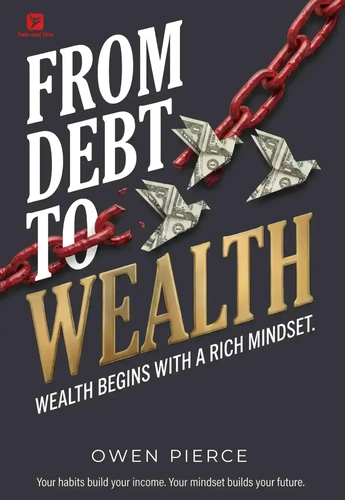
From Debt to Wealth by Owen Pierce
I spent a long time thinking I just lacked willpower. I would set a budget, stick to it for a week, then blow it. I would tell myself I would start saving next month, and next month would come and I would fail again. I thought the problem was me.
This book was the first one that told me something different. The problem was not my willpower. It was the rules I had been playing by. I had been trying to manage money like someone who already had it, not someone who was still figuring out the basics.
Pierce starts with a question that most finance books avoid: why does your income never seem to be enough? The answer is not that you are bad with money. It is that you have been running on a treadmill that keeps speeding up. You work harder, you earn a little more, but your expenses grow right along with it. You buy things to feel better and end up deeper in the hole.
The book is a complete reset. Not a budget. Not a spreadsheet. A rewrite of how I thought about money at a basic level. I learned how to break the paycheck-to-paycheck cycle. I learned how to pay down debt without feeling like I was punishing myself. I learned how to build savings when I had never been able to keep them.
What I loved most is that the book did not assume I already had savings. It assumed I was stuck. And it gave me a way out.
If you are tired of wondering where your money went and you need a real path out, this book delivers exactly that.
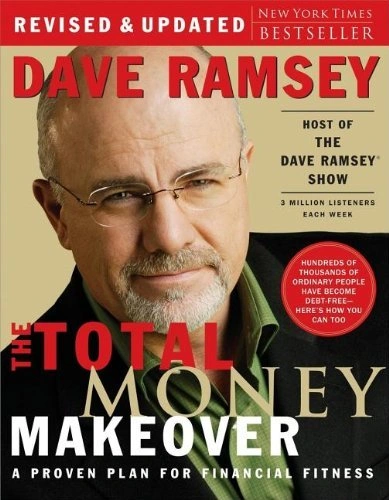
The Total Money Makeover by Dave Ramsey
Ramsey is the most well-known voice in the debt-free space for a reason. His approach is strict, simple, and built for people who are struggling.
The centerpiece is the “debt snowball.” You list all your debts from smallest to largest. You pay minimums on everything except the smallest one. You throw every extra dollar at that one until it is gone. Then you move to the next. The wins start small, but they build momentum. By the time you get to the bigger debts, you have a streak of wins behind you. You believe you can do it because you have already done it.
Ramsey also pushes a strict budget and a starter emergency fund of $1,000. The goal is not to get rich overnight. The goal is to get your head above water. To stop the panic. To make it so you can breathe again.
What makes Ramsey particularly useful for people in debt is the low barrier to entry. You do not need savings to start. You do not need to invest. You just need a list of debts and a commitment to paying them off one at a time. The system is repetitive and requires discipline, but it works.
If you are drowning in debt and do not know where to start, this book gives you a plan you can execute today. It is not subtle. But sometimes subtle is not what you need.
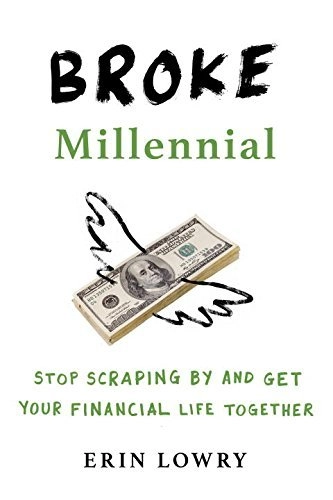
Broke Millennial by Erin Lowry
Debt is not just a number on a screen. It is also the awkward conversations you avoid. How do you tell a friend you cannot afford to go out to dinner? How do you ask your parents for help without feeling like a failure? How do you handle money in a relationship when you are the one who has less?
Lowry writes for people who are managing debt and all the awkwardness that comes with it. This book is not a step-by-step debt repayment plan. It is a book about the stuff no one else talks about.
She covers everything from opening a bank account to negotiating your salary to talking about money with friends and family. There is a whole chapter on how to have the “I cannot afford this” conversation without dying of embarrassment. Another on how to handle money in relationships. Another on what to do when your parents still see you as a child who needs rescuing.
What stands out is Lowry’s ability to normalize the struggle. She gives you permission to talk about money even when you do not have much of it. For someone who feels alone in their financial stress, this book is a relief.
If you feel embarrassed or overwhelmed by your financial situation, this book will make you feel less alone and more capable.
These three books met me at different stages. Pierce met me when I was stuck and confused, when I needed someone to tell me the problem was not me. Ramsey met me when I needed a strict, clear system to follow. Lowry met me when I needed permission to talk about money without shame.
If you are still figuring out how to stop the cycle, start with Pierce. If you need a clear step-by-step system, pick up Ramsey. If you feel alone and embarrassed, Lowry will make you feel like you are not the only one.
The only thing that matters is that you start somewhere.