You know the feeling. You have something to say in a meeting, but you wait for someone else to say it first. You have an idea, but you talk yourself out of it before anyone else has a chance. You walk away from conversations replaying what you said, wondering if you sounded as unsure as you felt.
Confidence is not about never feeling nervous. It is about not letting that nervousness make your decisions for you. The problem is that most advice on confidence tells you to “just believe in yourself” without giving you anything concrete to work with.
If you are looking for books that will actually help you build confidence, here are three of the best. They cover everything from practical language patterns to action-based psychology to the deeper work of vulnerability and self-acceptance. Each one approaches the problem from a different angle, so you can find the one that fits where you are right now.
Best Books For Speaking With Confidence In The Moment
1. Say It Right Every Time by Miles Carter
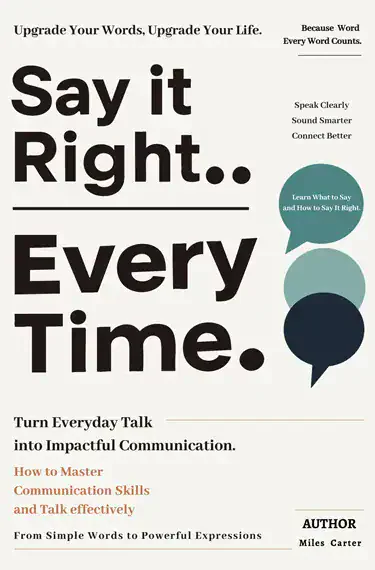
You have good ideas. You understand the material. But when the pressure hits, your words come out wrong. Or they do not come out at all. You sound uncertain when you meant to sound firm. You ramble when you meant to be concise. You know what you want to say, but you cannot seem to say it clearly when it matters.
Miles Carter wrote this book for exactly that problem. His approach is practical and immediate. He does not tell you to “just be confident.” He gives you language patterns that work even when your nerves are working against you. The book is built around before-and-after comparisons that show you how the same idea lands completely differently depending on how you phrase it. One version sounds uncertain. The other sounds grounded. One version invites pushback. The other invites collaboration.
The book covers specific scenarios: job interviews, salary negotiations, difficult conversations, team meetings. It teaches you to build a quick mental filter before you speak, so you stop saying things that undermine your own credibility. It does not ask you to feel confident. It asks you to say what a confident person would say, and let the feeling catch up.
The most useful insight is that confidence in conversation often comes down to a few small shifts in phrasing. You do not need to become a different person. You just need to change a few words.
What you will learn from ‘Say It Right Every Time’:
- How to speak clearly and confidently when you are nervous
- The difference between phrasing that sounds uncertain and phrasing that sounds grounded
- How to build a quick mental filter before you speak
- Practical language patterns for interviews, negotiations, and difficult conversations
If you have good ideas but struggle to express them clearly under pressure, this book gives you language you can use immediately.
Best Books For Building Confidence Through Action
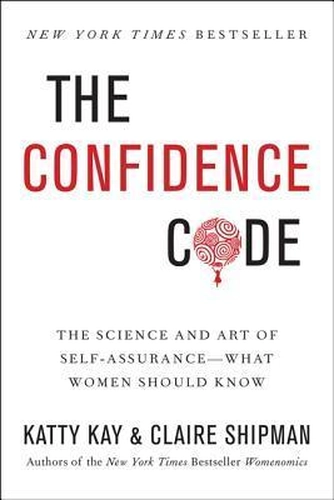
2. The Confidence Code by Katty Kay and Claire Shipman
Kay and Shipman are journalists, not psychologists, which gives this book a different texture than most books on confidence. They approached the topic with a reporter’s curiosity, interviewing researchers, analyzing studies, and talking to hundreds of women about their experiences with confidence. What they found is that confidence is not a personality trait you are born with. It is a capacity you build through action.
The core argument is that most people have the relationship backwards. They think confidence comes first, and action follows. Kay and Shipman argue the opposite: action comes first, and confidence follows. You do not wait until you feel ready. You take the step, and the feeling of readiness catches up afterward. This is not wishful thinking. It is grounded in neuroscience, specifically in how the brain rewires itself through repetition and risk-taking.
The book is full of specific, research-backed advice on how to take that first step even when you do not feel ready. How to tolerate the discomfort of uncertainty. How to reframe failure as data rather than verdict. How to stop waiting for permission to speak, act, or try.
Kay and Shipman write primarily for women, and much of the research is focused on the specific confidence gap that women face in professional settings. But the principles apply to anyone who has ever waited too long to act because they did not feel ready.
What you will learn from ‘The Confidence Code’:
- Why action creates confidence, not the other way around
- How to tolerate the discomfort of uncertainty
- How to reframe failure as data rather than a verdict
- Research-backed strategies for taking action before you feel ready
If you tend to wait until you feel 100% ready before taking action, this book gives you the research-backed push you need to start before you are ready.
Best Books For Deepening Confidence From The Inside Out
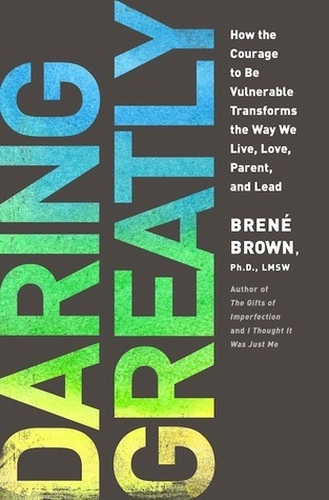
3. Daring Greatly by Brené Brown
Brené Brown spent years researching shame and vulnerability before she became a household name, and that background shows in this book. Where other books on confidence talk about action and language, Brown talks about the fear underneath the fear. The fear that if people really see you, they will not like what they see.
Brown argues that what we call a lack of confidence is often actually a fear of vulnerability. We hold back because we are afraid of being judged. We stay quiet because we are afraid of sounding foolish. We do not try because we are afraid of failing. And the more we hold back, the more we reinforce the belief that we cannot handle the exposure.
The book takes its title from a Theodore Roosevelt speech about the person in the arena, and the central argument is that showing up imperfectly is better than not showing up at all. Brown makes a case for courage that is not about being fearless, but about being willing to be seen even when you are afraid. She draws on her own research, which is qualitative and built on stories rather than controlled studies, and she writes with a warmth that makes the ideas feel personal rather than abstract.
The book is not a quick fix. It asks you to sit with uncomfortable feelings and examine the stories you tell yourself about why you are not enough. But for anyone who has tried all the techniques and still feels stuck, this is where the deeper work lives.
What you will learn from ‘Daring Greatly’:
- The connection between vulnerability and real confidence
- How fear of judgment holds you back more than lack of skill
- Why showing up imperfectly is better than not showing up at all
- How to examine the stories you tell yourself about why you are not enough
If you have tried all the external solutions and still feel like something is missing, this book points to the deeper work of accepting yourself as you are.
Frequently Asked Questions
What if my main struggle is freezing up in conversations—which book should I read?
If your primary issue is that you know what you want to say but cannot get it out clearly when it matters, start with Say It Right Every Time. It gives you practical language patterns you can use immediately, even when your nerves are working against you. The other two books address different layers of confidence, but Carter’s book is the most direct solution for speaking under pressure.
Can reading a book actually build confidence, or is it just theory?
Reading alone will not make you confident. Books give you frameworks, language, and a new way of seeing the problem. But confidence is built through repetition and action. You have to practice what you learn. The value of these books is that they give you something real to practice, not just vague advice to “believe in yourself.” Read one, then try one small thing. Confidence follows action, not the other way around.
What if I have read confidence books before and they did not work?
That is more common than you think. Many confidence books focus only on the surface—positive thinking, affirmations, power poses. If those did not work for you, the issue may be deeper. Each of these books addresses a different layer of the problem. Carter gives you the words. Kay and Shipman give you the action-based framework. Brown goes to the emotional root. The right book depends on which layer you are actually stuck at.