My brain has a favorite hobby: replaying conversations from three years ago and convincing me I said something wrong. It also loves to take a tiny worry and spin it into a full-blown disaster movie—complete with a soundtrack of worst-case scenarios. I’d lie awake at 3 AM, running through every possible outcome of a situation that hadn’t even happened yet, and then hate myself for not being able to sleep.
I tried everything. I’d tell myself to “just stop thinking about it.” I’d distract myself with shows, scrolling, anything. Nothing worked. The more I tried to control my thoughts, the more they controlled me. What finally helped wasn’t fighting my brain—it was understanding why it does this and what to actually do about it. These three books gave me real relief.
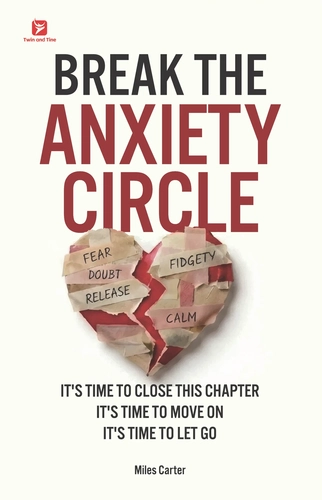
Book One: Break the Anxiety Circle by Miles Carter
This book made me realize that overthinking isn’t a sign of being “broken”—it’s a sign that my brain got stuck in a feedback loop. A thought triggers anxiety, anxiety triggers a physical response (racing heart, tight chest), and that physical response confirms the thought. Round and round it goes. The harder I push, the tighter the loop gets.
What I loved is that this book doesn’t tell you to “just relax.” It gives you concrete steps to interrupt the spiral in the moment. The chapter “Action Is the Antidote to Anxiety” taught me to shift my focus to small, physical actions when my mind starts spinning—something tangible that breaks the feedback loop. Another chapter helped me recognize when I’m ruminating (which is most of the time) and gave me techniques to redirect without fighting my own brain. By the end, I had a toolkit I could actually use when the thoughts started looping. This is the book I grab at 3 AM when my brain won’t shut up—because the techniques actually work under pressure.
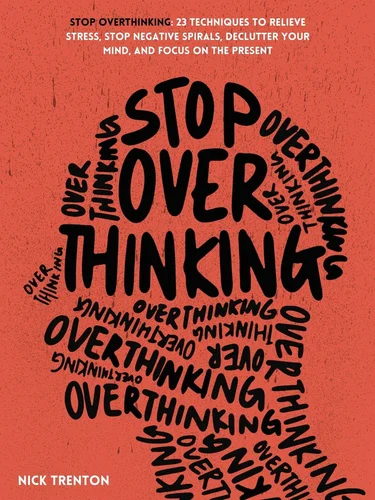
Book Two: Stop Overthinking: 23 Techniques to Relieve Stress, Stop Negative Spirals, Declutter Your Mind, and Focus on the Present by Nick Trenton
This one is exactly what the title promises—no fluff, just techniques. Trenton breaks down overthinking into two types: rumination (replaying the past) and worry (catastrophizing the future). Both are useless, but understanding which one I’m doing helped me choose the right tool to stop it.
The book is packed with practical exercises. One that stuck with me is the “thought stopping” technique—literally saying “stop” out loud when you catch yourself spiraling. It sounds simple, but it interrupts the pattern. Another chapter on “cognitive distancing” taught me to observe my thoughts like a scientist, not a victim. Instead of “I’m going to fail,” I’d say “I notice I’m having the thought that I’m going to fail.” The distance changes everything. This book is full of quick, actionable strategies I could use immediately—not just theories to absorb.
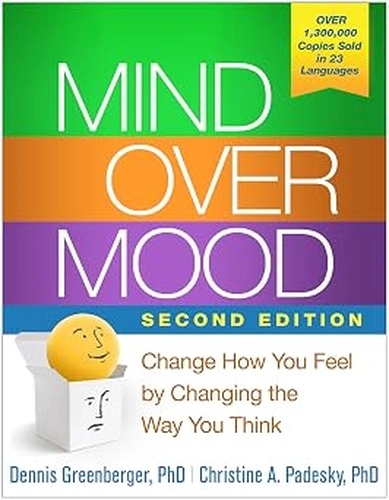
Book Three: Mind Over Mood: Change How You Feel by Changing the Way You Think by Dennis Greenberger and Christine A. Padesky
This is a classic cognitive behavioral therapy (CBT) workbook that’s been helping people for decades. It’s based on a simple insight: thoughts create feelings, and feelings create actions. If you want to feel better, you have to change how you think—but you need a system to do it.
The book walks you through identifying your automatic negative thoughts, examining the evidence for and against them, and creating more balanced alternatives. It’s structured like a workbook, so you’re doing exercises as you read. I learned to catch the distortions in my thinking: the catastrophizing, the mind-reading, the all-or-nothing patterns. The exercises feel like mental push-ups—they strengthen your brain’s ability to see things clearly. This book gave me a framework I still use, and it helped me understand that my thoughts aren’t facts. They’re just thoughts.
Why You Actually Need the First One
The other two books are excellent. Trenton’s book will give you quick techniques. Greenberger and Padesky will give you a deep framework. But they’re both books you need time to absorb. When you’re lying awake at 3 AM with your brain spinning, you don’t have time for exercises you haven’t practiced yet.
Break the Anxiety Circle is different. It’s the book you grab when it’s happening. The techniques are simple enough to remember even when your mind is scrambled. The language is warm and human. And it addresses something the others miss: the frustration of overthinking. That voice that says “why can’t you just stop?” This book helps you let go of that judgment so you can actually work with your brain instead of fighting it.
If you’ve ever felt trapped in your own head, stuck on a loop you couldn’t break—this book will help. It costs less than a coffee and pastry. The cost of staying stuck? That’s your sleep, your peace, and your ability to enjoy your own life.