You know the feeling. It’s 2 AM. You’re replaying a conversation from three days ago, dissecting every word, convinced you sounded stupid. Or you’re spinning out about a decision you made, second-guessing every choice, playing out alternate realities in your head. Your brain won’t shut up. You try to make it stop. The harder you try, the louder it gets.
I spent years stuck in that loop. I thought I was just “an overthinker.” I thought it was my personality—like being tall or having brown eyes. I didn’t realize it was something I could actually fix. Not just manage. Actually heal.
The shift happened when I stopped trying to “think my way out” of overthinking. Because here’s the thing: you can’t outthink a thinking problem. Your brain is just doing what brains do—trying to solve problems, keep you safe, predict the future. But somewhere along the way, the alarm got stuck. These three books helped me unstick it.
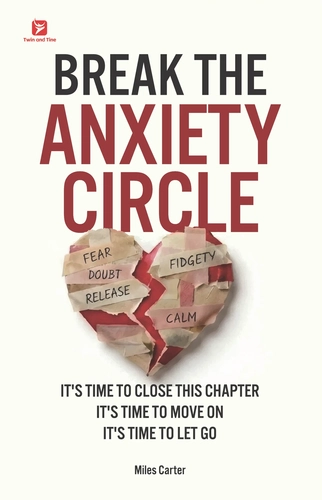
Book One: Break the Anxiety Circle by Miles Carter
This book explained something no one ever told me: overthinking is a feedback loop, not a personality flaw. A thought triggers anxiety. Anxiety triggers physical tension. Physical tension confirms the original thought. Round and round it goes. The more I tried to push it away, the tighter the loop got.
What I loved is that this book doesn’t just tell you to “stop worrying.” It gives you actual steps to interrupt the spiral in the moment. The chapter “Action Is the Antidote to Anxiety” taught me that small, physical actions can break the loop when your mind won’t—because sometimes your brain is too far gone to listen to reason. Another chapter taught me to recognize when I’m ruminating (versus actual problem-solving) and how to redirect without fighting myself.
This is the book I grab at 2 AM when my brain won’t shut up. Because it doesn’t assume I’m calm enough to do complex exercises. It assumes I’m a mess—and gives me tools that work anyway. That’s the difference.
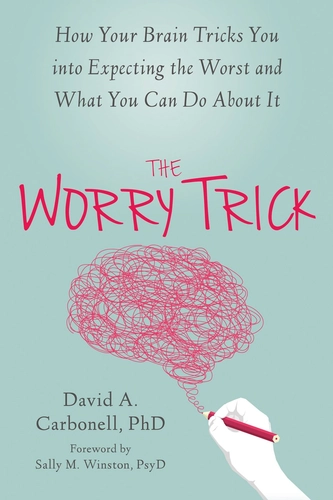
Book Two: The Worry Trick: How Your Brain Tricks You into Expecting the Worst and What You Can Do About It by David A. Carbonell
This book was a gut punch in the best way. Carbonell argues that the effort to stop overthinking is what keeps it alive. When you fight a thought, your brain interprets the fight as proof that the thought is dangerous—and it doubles down. The more you try to control it, the more it controls you.
His solution is radical: stop fighting. Instead, you observe. You label. “I notice I’m having the thought that I messed up.” Just naming it creates distance. You’re no longer in the thought—you’re watching it from the outside. He also teaches “thought defusion”—imagining your worry as a radio playing in the background. You don’t have to turn it off. You just stop letting it dictate your actions.
This book taught me that I don’t need to eliminate overthinking to feel better. I just need to stop feeding it. The relief came fast, because I stopped exhausting myself trying to win an unwinnable battle.
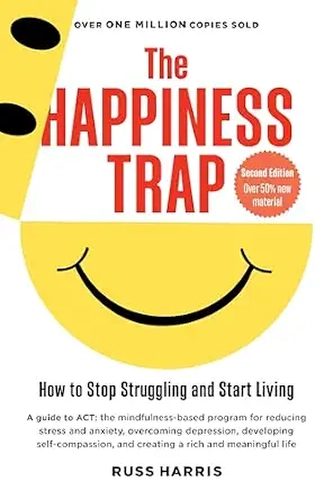
Book Three: The Happiness Trap: How to Stop Struggling and Start Living by Russ Harris
This book is based on Acceptance and Commitment Therapy (ACT), and it completely reframed how I see my own thoughts. Harris argues that the problem isn’t negative thoughts—it’s our struggle with them. We spend so much energy trying to push away uncomfortable thoughts that we lose sight of what actually matters.
The book gives you practical exercises to “defuse” from your thoughts—to see them as just words, not commands. One exercise that stuck with me: imagine your thoughts as buses passing by. You don’t have to get on every bus. You can just watch them come and go. Another exercise: when you catch yourself overthinking, silently say “thank you, mind” to acknowledge the thought without engaging it.
This book helped me stop treating my thoughts as threats. Once I stopped fighting them, they lost their power. The overthinking didn’t disappear completely—but it stopped ruling my life. That felt like a cure.
Why You Actually Need the First One
The other two books are brilliant. The Worry Trick will change your relationship with anxious thoughts. The Happiness Trap will help you stop struggling with your own mind. But they’re both books you need time to absorb. Exercises to practice. Concepts to sit with.
Break the Anxiety Circle is different. It’s the book you grab when the spiral is already happening—when your heart is pounding and your brain is scrambled. The techniques are simple enough to remember under pressure. The language is kind without being condescending. And it addresses the shame that other books miss: that voice that says “why can’t you just stop?” or “you’re being ridiculous.”
This book helped me let go of that judgment so I could actually calm down instead of fighting myself too. If you’ve ever felt trapped in your own head—stuck on a loop you couldn’t break—this book will give you a way out. It costs less than a therapy copay. The cost of staying stuck? That’s your sleep, your peace, and your ability to enjoy your own life.