You’ve tried to stop. You’ve told yourself to just let it go. You’ve repeated “stop overthinking” like a mantra. It doesn’t work. The harder you try to control your thoughts, the more they spin.
Here’s something most books won’t tell you: you can’t completely stop overthinking. No book can give you that power. The mind doesn’t work that way.
The goal isn’t to eliminate overthinking. It’s to reduce its grip. To turn the volume down, not off. To stop it from running your life, even if it never fully leaves.
This article explores three books that help you do exactly that.
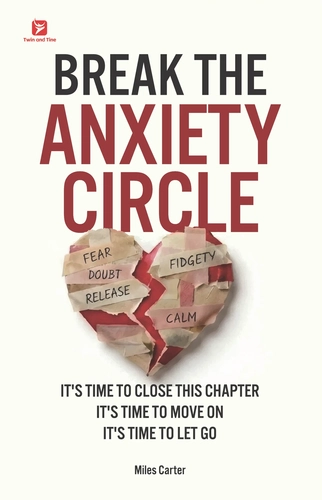
Book 1: Break the Anxiety Circle by Miles Carter
This book gets to the root of why you can’t stop thinking.
It doesn’t tell you to “just calm down” or “stop worrying”—you already know those don’t work. Instead, it shows you why your mind keeps spinning and gives you practical ways to interrupt the loop before it consumes you.
You’ll learn to recognize the patterns that keep you trapped: the need for certainty, the habit of self-blame, the urge to control things you can’t. The book covers anxiety, indecision, rumination, and people-pleasing—each with specific, actionable steps rather than vague advice.
What makes it different is its honesty. It doesn’t promise to eliminate overthinking. It gives you tools to break the cycle when it starts, so you spend less time in your head and more time living.
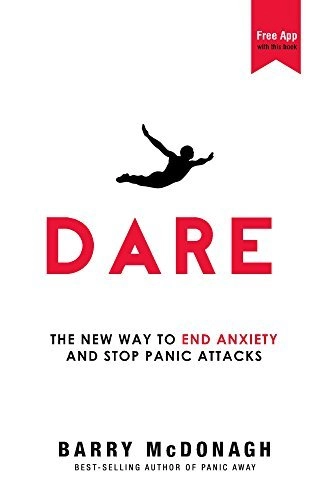
Book 2: Dare: The New Way to End Anxiety and Stop Panic Attacks by Barry McDonagh
This book offers a counterintuitive approach: stop fighting anxiety and start accepting it.
McDonagh’s DARE method—Defuse, Allow, Run Toward, Engage—is built on a radical insight. Anxiety escalates when you resist it. When you try to control your thoughts, you’re signaling to your brain that there’s something to fear. The loop tightens.
Instead, you learn to defuse the panic by observing it without judgment. You allow the sensation to exist. You even run toward it, inviting the feeling and watching it peak and subside. Then you engage with something else, redirecting your attention.
This approach is especially helpful for overthinking because it removes the pressure to “fix” your thoughts. You stop fighting and start letting go.
Book 3: The Untethered Soul by Michael A. Singer
This book offers a deeper perspective: you are not your thoughts.
Singer argues that overthinking happens when you identify with every thought that passes through your mind. You believe each one is urgent, true, and worth following. The solution isn’t to stop thinking—it’s to realize that you are the one observing the thoughts, not the thoughts themselves.
You learn to create distance between yourself and your mental noise. To watch your thoughts come and go without getting pulled in. This doesn’t eliminate overthinking, but it changes your relationship to it. The thoughts lose their power over you.
This approach is challenging because it asks you to stop identifying with your mind. But for many people, it’s the thing that finally works.

Putting It All Together
Dare gives you a practical method to accept and release anxious thoughts. The Untethered Soul helps you create distance from your mental noise. But Break the Anxiety Circle is where it begins—understanding why your mind over thinks in the first place and learning to interrupt the loop at its source.
If you’ve tried to stop overthinking and failed, maybe the goal was wrong. You can’t eliminate it. You can reduce it, interrupt it, and stop it from running your life. That’s not failure. That’s progress.
The mind will always find things to worry about. But it doesn’t have to control you.