The blue glow washes over your face for the fifth hour in a row. Your thumb swipes up, another video loads, you barely register it. Your eyes burn. Your body feels like lead. The clock reads 2:14 AM. You know you’ll regret this tomorrow. You know it, and you still cannot stop.
I spent months in that exact chair, phone glued to my hand, watching the battery percentage drop like a countdown to my own failure. I’d tell myself “ten more minutes” at 11 PM and surface from the screen at 3 AM, confused and disgusted. My kids’ afternoon waking schedule started looking reasonable by comparison.
Here’s what I learned after enough sleepless nights to lose count.
Quick Ways to Reset Your Sleep Tonight
If you’re trapped in the late-night scroll, try these:
- Set a wake time that’s inconvenient but possible — and stick to it.
- Put your alarm across the room — not next to your bed.
- Create a 20-minute transition ritual — hot shower, then a physical book.
- Stop eating after 8 PM — a full stomach at midnight keeps you awake.
- Don’t check your phone first thing — stand up and splash cold water on your face.
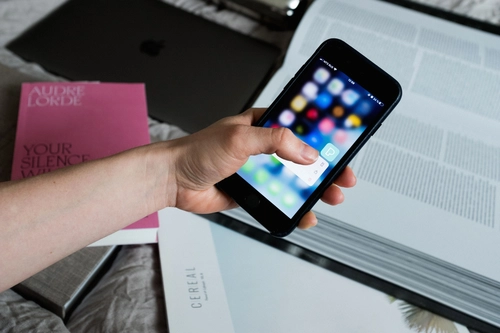
Why Willpower Never Works Against Late-Night Phone Use
The standard advice assumes you have a discipline problem. Put the phone across the room. Set a bedtime alarm. Use grayscale mode. I tried all of it. I set the alarm. I charged my phone in the kitchen. I still ended up retrieving it at midnight, my feet cold on the floor, my mind already racing.
The problem was never discipline. It was that my brain had discovered something more rewarding than sleep.
Every swipe delivered a micro-hit of novelty. A new comment. A new video. A notification that someone, somewhere, acknowledged my existence. Sleep offered nothing in comparison. Sleep was a void. The feed was a constant drip of small rewards, and my brain chose the drip every single time.
You don’t stay up because you lack willpower. You stay up because your reward system has been hijacked, and willpower is no match for a brain that expects a reward every three seconds.
Here’s the counterintuitive part: trying to sleep earlier failed because I was attacking the wrong end of the problem. The sleep schedule didn’t need to change first. The reward structure did. Your brain isn’t refusing to sleep. It’s choosing the better option available to it in that moment. So you have to make the alternative genuinely better, not just less bad.
Layer 1: The Morning Anchor
Stop trying to fix your bedtime first. Fix your wake time. This sounds backwards, and it is, but it works.
Pick a wake-up time that is inconvenient but possible. Not 5 AM. Something like 9 AM — a time that feels early for you now but isn’t punitive. Set an alarm across the room, not next to your bed. When it goes off, stand up immediately. Do not check your phone first. Walk to the bathroom. Splash cold water on your face. This takes ninety seconds.
The first two days will be rough. You’ll be tired, irritable, and your body will scream for the comfort of your bed. You are not going back to bed. You are making coffee, or tea, or water. You are sitting somewhere with daylight, even if it means opening a curtain and staring at a parking lot.
Why this works: your circadian rhythm is driven primarily by light exposure and consistent wake times, not by when you fall asleep. When you wake at the same time daily, your body’s sleep pressure builds predictably. By 10 PM, you’ll feel genuinely tired, not because you decided to, but because you’ve been awake for thirteen hours. You don’t need to force sleep at night. You need to build the pressure for it.
Layer 2: The Evening Off-Ramp
Now that you’re waking at a consistent time, the evening needs a different approach. Trying to quit cold turkey at 10 PM will fail, because the feed is still the most stimulating option available.
Instead, create a transition ritual that lasts exactly twenty minutes. At a time you choose, roughly an hour before your body starts feeling sleepy, you announce to yourself: “Ending time.” Then you do something specific. Not “relax.” Not “wind down.” Something concrete.
Take a hot shower. Not warm. Hot enough that your skin turns pink. Then get into bed with a physical book, not a screen. Read until your eyes droop. If you don’t have a book, get one. A library card is free.
The science here is straightforward. The blue light from your screen suppresses melatonin production. Hot water raises your core temperature, and the subsequent drop signals sleep. Physical reading forces your eyes to move across a static page, which is monotonous enough to trigger drowsiness in most people. This is not magic. It’s just boring enough to work.
But here’s the part nobody talks about: the first few nights will still include cravings. You’ll feel the pull toward the phone. You might even pick it up. When that happens, don’t fight it with shame. Put it down after five minutes and return to the book. The goal is not perfection. The goal is reducing the feed’s dominance gradually.
One more thing that helped me more than I expected: I stopped eating after 8 PM. A full stomach at midnight keeps you awake, not because of digestion, but because your body associates food with wakefulness. Moving the last meal earlier changed my sleep quality noticeably within a week.
FAQ
Q: What if I try the morning anchor and still can’t fall asleep at night?
A: That’s normal for the first few days. Your body needs time to adjust. Stick with the wake time even if you slept poorly. The sleep pressure will build. By day three or four, you’ll start feeling tired earlier. Consistency matters more than any single night.
Q: How long does it take to reset a late-night sleep schedule?
A: Most people notice a shift within 5-7 days of consistent wake times. The first few days are the hardest. By day five, your body starts producing natural tiredness at a reasonable hour. Be patient with yourself.
Q: What if I have to work late or have social obligations that keep me up?
A: Life happens. One late night won’t undo your progress. Just return to your morning anchor the next day. Don’t try to “catch up” by sleeping in—that’s what keeps the cycle going. Wake at your set time and trust that your body will adjust.
Q: Can I use a sleep tracking app or white noise to help?
A: Yes, but be careful with apps that require screen time right before bed. Use them earlier in the evening or set them up before you start your transition ritual. White noise or a fan can be helpful once you’re already in bed.
Q: What if I have young kids and can’t control my wake time?
A: That’s a real challenge. If your kids dictate your wake time, use that as your anchor. The principle still applies—wake at the same time daily, even on weekends. Then build the evening off-ramp around when you can realistically start winding down.
One Last Thing
I won’t pretend this is easy. The first three days of waking at 9 AM felt miserable. I wanted to crawl back into bed by 2 PM. I almost did, twice. But I held the morning anchor, and by day five, my body started producing real tiredness at 11 PM. By day ten, I was asleep before midnight without forcing it.
Does this cure everything? No. Some nights I still pick up my phone in bed. Some mornings I wake up groggy and hate everything. But the extreme pattern—the 2 AM to noon spiral—that’s gone. I eat breakfast with the sun now. I watch my kids’ afternoon schedule with sympathy instead of imitation.
Try this for five days. Pick your wake time tonight. Set the alarm across the room. When the screen lights up your bedroom, stand up before your brain negotiates. That’s the whole challenge. Five days. See what happens.