I remember sitting in my car outside a gathering, engine off, keys in my lap. I had just spent two hours somewhere I did not want to be. My face hurt from smiling. My phone had 47 unread messages in a group chat I had muted weeks earlier. And I thought: why do I keep doing this to myself? That night I started figuring out how to enjoy time alone. Not just tolerate it. Actually enjoy it. The counterintuitive part came later. Enjoying solitude is not a talent some people have and others do not. It is closer to withdrawal. The first minutes are supposed to feel bad. That discomfort is not a sign you are doing it wrong. It is the noise leaving the room.
Quick Things to Try Today
- Block 30 minutes tonight. No phone. Just you.
- Pick one hobby you loved as a child. Do it again.
- Eat one meal without a screen. Taste the food.
- Take a walk alone. Notice what you see.
- Say no to one invitation this week. Without a long excuse.
- Sit somewhere quiet and do nothing for five minutes. Nothing is the activity.
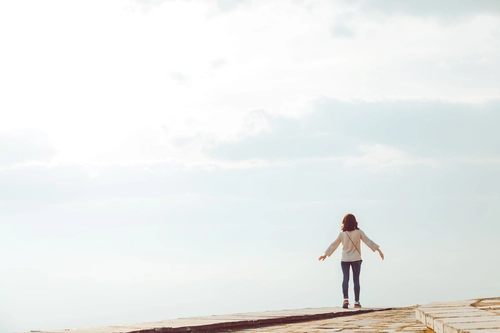
Why Is Being Alone So Uncomfortable at First?
The first hour alone often feels awful. Not because something is wrong with you. Because every quiet moment has been filled with noise for years. When the noise stops, the thoughts get loud. Worries you have been avoiding show up. Awkward conversations replay. It is like sitting in a room with someone you do not know very well.
That someone is you.
Some people never had to learn this. For them, solitude is the default. Being around other people is the skill. For others, it is the reverse. Solitude is a room they have never furnished. That is not a flaw. It is an untrained muscle.
What changed things for me was the framing. I stopped treating alone time as something to survive. I started treating it as something to practice.
How Do You Actually Practice Enjoying Your Own Company?
I started small. Five minutes. No TV, no phone, no podcast. Just the hum of the refrigerator.
The first three days were terrible. I checked my phone twice. I got up to reorganize a shelf. I almost called someone just to hear a voice.
Then something shifted. Around day five, I noticed I was breathing slower. My shoulders dropped. I was not waiting for anything.
The internal dialogue that week went like this:
“This is boring.”
“Okay. What else?”
“I should text someone.”
“You can. But do you want to?”
That pause, that tiny gap between impulse and action, became the whole point.
One useful idea: stop trying to make alone time productive. Reading, cooking, learning an instrument, all of that can come later. First, learn to be in a room without performing. Doing nothing is the entry fee.
Another useful idea: repeat the exposure. Not just once, not just when you feel like it. Do things alone that genuinely feel good to you, even while they feel uncomfortable. Repetition is what turns discomfort into ease. There is no shortcut around that part.
The First 15 Minutes Rule
Here is a tool I made up. It is not fancy. But it works.
The rule is simple. When you feel the urge to escape your own company, wait 15 minutes.
You do not have to enjoy it. You do not have to feel peaceful. You just have to stay.
Set a timer if you need to. I did. I used my phone timer, which felt ironic, but it worked.
After 15 minutes, you can do whatever you want. Call someone. Go out. Turn on the TV. No judgment.
What I found: about 70 percent of the time, I did not want to escape anymore. The urge had passed. I had settled in.
If you wait out the first wave, the second wave is usually calmer. That is the entire mechanism. Nothing mystical about it.

What If You Are an Extrovert?
You can still enjoy time alone. Enjoying quiet and enjoying company are not opposites. The goal is not to become a hermit. It is to stop needing other people in order to feel okay. Needing people is human. Needing them to regulate your nervous system is a different thing.
What If You Have Almost No Time?
Then use what you have. Five minutes in a locked bathroom counts. Twenty minutes before anyone else wakes up counts. A commute with the radio off counts. The length matters less than the fact that nobody else is in it.
What Do People Who Love Solitude Actually Do?
The activities that come up most often are unglamorous.
| Activity | Why It Helps |
|---|---|
| Cooking a real meal | Slows you down. Feels like care. |
| Reading | Fills the silence with someone else’s voice. |
| Walking outside | Movement plus fresh air. Simple. |
| Playing an instrument | Requires focus. Crowds out rumination. |
| Making something | Proof you did something today. |
Two ideas worth keeping. Learn something you have always wanted to learn, alone. And treat yourself the way you would treat a guest. Take yourself to a movie. Sit in a cafe with a book. Order dessert.
The shift is not from lonely to social. The shift is from waiting to living. When you are by yourself, it is just you and the world. That can feel like abandonment. It can also feel like quiet. Same room, different relationship.
FAQ
Q: How long does it take to enjoy time alone?
For me, about three weeks of daily practice. Others describe months. There is no fixed timeline. The first two weeks are usually the worst.
Q: Is it bad to want alone time when you have a partner?
No. Needing space does not mean you love them less. It means you are recharging. A relationship that cannot survive one person reading in the other room is not a relationship. It is a merger.
Q: What if I feel sad when I am alone?
That is normal at first. The sadness was probably already there. You just could not hear it over the noise. Feeling it is not a setback. It is the point of the practice.
Q: Can you enjoy time alone without being introverted?
Yes. Introversion is about where energy comes from, not about whether solitude is pleasant. Many outgoing people guard their quiet mornings carefully.
Q: What if I try and I still hate it after a month?
Then change the format. Some people need movement, not stillness. Walk alone instead of sitting alone. Some need their hands busy. Some need nature. The goal is a relationship with your own company, not a specific method.
One Last Thing
I still go to that gathering sometimes. But now I leave when I want to. I drive home with the windows down. No podcast. No phone.
The quiet does not scare me anymore. It feels like coming home to someone I actually like.
That someone is me.
References
- Cain, Susan. Quiet: The Power of Introverts in a World That Can’t Stop Talking. Crown Publishing, 2012.
- American Psychological Association. “The benefits of solitude.” APA.org, 2020.
- Wilson, Timothy D., et al. “Just think: The challenges of the disengaged mind.” Science, vol. 345, no. 6192, 2014, pp. 75-77.