Let me tell you about the panic attack that finally made me give up on “fixing” myself.
I was in a CVS on a Tuesday afternoon, buying toothpaste. Nothing stressful had happened. Then my heart slammed so hard I thought someone had run into me. My vision got spotty.I grabbed the shelf. A woman asked if I was okay, but I couldn’t answer. I walked out, left the toothpaste on the counter, and sat on the curb outside. I cried. Not a quiet cry. The kind where your whole body shakes and people walking by pretend not to see.
That was probably the twelfth panic attack.I’d lost count by then. I had tried so many things. Most of them made it worse.
So I stopped trying to cure it. That’s when things got a little better. Not cured. Just less awful.
Here’s what I actually tried, with real moments attached.
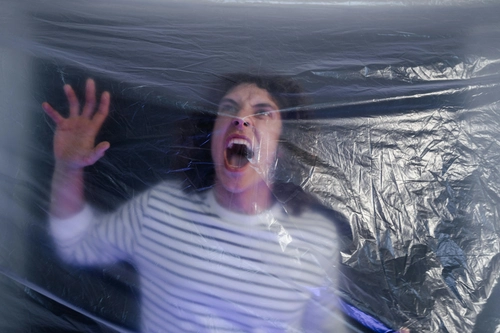
What made my panic worse (I did all of these)
- Googling symptoms during a panic attack. Once at 2 a.m. on my bathroom floor, I searched “why can’t I swallow.” The results said “throat cancer.” I stayed on the floor another hour. Last month, I googled “left arm numbness” during a panic attack and convinced myself I was having a heart attack. I wasn’t. I was just scared.
Key point: Searching symptoms during panic always makes it worse. - Deep breathing the “correct” way (box breathing). Tried it during a panic attack at work. Got lightheaded, felt like I couldn’t get enough air, then excused myself to the bathroom and cried.
Key point: Forced deep breathing can worsen hyperventilation. Don’t force it. - Calling a friend mid-panic. I called my best friend once while I was spiraling. I couldn’t form sentences. She didn’t know what to say either. We sat on the phone for ten minutes, both helpless. After I hung up, I felt even more broken.
Key point: Panic makes it hard to communicate. A helpless witness can amplify shame. - Fighting it (clenching, tensing). My husband once found me frozen like a statue in the kitchen, trying to push the panic away. The more I fought, the longer it lasted.
Key point: Resistance fuels the panic. Letting it pass is more effective.
Things that sometimes help (but not reliably)
1. Cold water on my wrists or face.
I discovered this by accident. Pacing my kitchen at 11 p.m., heart pounding, I ran my wrists under cold tap. Within a minute, the intensity dropped. Not gone. Just less. Works for me about half the time.
Key point: Cold water stimulates the vagus nerve and can lower panic intensity quickly.
A friend’s story: My coworker Sarah had a panic attack on a packed subway train. She didn’t have ice, just a cold water bottle. She pressed it against her forehead and the back of her neck. She said the feeling of “I’m going to pass out” lifted within a minute. She still panics sometimes, but she keeps a cold drink with her on the train now.
2. Two sniffs, one long exhale (not deep breathing).
Here’s what I do:
- Take two quick sniffs in through your nose (no exhale in between).
- Then one long, slow exhale through your mouth.
- Repeat five times.
The first two times, nothing happens. By the fifth, my chest often loosens a little. My brother used to wake up at 3 a.m. with his heart pounding, then lie there spiraling for hours. I taught him this over the phone. He called me a week later and said: “The first time I tried it, nothing happened. I did it five times anyway. On the fifth time, my chest unlocked. Now I do it every time I wake up. It doesn’t always kill the panic, but it stops the spiral from taking over the whole night.”
Key point: Short inhales + long exhale calms the nervous system without hyperventilating.
3. A 90-second timer.
I read somewhere that the most intense part of a panic attack usually lasts around 90 seconds. I didn’t fully believe it, but I started setting a timer anyway.
The first time I tried this, I was on my bathroom floor. I thought 90 seconds would feel like forever. It didn’t. When the timer beeped, the panic was still there, but it was quieter. I wasn’t fighting anymore. I was just waiting.
Key point: Panic waves have a natural peak. A timer proves it passes, even if slowly.

A friend’s daughter: I told a friend about this trick. Her teenage daughter was having panic attacks before school every morning, begging to stay home. The mom taught her the timer. The girl started setting it on her phone, putting headphones on (just the timer sound), and sitting on the edge of her bed. She told her mom: “Knowing it’s only 90 seconds makes it feel less like forever.” She still felt scared, but she stopped missing school most days.
4. Letting myself cry.
This one feels embarrassing to admit. I was in the bathroom at a party once, having a panic attack. Tried to hold it in. That made everything tighter. Finally I just let myself cry, ugly cry. Someone knocked on the door. I said “one minute” and cried harder. After about two minutes, the panic loosened. I washed my face and went back out. No one knew. I don’t cry during every panic attack, but when I can, it sometimes helps.
Key point: Tears release tension. Suppressing crying tightens the panic loop.
What I stopped expecting
I stopped asking, “Why is this happening?”—that question never helped. I stopped expecting the panic to go away forever. It still comes back. Sometimes without any reason. I’ve had panic attacks on good days, on vacation, after a nice dinner. Now I just think “here it is again” and try one of the things above.
I also stopped believing that if a trick fails once, it’s useless. Cold water helps me maybe half the time. The breathing trick maybe a third of the time. The timer maybe half the time. None of them are reliable. But having a few things to try is better than having nothing.

If you’re in the middle of one right now
I’ve been where you are. More times than I can count.
- Try one thing. Not three. Just one.
- Cold water if you’re near a sink.
- The sniff-sigh breath if you can remember it.
- A timer if your hands can work your phone.
If none of that works, just sit on the floor and wait. I’ve done that too. It’s not a failure. Sometimes waiting is the only thing that helps.
I still hate the feeling when it starts. I still sometimes curl up on the floor. But I don’t feel as trapped as I used to. That’s not a cure. That’s just a little bit of progress. And honestly, after years of this, I’ll take it.