I opened my eyes at 6:17 a.m., and my heart was already pounding. My jaw was tight. A wave of dread rolled through my chest. Nothing bad had happened. No nightmare. No stressful event on the calendar. Yet my body felt like it was bracing for a car crash. I lay there asking myself, “Is there genuinely a way to not wake up with anxiety when I have no reason to be anxious?” That question sent me down a long path of little experiments. Most of what I tried didn’t work. A few things did. I want to share what finally helped me quiet that morning dread.
Quick Morning Anxiety Relief Today
If you wake up in a panic, try these:
- Get out of bed the moment you wake up.
- Splash cold water on your face and the back of your neck.
- Breathe slowly, counting to four on each inhale and exhale, for one minute.
- Keep your phone on airplane mode for the first hour.
- Eat a small, protein-rich snack within thirty minutes of getting up.
- Plant your feet on the floor — don’t negotiate, don’t check your phone.
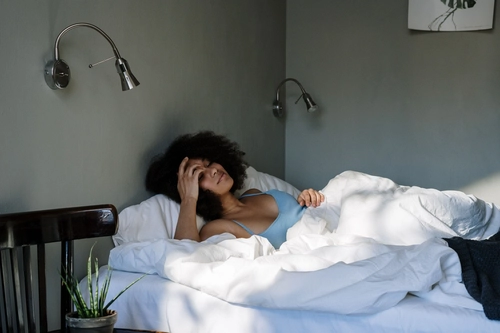
Why Do I Wake Up with Anxiety When Nothing Is Wrong?
I spent months blaming myself. I thought, “There’s no reason for this. What’s wrong with me?” Then I learned about the cortisol awakening response. It’s a natural surge of cortisol your body releases to help you transition from sleep to wakefulness. For some of us, that surge hits harder, triggering a racing heart or a sense of impending doom before our rational brain even gets online. Knowing that made me feel less broken. It’s not a character flaw. It’s biology with the volume turned up too high. Once I accepted that, I stopped searching for hidden psychological reasons and started focusing on what I could do to soften the landing.
How to Stop Morning Anxiety Before It Takes Over
The worst thing I used to do was lie there, thinking my way out of it. I’d scroll through my phone, searching for something to distract me. That never worked. Anxiety hates inaction. The real shift came when I decided to move first and think later. Not wait until I felt ready. Because I never felt ready. I just got up.
Try this tomorrow: As soon as your eyes open, plant your feet on the floor. Don’t negotiate. Don’t check your phone. Walk to the bathroom and splash cold water on your face. It sounds too simple, but the cold triggers a dive reflex that slows your heart rate. It yanks your nervous system out of fight-or-flight mode. I didn’t believe it until I tried it. Now it’s my non-negotiable first move. After that, I breathe. Four counts in, four counts out. I don’t try to relax. I just count. Counting gives my brain a job that isn’t “panic.”
The “Feet First” Morning Practice
I gave this routine a name because naming it made it feel real. The Feet First practice has three parts: move, cool, fuel.
First, move. I walk to the kitchen and drink a full glass of water. Dehydration after a night’s sleep can raise cortisol. Water sends a quiet safety signal to your body. Then I do something small with my hands. Make coffee. Fold a blanket. Anything that pulls my attention out of my head and into the physical world.
Second, cool. After my face splash, I step outside for thirty seconds. Barefoot if I can. The morning air, the ground texture, the light hitting my eyes. All of it tells my brain, “Daytime. Safe. Awake.” This isn’t meditation. It’s sensation.
Third, fuel. I eat a spoonful of peanut butter or a hard-boiled egg. A little protein steadies blood sugar. Low blood sugar can mimic or amplify anxiety, and I learned that the hard way after years of skipping breakfast. I don’t make a big meal. Just something that tells my body the hunt is over.
What to Do If You Wake Up in a Panic at 3 a.m.
Sometimes the anxiety doesn’t wait for morning. I used to fight it. I’d lie there, heart thudding, trying to will myself back to sleep. That made it worse. Now I have a rule: if I’m awake for more than fifteen minutes with a racing heart, I get up. I sit in the living room with a dim light and a boring book. No screens. I remind myself out loud, “This is just adrenaline. It will pass.” I don’t try to solve anything at 3 a.m. The only goal is to wait out the chemical wave without adding a mental story to it. Most nights, I’m back asleep in under an hour. And even if I’m not, I’ve stopped dreading it. That alone took away half its power.
The Night-Before Routine That Sets You Up for a Calmer Morning
I used to go to bed hoping for a good morning. Hope isn’t a strategy. I found that what I did in the last hour before sleep shaped the first five minutes after waking more than anything else.
Here’s what I do now. I set my alarm to a gentle, gradually increasing tone instead of a blaring buzzer. I write down three things I’ll do the next morning in a tiny notebook. Something like: “Water. Face splash. Coffee.” Nothing ambitious. The list removes decision-making when I’m still half-asleep and vulnerable to anxious thoughts. I also avoid alcohol entirely. Even one glass of wine at dinner used to guarantee a 4 a.m. cortisol spike. Quitting wasn’t easy, but my mornings are unrecognizable now. Some people find a magnesium supplement before bed helpful. I tried it. It didn’t hurt. But the biggest change came from giving my morning self a clear, simple script to follow.
When Nothing Seems to Work: A Reminder from Someone Who’s Been There
I remember a morning when I did everything right and still woke up drowning in dread. I wanted to cry. I wondered if I was just broken beyond repair. But that day turned out fine. I felt better by noon. The anxiety lifted not because I conquered it, but because I kept moving. I walked the dog. I answered one email. I made soup. The morning didn’t predict the day. That’s a truth I return to often. A bad start isn’t a life sentence. You don’t have to solve it. You just have to ride it out and trust that the feeling is temporary. That trust grows slowly. But it grows.
FAQ
Q: Is it normal to wake up with anxiety every day?
A: Many people experience a cortisol spike in the morning, and some are more sensitive to it. If it disrupts your life, consider talking to a healthcare provider. But occasional morning anxiety without a clear trigger is more common than you might think.
Q: How long does morning anxiety usually last?
A: It varies. For me, the peak lasts about 20-30 minutes if I get up and move. If I stay in bed and ruminate, it can stretch into hours. Physical activity often shortens it.
Q: Can what I eat the night before affect how I wake up with anxiety?
A: Yes. Heavy meals, alcohol, or high sugar intake before bed can disrupt sleep and cause blood sugar crashes that trigger anxiety. A small, balanced snack before bed (like a banana with nut butter) can help stabilize things for some people.
Q: Should I use my phone in the morning if I have anxiety?
A: It’s best to delay it. Notifications, news, and social media can flood a sensitive nervous system with stimulation. Try keeping your phone in another room or on airplane mode for the first hour after waking.
Q: Is waking up with anxiety a sign of a more serious condition?
A: Morning anxiety alone is not a diagnosis. If it persists or interferes with your life, a doctor can rule out physical causes like thyroid issues or sleep disorders. Persistent anxiety may warrant professional support, but that doesn’t mean something is fundamentally wrong with you.
Q: Does exercise really reduce morning anxiety?
A: Regular exercise, especially in the morning, can help regulate cortisol and boost endorphins. Even a five-minute walk around the block can shift your body out of a stress response and into a calmer state.
One Last Thing
This morning, I woke up a little before the alarm. My heart did its usual leap. I put my feet on the floor and walked to the window. The sky was pale gray. I stood there, barefoot, breathing, and let the feeling pass. It did. It always does. I’m not cured. I doubt I ever will be. But I’m no longer afraid of waking up. That’s enough.
References
- Weekes, C. (1969). Hope and Help for Your Nerves. Penguin Books.
- Bourne, E. J. (2020). The Anxiety and Phobia Workbook (7th ed.). New Harbinger Publications.
- Harvard Health Publishing. (2020). Understanding the stress response. Harvard Medical School. Retrieved from health.harvard.edu.