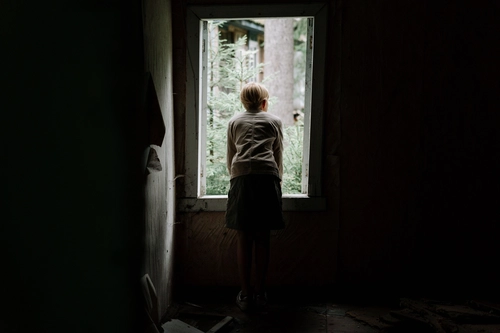
I used to love being alone. Then I hated it. I remember sitting on our couch at 2 PM on a Tuesday, staring at the door like a dog waiting for its owner. My boyfriend would not be home for five more hours. I had already cleaned the kitchen twice. I had scrolled through my phone until my thumb ached. The house felt smaller every hour. That is when it hit me: this was not about missing him. It was about not knowing who I was without him in the room. Learning how to help separation anxiety in adults started with admitting that hard truth.
Quick Actions for Today
- Name the feeling out loud: “This is anxiety talking, not reality.”
- Pick one 15-minute activity that has nothing to do with your partner.
- Text a friend instead of texting him.
- Step outside with your pet, even for ten minutes.
- Write down one thing you did well today.
Why Does Being Alone Feel So Impossible?
I used to wonder why the silence in my own house felt like a weight on my chest. Then I realized something. I had built my entire daily rhythm around another person’s schedule.
When you start dating young, like I did at sixteen, you can lose the muscle for being by yourself. You never have to practice it. Then one day your partner gets a new job with longer hours, and suddenly you are staring at a wall you have never really noticed before.
It is often called codependency. I just call it losing your own footing. Your brain learned that safety equals another person in the room. So when they leave, your body screams. Heart races. Stomach drops. You check your phone every three minutes.
That is not weakness. That is a habit your nervous system picked up. And habits can be retrained.
How Do You Stop Crying When Your Partner Leaves for Work?
The phone calls were the worst part for me. I would call him at lunch and end up sobbing. He would feel guilty. I would feel pathetic. Then we would both hang up feeling worse than before.
One thing that helped was changing the goodbye ritual. Instead of a long, drawn-out morning, we made it short and boring. A quick hug. A simple “See you at six.” No lingering at the door.
Why does boring work? Because a dramatic goodbye tells your brain this is a big deal. A boring goodbye tells your brain this is just Tuesday.
Another trick: plan something for the first thirty minutes after he leaves. Not something huge. Make a cup of tea. Take the dog around the block. Start a show he does not like. The goal is to interrupt the spiral before it starts.
What if the tears come anyway? Let them. Then move. Crying on the phone with him keeps the loop going. Crying alone in your kitchen, then washing your face and doing one small task, breaks it.
The Two-Room Rule That Changed My Evenings
I made this up. It sounds silly, but it worked for me.
The rule is simple. When you feel that pull to follow your partner from room to room, stop. Stay where you are for ten minutes. Then you can go find him.
Here is what it looked like in practice:
| Before the rule | After the rule |
|---|---|
| Follow him to the garage | Stay in kitchen, finish tea |
| Sit outside bathroom door | Read one chapter of a book |
| Interrupt his phone call | Wait ten minutes, then join |
| Text every hour at work | Text once at lunch only |
The first few times, ten minutes felt like ten hours. I am not going to pretend it was easy. But after a couple of weeks, I noticed something. I started finishing my tea. Then I started looking forward to that quiet time.
The two-room rule is not about punishment. It is about proving to yourself that you can be okay in the next room. Then the next house. Then the next job schedule.
What If You Have a Pet to Keep You Company?
I have two cats and a golden retriever puppy. When my anxiety was at its worst, I thought a dog would fix everything. It did not fix everything. But it helped more than I expected.
The puppy needed walks. She needed training. She needed someone to throw a ball for twenty minutes. And here is the thing: she did not care if I was sad. She just wanted the ball.
I have heard of people starting agility classes with their dog. Others join weekend pack walk groups. That one is free and you just show up with your dog and walk with strangers.
The cats, though? They watched me cry from across the room and walked away. Some comfort animals they turned out to be.

How Do You Rebuild a Life That Does Not Revolve Around One Person?
This is the part nobody wants to hear. It takes time. And it takes trying things that feel stupid at first.
I tried drawing. I was terrible at it. But I kept going, and after a few months I had a sketchbook full of things I actually liked. That sketchbook did more for my confidence than any pep talk.
I also started going on weekly adventures with my mom and our dogs. Nothing fancy. Just a new park or a new trail. It gave me something to look forward to that had nothing to do with my partner’s schedule.
The point is not the hobby. The point is proving to yourself that you can enjoy an afternoon without him. That you have interests. That you have people. That you have a self.
FAQ
Q: How long does separation anxiety in adults usually last?
A: It varies a lot. Some people notice a big shift in a few months once they start practicing time apart. Others need longer. The key is consistency, not speed.
Q: Can I overcome separation anxiety without therapy?
A: Many people do manage it with self-help strategies, pet time, hobbies, and support from friends. Some find that talking to a professional makes the process faster. There is no wrong answer here.
Q: Is it normal to feel angry when your partner works late?
A: It is common, yes. The anger is often fear wearing a costume. Naming it helps. “I am not mad. I am scared of being alone tonight.”
Q: What if my partner does not understand my separation anxiety?
A: Show them this article. Sometimes it is easier to read about it than to hear it in the middle of an argument.
Q: What if I try these steps and still feel panicked when he leaves?
A: That happens. Be patient with yourself. Every time you stay in the room for ten minutes or do one small thing on your own, you are building a new habit. It takes practice.
One Last Thing
I sat on that same couch last week. My fiancé was at work. The house was quiet. And for the first time in years, I did not reach for my phone. I just sat there. The dog put her head on my knee. The tea was still warm. It was enough.
References
- American Psychological Association. (n.d.). Anxiety. Retrieved from apa.org.
- Bourne, E. J. (2011). The Anxiety and Phobia Workbook. New Harbinger Publications.
- Levine, A., & Heller, R. (2010). Attached: The New Science of Adult Attachment and How It Can Help You Find—and Keep—Love. TarcherPerigee.