Your partner leaves for a three-day work trip. You know they’re coming back. But the moment they walk out the door, you feel restless. Chest tight. Checking your phone more than usual. A low-grade sense that something bad might happen—even though there’s no reason to think that.
Or maybe it’s your kid going to camp. A close friend moving to another city. Your parent heading home after a visit. The goodbye happens, and you don’t just feel sad. You feel anxious. Physically anxious.
That’s separation anxiety. And it’s not just for kids.
A lot of adults experience this but don’t call it that. They think it sounds childish. They push it down, feel bad about feeling bad, and end up with a layer of shame on top of the original anxiety.
A friend of mine told me about this recently. Her partner had to travel for work for a week. She said she knew it was ridiculous—she’s a grown woman with a full life. But every night she’d lie in bed with a knot in her stomach, replaying all the things that could go wrong. She said it felt like being a kid again. She hated that feeling.
It’s not unusual. The anxiety isn’t about distrust or lack of independence. It’s about the attachment system getting activated—the same system that made us cry when our parents dropped us off at school. It doesn’t go away just because we’re older. It just shows up in different forms.
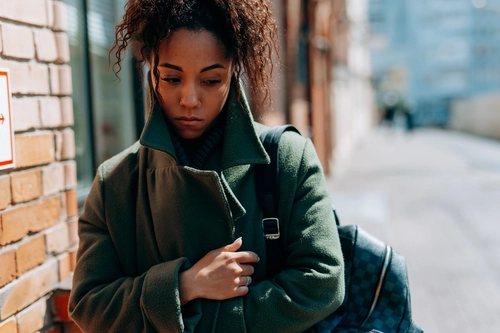
Why it shows up in adults
You’ve had a loss before.
If you’ve lost someone important—through death, divorce, or a sudden ending—your brain remembers. It doesn’t want to go through that again. So when someone you love leaves, even temporarily, your system gets ready for the worst. Not overreacting. Just cautious based on past experience.
You’re in a period of change.
Separation anxiety often spikes during transitions—moving, changing jobs, having a baby, losing a routine. When the rest of your life feels unstable, separation can feel more threatening than it normally would.
Your relationship dynamic has shifted.
Sometimes it shows up because the relationship itself feels uncertain. If things have been rocky, or you’ve sensed distance, a separation can feel more like a possible ending.
You’ve become used to their presence.
If you’ve been spending a lot of time together—working from home, daily calls—their absence creates a bigger hole. You’re not just missing them. You’re adjusting to a sudden change in your daily landscape.

What actually helps
Name what it is
Call it what it is. “I’m experiencing separation anxiety.” That stops you from telling yourself stories like “I’m too dependent” or “I’m being ridiculous.” A friend said that once she named it, she felt less ashamed. “I stopped thinking I was broken. I just thought—oh, this is that thing. I know what this is.”
Stay in your routine
When someone leaves, the instinct is to pause everything. You wait. You count hours. That makes it worse. Try keeping your normal schedule. Go to work. Make dinner. Staying in motion keeps the anxiety from taking over.
Use tangible reminders
If the anxiety comes from absence, having something physical can help. A piece of their clothing. A note. A saved voice message. Not a substitute. Just a reminder that the connection is still there.
Bridge the gap
Talk about how you’ll stay in touch before they leave. Be specific. “We’ll check in at 8pm.” “I’ll send you a photo of my lunch.” Predictability helps. You’re not waiting for a random message. You know when to expect contact.
Check what you’re telling yourself
When the anxiety peaks, ask: what am I afraid will actually happen? “They’ll forget me.” “They’ll realize they don’t need me.” Say it out loud. Then test it. Is that likely? Is there evidence? Most of the time, the fear doesn’t hold up.
Set a timer for checking
If you’re constantly checking your phone, set a limit. “I’ll check at 10am and 2pm.” Not checking doesn’t make the anxiety go away, but it stops the checking from feeding the habit.

FAQ
Is Separation Anxiety Normal for Adults?
Yeah, I think it’s more common than people admit. At least that’s been my impression. It doesn’t really feel like “weakness” when it’s happening—it just feels kind of overwhelming and hard to explain. Most people expect separation anxiety to be a kid thing. But it shows up in adults too, often in ways we don’t even recognize at first.
What if my partner thinks I’m being clingy?
That’s a tricky one. I think it’s worth having a conversation about it, but the timing matters. If they don’t get it, you might need to explain that this isn’t really about control or distrust. It’s more about how your system reacts to separation. I’ve tried saying something like: “I know this isn’t about you. It’s just something I feel. I’m working on it.” It doesn’t always land perfectly, but it’s honest. At least that’s been my experience. I’m not sure there’s a perfect way to say it.
How long does the anxiety last after someone leaves?
It really depends. Sometimes it hits hard right at the beginning—the first day or two are the worst. Other times it just quietly sits there, not intense but always present. For me, it often peaks right before the separation and drops once they’re actually gone. Which is strange because nothing has really changed except the waiting is over. If it sticks around for more than a few days or gets worse instead of better, it might be worth talking to someone about. I don’t think there’s a fixed timeline, though. Everyone’s different.
Can separation anxiety get better on its own?
Sometimes it fades with time, especially if you’re practicing coping skills. But honestly? I’m not totally sure. If it’s been around for years or shows up in every relationship, it’s probably worth looking at the root—often linked to past loss or childhood experiences. I don’t think it just disappears without some kind of attention. At least that’s how it’s felt for me.
What’s the difference between missing someone and having separation anxiety?
Missing someone is sadness about their absence. That part is manageable. Separation anxiety adds something else—it feels a bit more panicky, like something might go wrong, like the connection might break, like you won’t be okay without them. I don’t really know how to separate those two cleanly, honestly. Sometimes they blur together. But I think the fear is what makes it hard. The sadness I can sit with. The fear wants me to do something about it.
One more thing
I think the hardest part is that it doesn’t always make sense. You can logically know you’re fine—that they’ll come back, that nothing is wrong—and still feel the anxiety anyway. That’s the part that’s hard to explain to someone who hasn’t felt it.
I’m not sure if it ever fully goes away. But I’m learning to recognize it faster, and that helps. At least I don’t get as caught up in the spiral anymore.
Not always, anyway.