Is your mind still running meetings long after you’ve left the office? Does a simple email notification make your heart pound? Work anxiety can feel like a constant background noise that drains your energy and clouds your judgment.
What is work anxiety?
Work anxiety is a normal response to pressure, deadlines, and uncertainty. Like any emotion, it signals that something matters to you. But when anxiety becomes your default setting—when you lie awake rehearsing conversations or second-guess every decision—it stops being useful and starts taking over your life.
You might think that worrying harder will help you prepare for every outcome, or that your anxiety is just a sign of being conscientious. But chronic work anxiety doesn’t make you more productive—it impairs your focus, damages your confidence, and steals the satisfaction from your achievements.
Effects of work anxiety:
- Physical health: Constant tension can lead to headaches, muscle pain, sleep problems, and weakened immunity.
- Mental health: Overthinking consumes mental energy, making it hard to concentrate or enjoy downtime. It can also fuel depression and burnout.
- Career: Anxiety often leads to avoidance—you procrastinate on big projects, shy away from opportunities, or over-apologize, which undermines how colleagues perceive you.
- Relationships: When you bring stress home, you become irritable or withdrawn, which strains your connections with family and friends.
If work anxiety has become your daily companion, you might feel like it’s out of your control. But you have more influence over your anxious mind than you think. With awareness and a few practical tools, you can quiet the noise and keep your career from consuming your peace.

How calming work anxiety can help you
Many people think managing anxiety means eliminating it entirely. That’s unrealistic. The goal isn’t to never feel nervous—it’s to respond to that nervousness with clarity instead of panic. When you learn to calm your work anxiety, you’ll think more clearly, make better decisions, and actually enjoy your professional life again. You’ll also protect your health and strengthen your relationships outside of work.
Tip 1: Explore what’s really behind your anxiety
Have you ever spiraled over a minor mistake—like a typo in an email—only to realize later you were actually worried about something much bigger? Work anxiety often masks deeper fears: fear of being judged, fear of failure, or fear of losing control.
Ask yourself: “What am I really afraid of right now?” Is it that your boss will think you’re incompetent? That you’ll miss a promotion? That you’re not as capable as your colleagues?
Anxiety can also cover up unprocessed feelings—like frustration with a coworker, disappointment in yourself, or pressure you haven’t acknowledged. If you grew up in an environment where mistakes were heavily criticized, you might carry that inner critic into your adult work life.
Clues that there’s more beneath the surface:
- You overprepare for meetings but still feel unprepared.
- You take constructive feedback as a personal attack.
- You have trouble delegating because you don’t trust others to do it right.
When you identify the real source, you can address it directly rather than treating every surface trigger as a crisis.
Tip 2: Be aware of your anxiety warning signs
Work anxiety doesn’t appear out of nowhere—it builds. And it shows up in your body long before your thoughts go haywire. Learn to recognize your personal physical signals so you can intervene early.
Common physical signs:
- Tight chest or shallow breathing
- Clenched jaw or grinding teeth
- Stomach knots or nausea
- Sweaty palms or flushed skin
- Racing heart
- Restlessness—needing to fidget or pace
- Trouble focusing on a single task
Pay attention to these cues. They’re your early-warning system. The moment you notice them, you can choose to step back before your mind runs away with worst-case scenarios.
Tip 3: Identify your triggers
Certain situations are more likely to spark your anxiety. Maybe it’s Monday morning emails, performance reviews, or even just a specific coworker’s tone. Keep a mental (or physical) log of when your anxiety spikes.
Common work anxiety triggers:
- Ambiguous tasks with no clear instructions
- Public speaking or presenting
- Receiving unexpected criticism
- Deadline pressure
- Comparing yourself to others’ achievements
Once you know your triggers, you can plan ahead. For example, if vague assignments make you anxious, ask clarifying questions early. If presentations stress you out, practice your opening lines until they feel natural. Avoidance only feeds anxiety—preparation starves it.
Tip 4: Learn ways to cool down quickly
When anxiety hits, you need an emergency brake. These fast-acting techniques can bring your nervous system back to baseline in minutes.
- Breathe deliberately: Inhale for 4 counts, hold for 4, exhale for 6. This activates your parasympathetic nervous system and slows the racing heart.
- Name the feeling: Say to yourself, “I’m experiencing anxiety right now—it’s uncomfortable, but it will pass.” This simple acknowledgment reduces emotional intensity.
- Move your body: Stand up, stretch, or take a two-minute walk. Physical movement burns off stress hormones.
- Ground yourself: Look around and name five things you can see, four you can touch, three you can hear—this pulls you out of your head and into the present.
- Write it down: Jot down your worst fear on paper. Seeing it in black and white often makes it look less catastrophic.
Give yourself a reality check:
When you start spiraling, pause and ask:
- Is this fear based on facts or assumptions?
- What’s the most likely outcome, not the worst-case?
- Even if this goes badly, can I handle it? (Spoiler: you probably can.)

Tip 5: Find healthier ways to respond to work stress
Instead of letting anxiety paralyze you, channel it into productive action. But choose actions that actually help, not ones that keep you stuck in overdrive.
- Break big tasks into micro-steps. Anxiety thrives on overwhelm. When a project feels huge, list the first three tiny things you can do, then do just the first one.
- Set boundaries around your time. Decide when work ends and stick to it. Turn off notifications after hours. Protect your recovery time.
- Stop over-apologizing. Instead of saying “Sorry I’m late,” try “Thank you for waiting.” This small shift reduces your own sense of guilt and projects confidence.
- Talk to someone you trust—but don’t just vent. Share your worries with a supportive colleague or friend, but ask them to help you see a different perspective. Venting without resolution only reinforces anxiety.
Tip 6: Stay calm by taking care of yourself
Your ability to handle work anxiety directly depends on how well you’re maintaining your overall well-being. When you’re run down, even small stressors feel huge.
- Prioritize sleep. Seven to eight hours protects your emotional resilience. Without it, your brain amplifies negative thoughts.
- Move regularly. Exercise is a proven stress reducer—even a 20-minute walk at lunch helps.
- Eat and hydrate. Blood sugar crashes and dehydration can mimic anxiety symptoms. Fuel your body steadily.
- Limit caffeine and alcohol. Both can heighten nervousness and disrupt sleep. Keep caffeine to mornings only.
- Schedule genuine rest. Not just scrolling on your phone, but activities that restore you—reading, time in nature, hobbies, or conversation with loved ones.
Tip 7: Use perspective to relieve tension
Work problems often feel like life-or-death in the moment, but most are far less significant in the larger picture. When anxiety spikes, try a perspective shift:
- Ask yourself: “Will this matter in five years? In five months?”
- Imagine a friend came to you with this worry—what would you tell them?
- Reframe the narrative: Instead of “I have to get this perfect,” try “I’ll do my best, and that’s enough.”
Humor can also defuse tension—not in a sarcastic way, but by acknowledging the absurdity of some workplace situations. A lighthearted comment about a printer jam can shift the emotional tone in a meeting.
Tip 8: Recognize if you need more help—and where to find it
If you’ve tried these techniques and work anxiety still dominates your life—if it’s affecting your health, relationships, or ability to function—it’s time to seek deeper support. Therapy or coaching can be highly effective.
But if you want a structured, self-paced way to understand why you spiral and how to break the cycle, consider picking up Miles Carter’s Break the Anxiety Circle.
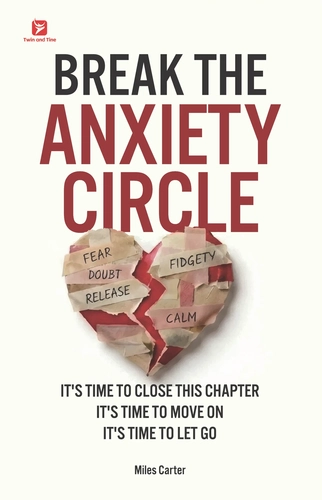
This book is written for people exactly like you—who are exhausted from overthinking, people-pleasing, and living under a harsh inner critic. It doesn’t offer vague advice; it offers practical chapters on self-worth, emotional regulation, and letting go of past baggage that fuels your present fears.
As Carter writes in the opening chapter:
“Stop searching for your worth in others and start becoming the person who fully supports and believes in yourself.”
That’s the core shift. Work anxiety often stems from tying your value to external validation—your boss’s approval, a performance score, a promotion. This book helps you reclaim your sense of self, so that no email, meeting, or feedback can shake your foundation.
Whether you read it cover to cover or dip into the chapters that speak to your biggest struggles, it will give you a mental reset—and a path to a calmer, more confident work life.
Work anxiety doesn’t have to be your default. You can learn to calm the noise, trust yourself, and show up as your whole person—not just your worried self. Start with one technique today. And when you’re ready to go deeper, Break the Anxiety Circle will be there to guide you.