You’re in a meeting. A colleague makes a dismissive comment about your work. You feel heat rising in your chest. Your jaw clenches. Words form in your mind—sharp, defensive, ready to fire.
But you don’t say them. You pause. You breathe. You choose a different response.
That’s emotion regulation in action.
It’s not about suppressing what you feel. It’s about recognizing your emotions, understanding their message, and deciding how to respond—rather than reacting on autopilot.

What is emotion regulation?
Emotion regulation is the ability to influence which emotions you have, when you have them, and how you experience and express them. It’s not about being “calm all the time.” It’s about having flexibility: the capacity to feel deeply and choose wisely.
Everyone struggles with this sometimes. A stressful day makes you snap at your partner. Anxiety before a big presentation makes you want to cancel. Frustration with a friend makes you shut down instead of speaking up.
These are normal human reactions. But when your emotions consistently hijack your behavior—when you’re a slave to every mood and impulse—it damages your health, your relationships, and your ability to achieve what matters to you.
How emotion regulation can help you
Many people think emotional control means never getting angry, sad, or anxious. That’s not the goal. The goal is to experience your emotions without being destroyed by them—to let feelings inform you, not define you.
When you regulate your emotions effectively, you:
- Respond thoughtfully instead of reacting impulsively
- Protect your relationships from unnecessary conflict
- Reduce stress and improve physical health
- Make clearer decisions
- Feel more in control of your own life
It takes practice. But the more you work at it, the easier it becomes. And the payoff is huge.
Tip 1: Explore what’s really behind your emotions
Emotions are messengers. But sometimes they’re delivering a message from somewhere deeper.
That flash of anger at your partner for leaving their dishes in the sink—are you really upset about the dishes? Or are you feeling unappreciated, overwhelmed, or disconnected? That wave of anxiety before a social event—are you actually worried about the event itself, or about being judged, excluded, or not belonging?
Ask yourself: What am I really feeling underneath this?
Emotions often mask other emotions:
- Anger often covers hurt, fear, or shame
- Anxiety often covers a fear of losing control or being inadequate
- Irritability often covers exhaustion or overwhelm
- Jealousy often covers insecurity or fear of abandonment
If you grew up in a home where certain feelings weren’t allowed—maybe sadness was shut down, or anger was punished—you might have learned to express everything through one or two “acceptable” emotions. Untangling this takes time, but it’s the first step toward real regulation.
Clues that there’s more beneath the surface:
- You have strong reactions to small triggers
- You’re not sure what you’re feeling until you’re already acting on it
- You often say “I’m fine” when you’re clearly not
- People tell you you’re “overreacting” or “too sensitive”
Tip 2: Be aware of your emotional warning signs
Emotions show up in your body before your conscious mind catches up. Learning to read these signals gives you a head start.
Common physical signs:
- Anger: Clenched jaw, tight shoulders, flushed face, racing heart
- Anxiety: Shallow breathing, stomach knots, sweaty palms, restlessness
- Sadness: Heaviness in chest, fatigue, lump in throat, watery eyes
- Frustration: Tension in neck or back, pacing, irritability
- Overwhelm: Racing thoughts, difficulty focusing, feeling “stuck”
Pay attention to these cues. They’re your early-warning system. The sooner you notice them, the more options you have for how to respond.
Tip 3: Identify your emotional triggers
Certain situations reliably set off strong emotional reactions. Recognizing your triggers allows you to prepare—and sometimes avoid unnecessary emotional turmoil.
Common triggers:
- Feeling unheard or dismissed
- Receiving criticism—especially about something you care about
- Situations where you feel out of control
- People who push your buttons (often because they remind you of someone from your past)
- Fatigue, hunger, or stress (these lower your emotional tolerance)
- Unmet expectations (when reality doesn’t match what you hoped for)
Keep a mental note—or better, a journal—of when your emotions spike. Look for patterns. What happened right before? What was the situation? Who was involved? How were you feeling physically?
Knowing your triggers doesn’t excuse your reactions. But it gives you the power to anticipate and prepare.

Tip 4: Cool down quickly in the moment
When your emotions escalate, you lose access to your rational brain. This is not the time for deep analysis—it’s time for an emergency cooldown.
Fast techniques:
- Breathe deeply: Inhale through your nose for 4 counts, hold for 4, exhale through your mouth for 6. This activates your parasympathetic nervous system—the “rest and digest” response.
- Name the feeling: Say to yourself: “I’m feeling really angry right now.” Labeling reduces intensity.
- Take a pause: Count to 10—slowly. Let your rational mind catch up.
- Step away: If you can, physically remove yourself from the situation for a few minutes. Walk to the bathroom, step outside, get a glass of water.
- Use your senses: Look at something calming—a plant, the sky, a photo. Listen to music. Sip cold water. Touch something textured.
Give yourself a reality check:
Ask:
- Is my reaction proportional to what just happened?
- Will this matter tomorrow? Next week?
- What do I actually need right now?
- If I react right now, will I regret it later?
These questions don’t dismiss your feelings—they help you decide what to do with them.
Tip 5: Find healthier ways to express your emotions
Once you’ve cooled down, you still need to deal with what you’re feeling. Suppression isn’t regulation—it’s avoidance. Healthy expression is the goal.
Fight fair (if you’re in conflict with someone):
- Use “I” statements: “I felt hurt when…” instead of “You always…”
- Stay in the present: address the current issue, not past grievances
- Be willing to listen as well as speak
- Take a break if things get too heated—agree to continue later
Process emotions on your own:
- Journal: Write down what happened, what you felt, and what you needed
- Talk to someone you trust—but ask for perspective, not just validation
- Move your body: exercise, walk, dance—physical release helps process emotion
- Create something: art, music, writing—express what words can’t
Know when to let go:
Not every emotion requires expression. Sometimes the healthiest choice is to acknowledge the feeling and let it pass. This isn’t avoidance—it’s discernment. Ask: Is expressing this right now going to help or harm?
Tip 6: Stay calm by taking care of yourself
Your emotional resilience depends heavily on your physical state. When you’re run down, everything feels harder.
Prioritize these basics:
- Sleep: 7–9 hours. Emotional regulation requires a rested brain.
- Movement: Regular exercise reduces stress and improves mood.
- Nutrition: Stable blood sugar prevents irritability. Eat regular meals.
- Hydration: Even mild dehydration can worsen mood.
- Stress management: Practice mindfulness, meditation, or relaxation techniques daily—not just when you’re upset.
- Boundaries: Protect your time and energy. Say no when you need to.
Try this:
At the end of each day, ask yourself: What kind of emotional shape am I in? Tired? Stressed? Peaceful? Just noticing—without judgment—builds self-awareness.
Tip 7: Use perspective to reframe your emotions
Your emotions don’t always tell you the truth. They tell you how you’re interpreting a situation. Sometimes that interpretation needs adjustment.
Common distorted emotional patterns:
- Catastrophizing: This is a disaster. I can’t handle this.
- Mind reading: They’re definitely judging me.
- Overgeneralizing: This always happens to me.
- Personalizing: It’s all my fault.
When you catch yourself doing this, challenge it:
- What’s the evidence for this thought? Against it?
- What’s a more balanced way to see this?
- What would I tell a friend who was thinking this way?
Humor can also help—not to dismiss your feelings, but to reduce their intensity. A little lightness can break the spell of emotional overwhelm.
Tip 8: Recognize if you need deeper help—and where to turn
If your emotions consistently feel unmanageable—if they’re affecting your relationships, your work, or your physical health—it’s time to seek professional support. Therapy can help you understand the patterns beneath your reactions.
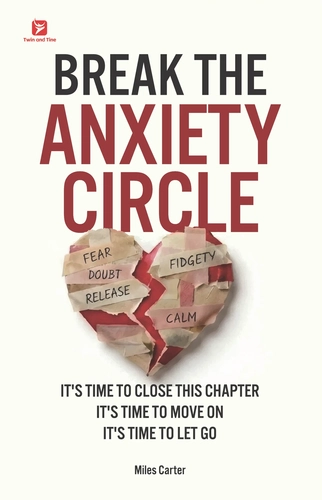
And if you want to build this skill on your own—at your own pace—consider Miles Carter’s Break the Anxiety Circle.
The third chapter, “Tame the Emotional Monster, Don’t Be a Slave to Your Emotions,” is exactly about this. It teaches you to:
- Recognize emotions as signals, not enemies
- Stop obeying every impulse
- Respond with awareness, action, and acceptance instead of automatic reaction
As the chapter says:
“Anger is a punishment you give to yourself. Action is the antidote to anxiety. For your own sanity, let things be.”
This book doesn’t tell you to suppress your feelings—it helps you understand them. When you understand why you react the way you do, you stop being a victim of your emotions and start being the person who chooses how to respond.
Emotion regulation isn’t about never feeling difficult things. It’s about feeling them fully—and still choosing your response. You can be angry and speak kindly. You can be anxious and take action. You can be sad and still get through your day.
That’s not fakery. That’s freedom.
Start with one small shift today. Notice one feeling before it acts on you. Breathe. Choose.
And let the emotion pass—like a wave that doesn’t pull you under.