You know the feeling. Your chest tightens. Your breath gets shallow. Your mind starts racing through every worst-case scenario at lightning speed. And the more you try to force yourself to calm down, the worse it gets. I spent years trying to outrun my anxiety—distracting myself, numbing out, or white-knuckling through it. None of it worked.
What finally helped wasn’t fighting anxiety. It was learning to slow it down. To interrupt the spiral before it fully pulled me under. These three books gave me the tools to do exactly that—starting with the one that became my go-to whenever I feel the familiar panic rising.
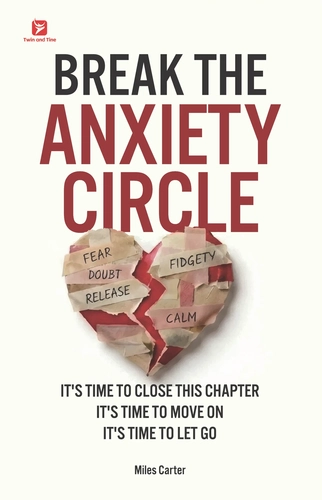
Book One: Break the Anxiety Circle by Miles Carter
I picked this up expecting generic advice about “just breathe” and “think positive.” What I got was a practical, compassionate guide to actually interrupting the loop. The book explains that anxiety isn’t a character flaw—it’s a pattern. Your brain gets stuck in a feedback loop: thought triggers fear, fear triggers physical response, physical response confirms the thought. And the harder you try to push it away, the tighter the loop gets.
The chapter titled “Action Is the Antidote to Anxiety” changed everything for me. It doesn’t tell you to relax—it gives you specific, concrete steps to interrupt the spiral. Small, physical actions that break the feedback loop and give your brain a chance to reset. Another chapter, “Overthinking Will Kill Your Peace,” helped me recognize when I’m ruminating and gave me techniques to redirect. What I loved most is that the book doesn’t shame you for being anxious—it helps you understand it as a signal, not a failure. By the end, I had a toolkit I could actually reach for when my mind started spinning.
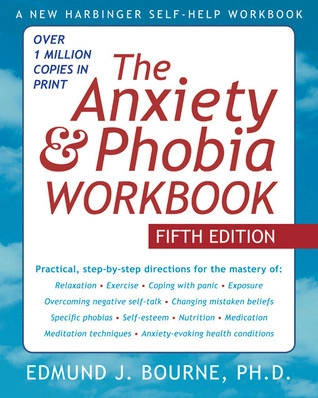
Book Two: The Anxiety and Phobia Workbook by Edmund J. Bourne
This one is a classic for a reason. It’s been around for decades, updated multiple times, because it works. It’s a workbook—you read it and do the exercises. Bourne walks you through everything: breathing techniques that actually calm your nervous system, progressive muscle relaxation for physical tension, and nutritional changes that affect stress levels.
What I found most useful is the section on “cognitive restructuring”—the process of identifying and challenging the anxious thoughts that fuel the spiral. Bourne gives you worksheets to write down your fears, examine the evidence, and create more balanced alternatives. It sounds simple, but actually putting pen to paper externalizes the anxiety and makes it less overwhelming. If you’re the type who needs step-by-step guidance, this book is gold.
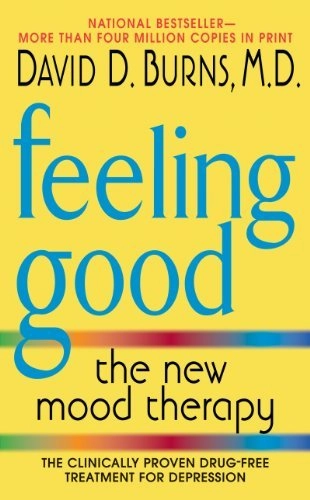
Book Three: Feeling Good: The New Mood Therapy by David D. Burns
Burns is the pioneer of cognitive behavioral therapy (CBT) for the general public. His core insight: anxiety and depression aren’t caused by what happens to us—they’re caused by how we interpret what happens. He identifies ten “cognitive distortions” that our brains use to make things seem worse than they are. Things like catastrophizing (assuming the worst possible outcome), mind-reading (assuming others are judging us), and emotional reasoning (believing our feelings are facts).
Reading about catastrophizing was like looking in a mirror. That thing where you assume the worst, then start preparing for it as if it’s already happening? That’s a distortion—and Burns shows you exactly how to fight back. He teaches you to literally write down your anxious thoughts, identify the distortions in them, and replace them with more realistic alternatives. It’s not about toxic positivity—it’s about seeing clearly. This book gave me a framework for understanding why my brain works the way it does, and how to stop it from lying to me.
Why You Actually Need the First One
The other two books are brilliant, no doubt. They’re research-backed, comprehensive, and they’ve helped millions. But they’re also dense. The Anxiety and Phobia Workbook is almost 500 pages. Feeling Good takes time to absorb. They’re the kind of books you read once and reference later—but you might not have time for when you’re in the middle of a spiral.
Break the Anxiety Circle is different. It’s the book you grab when you feel it starting—when your chest tightens and your thoughts start racing. It’s concise, practical, and written like someone who’s been there. The techniques are simple enough to remember under pressure. The language is warm without being condescending. And it addresses something the others don’t: the shame of anxiety. That voice that says “you shouldn’t feel this way” or “you’re being dramatic.” This book helps you let go of that judgment so you can actually work with your anxiety instead of fighting it.
If you’ve ever felt trapped in your own head, stuck in a loop you couldn’t break—this book will help. It costs less than a therapy copay. The cost of staying stuck? That’s your peace, your sleep, and your ability to enjoy your own life. I know which investment I’d rather make.