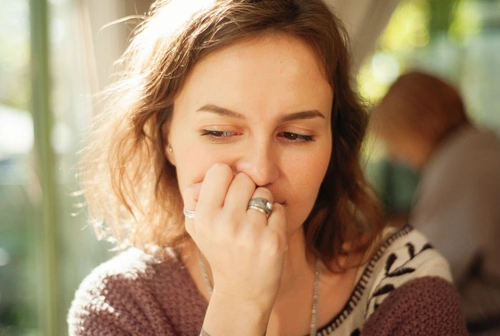
I still remember the night I called my friend Lena after she’d been on a third date with someone new. She was pacing her kitchen, phone pressed to her ear, re-reading his last text out loud to me for the fourth time. “He wrote ‘sounds good’ with a period. Not an exclamation point. I think I overshared about my mom. I should double-text to fix it. Should I? I think I already scared him off.” She hadn’t asked him a single question about his day. She couldn’t. Her mind was a hurricane of what-ifs, all pointing inward. That’s when it hit me: she wasn’t really connecting with him. She was trying to soothe herself, using him like a mirror to prove she was still wanted.
Quick Answer: Are Anxious Attachers Emotionally Unavailable?
If you’re wondering whether anxious attachment can block emotional availability, consider these:
- Yes, anxious attachment can create a different flavor of emotional unavailability.
- It’s not about avoidance. It’s about self-absorption driven by fear.
- Anxious attachers often perform deep intimacy but struggle to truly see their partner.
- The constant need for reassurance can drown out the other person’s real feelings.
- Unavailability is a spectrum. Anxious and avoidant styles both block true connection, just in opposite ways.

Why Am I So Clingy Yet Still Feel Like I’m the One Being Emotionally Starved?
Most people picture an emotionally unavailable person as distant, cold, impossible to reach. But clingy people can be just as unavailable. I used to think my own anxious patterns—needing daily affirmations, getting panicked at silence—meant I was deeply invested. Now I see that I was deeply invested in my own emotional state. I was present in the room but absent in the heart.
True emotional availability means you can hold space for someone else’s reality without making it about you. When I was anxious, every conversation was a test. “Does he still like me? Am I safe? Is this the moment he leaves?” I couldn’t hear his struggles because mine were screaming so loud. He’d tell me about a lousy work call, and I’d somehow turn it into a referendum on our relationship. That’s not being there for him. That’s being there for myself, using his words as data for my endless reassurance project.
So yes, an anxious attacher can be emotionally unavailable. The door is wide open, but they’re blocking it with their own body, desperate for you to walk through while simultaneously checking the exit sign.
How Do Anxious Attachers Hide Their Emotional Unavailability?
Anxious attachers often seem like the opposite of unavailable. We share everything. We ask 27 questions about your childhood by the second date. We crave closeness with an intensity that feels romantic, even flattering. But much of that sharing is a disguised plea: “Tell me I’m okay. Tell me you won’t leave. Tell me I’m finally safe.” When you don’t respond with exactly the right tone or timing, the panic floods in, and suddenly we’re not hearing you anymore. We’re managing a crisis inside our own skull.
I once dated a guy, Chris, who was textbook avoidant. He’d shut down at any hint of conflict. I’d chase, he’d retreat. I told myself I was the emotionally available one because I was “fighting for us.” But looking back, I fought for my own sense of control. I needed him to engage so my anxiety could rest. I wasn’t really asking what he needed. I was demanding he meet my script. That’s a locked door with a welcome mat. It looks inviting, but you can’t actually come inside.
Signs Your Anxiety Might Be Making You Unavailable
- You dominate conversations with your own fears about the relationship.
- You ask for reassurance but rarely check in on your partner’s emotional state without a hidden agenda.
- When they share a hard feeling, you immediately relate it back to your own experience.
- You feel bored or restless when they talk about something that doesn’t directly involve you.
- You’ve been told you’re “intense” or that they feel like they can’t have a bad day without you falling apart.
How Anxious Unavailability Differs from Avoidant Unavailability
| Anxious Emotional Unavailability | Avoidant Emotional Unavailability |
|---|---|
| Craves closeness but on own terms | Pushes closeness away entirely |
| Over-shares to fill silence | Avoids sharing to maintain distance |
| Demands immediate response | Ignores attempts at connection |
| Panics at emotional distance | Panics at emotional depth |
| Blames self for any rupture | Blames partner or shuts down |
| Appears highly engaged but is actually monitoring perceived slights | Appears detached and uninterested |
Is It Just Anxiety or Am I Really Emotionally Unavailable for My Partner?
Maybe you’re reading this and your stomach just dropped. You’re the anxious one. You love deeply. How dare I call you unavailable. I get it. I felt that way too. But love and availability aren’t the same thing. You can love someone with your whole heart and still be unable to give them the kind of steady, curious presence they need to feel truly known.
Here’s a way some people test this: for one week, every time you interact with your partner, ask yourself, “What did I just learn about them that I didn’t need?” Not information that confirms they still like you, not clues about the future. Something about their inner world that has nothing to do with you. If the answer is consistently “nothing,” you might be emotionally unavailable, even if you’re the one who always initiates the deep talks.
I tried this with Lena recently. She texted me after a date and said, “I asked him about his art project because I was curious, not because I needed him to like me back.” She paused. “I actually heard his answer.” That was new. That was available.
What If I’m the Anxious One and They’re the One Who’s Truly Not That Into Me?
Sometimes we anxiously attached people fixate on the wrong question. We obsess over “Are they emotionally unavailable or just not that into me?” But the healthier question might be: “Am I so afraid of being abandoned that I’ve stopped noticing whether I even enjoy this person’s company?” When you’re consumed with securing the relationship, you lose the ability to evaluate it clearly. You might be trying to open a lock that was never meant for you, while ignoring the fact that the lockbox is empty anyway.
A mentor once told me: “If you’re always the one holding the emotional flashlight, you can’t see if anyone’s actually in the room.” Anxious attachers often date people who are indeed not that into them, because the chase confirms their core wound. They mistake the drama of pursuit for deep connection. But deep connection feels quiet. Safe. Not like proof.
What Can I Do If I’m an Anxious Attacher Who Wants to Become More Emotionally Available?
Start small. The next time your partner shares a frustration, resist the urge to make it about the relationship. Just listen and say, “That sounds really hard. Tell me more.” Don’t evaluate. Don’t seek reassurance inside their sentence. Practice that for a week. It’s going to feel like holding your breath underwater. But eventually, you’ll surface and realize you can breathe and still hold someone else’s world.
Learn to sit with the discomfort of not being the center of every interaction. Your partner’s bad mood might not be about you. Their silence might be exhaustion, not rejection. The more you can tolerate that uncertainty without grabbing for a “fix,” the more room you give them to actually show up.
Therapy helps, books help, but mostly it’s the daily choice to stop scanning for threats and start seeing a person. It’s not about being less anxious overnight. It’s about being less self-centered while anxious. And that’s work anyone can do.
FAQ: Are Anxious Attachers Emotionally Unavailable?
Q: Can an anxious attacher be the emotionally unavailable one in a relationship?
A: Absolutely. Anxious attachers often flood the space with their own needs for reassurance, leaving little to no emotional oxygen for their partner. Unavailability isn’t just about distance; it’s about not making room.
Q: How do I know if I’m emotionally unavailable because of my anxious attachment?
A: Check if you listen to understand or listen to respond with your own fears. If you can’t go a full conversation without steering it back to your need for security, you might be unavailable.
Q: What’s the difference between being anxiously attached and just being a caring partner?
A: Caring partners offer curiosity. Anxious partners offer intensity loaded with expectation. Caring means you can handle their bad day without falling apart. Anxious means their bad day becomes your crisis.
Q: Can anxious attachers and avoidant attachers both be emotionally unavailable in similar ways?
A: They mirror each other. Avoidants fear losing themselves, so they shut the door. Anxious attachers fear losing the other, so they batter down the door. Neither truly lets the other person just be.
Q: Does therapy help anxious attachers become more emotionally available?
A: Many people find that therapy, especially modalities focused on attachment patterns, helps them untangle their own fears from their partner’s reality. It’s a long road, but available love often starts with learning to soothe yourself first.
Q: Can two anxious attachers have an emotionally available relationship?
A: It’s challenging. Two people needing constant reassurance can create a beautiful but exhausting bubble. Without self-work, they may stay emotionally available to each other only as long as the reassurance flows uninterrupted. A single quiet day can feel like abandonment.
Q: What if my partner thinks I’m not that into them, but I’m actually just anxious?
A: This is a common and painful mismatch. Your partner might misinterpret your anxiety as disinterest because you’re too focused on managing your own internal panic to show up warmly. Try naming it: “I know I can seem distracted, and I realize it might look like I’m not interested. The truth is, I get anxious and I’m working on it. I do care about you.” Naming the gap can help them see you more clearly.
One Last Thing
Last month, Lena sat across from me at a café. She’d been dating someone for three weeks and hadn’t panicked once. “He’s not my project,” she said, almost surprised at her own words. “I just like being around him. I don’t need him to plug a leak in me.” She took a sip of her coffee and didn’t check her phone. I think that’s the quietest form of availability there is: choosing presence over proof.
References
- Levine, A., & Heller, R. (2010). Attached: The New Science of Adult Attachment and How It Can Help You Find—and Keep—Love. TarcherPerigee.
- Gottman Institute. (2023). How to move from insecure to secure attachment. Retrieved from https://www.gottman.com
- Cassidy, J., & Shaver, P. R. (Eds.). (2016). Handbook of Attachment: Theory, Research, and Clinical Applications (3rd ed.). Guilford Press.