About three weeks ago, I was sitting on the floor of my daughter’s room, trying to build a Lego tower. She was laughing. My hands were shaking. I looked at her and felt… nothing. Just a hollow sense of dread where love used to be. That’s when I knew something was deeply wrong. I’d been through a virus, then my stepdad passed. Grief and fever collided and my brain just snapped. Now I’m slowly learning how to feel normal again after anxiety hijacked everything I thought I knew about myself.
Quick Recovery Today
If you’re in the middle of that hollow space, try these:
- Recognize the anxiety alarm as a false signal, not reality.
- Stop trying to feel “normal” immediately —rebuild in small moments.
- Share what’s happening with one person you trust completely.
- Use a grounding ritual when joy triggers dread.
- Be patient. Your brain can heal, but it takes weeks, not days.
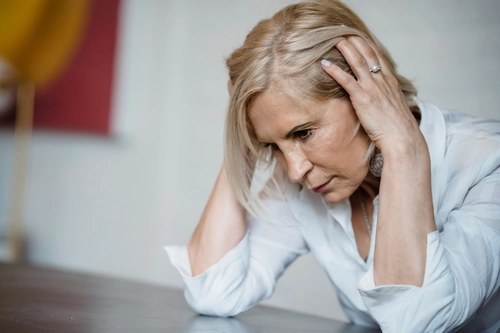
Why Does Anxiety Make Everything Feel Permanently Broken?
Have you ever had a smoke alarm go off because of burnt toast? That’s what my brain felt like. The alarm was screaming, but there was no actual fire. I’d wake up with a wave of dread before I even opened my eyes. My mind would scan for a reason to be afraid and latch onto the most tender parts of my life—my kids growing up, my own mortality, the pointlessness of everything. These weren’t new thoughts. I’d always known life was temporary. But before, that knowledge didn’t stop me from enjoying a movie with my husband or planning a weekend trip. Now every beautiful moment came with a sharp emotional jab: “Don’t enjoy this, it won’t last.”
This isn’t a personality change. Many parents describe it as their nervous system getting stuck in overdrive. Think of it like a car alarm that won’t turn off. The threat is gone, but the siren keeps blaring. Your body is flooded with stress chemicals that color everything in fear. I remember reading somewhere that prolonged stress can temporarily alter how the brain processes emotions—not permanently, just for a while. That gave me hope. The feeling of being permanently changed? That’s a symptom, not a prophecy. Why does it feel so convincing? Because the alarm is loud, and it drowns out the quiet signals that tell you you’re safe.
How to Feel Normal Again After Anxiety: The Slow, Boring Rebuild
I wanted a magic switch. There isn’t one. What I found instead was a slow, boring, and surprisingly simple path back. It started with tiny windows of okay-ness. I’d be washing dishes and notice my mind wasn’t racing. Five minutes later the dread returned, but that gap was real. I clung to that. Normal doesn’t come back as a single moment—it returns in fragments. An afternoon where you laugh at a dumb joke. A morning where you wake up and your first thought isn’t fear.
One of the most helpful shifts I made was learning to talk back to the anxiety. Not fighting it. Fighting made it scream louder. Instead, I’d say, “Oh, there’s that alarm again. Thanks for trying to protect me, but there’s no danger right now.” Saying it out loud, even with a shaky voice, helped. My husband would hear me muttering to myself and just squeeze my hand. You don’t need a script. Just name it. “This is the anxiety talking. Not the truth.”
I also had to stop checking if I felt normal. Every time I asked myself, “Am I okay now? Do I feel like myself?” the answer was no, and that sent me spiraling. A parent in a support group told me, “Stop testing the water. Just swim.” I didn’t know what that meant at first. Then I realized: the more I monitored my feelings, the more I fed the cycle. So I practiced doing things without evaluating my emotional state. I played with my kids not to prove I could enjoy it, but just because they wanted to. The enjoyment crept back later, when I wasn’t looking.
What about the existential thoughts? They lost their power when I stopped engaging. I’d think, “One day I’ll be gone and nothing matters.” Instead of arguing, I’d just say, “Maybe. But right now my daughter wants a snack.” That grounding in present-day mundanity was a lifeline. Did it feel profound? No. Did it help? Absolutely.
A Simple Ritual That Anchored Me
I started using a practice I could hold onto in the chaos. When the wave hits—especially that terrifying blankness after a moment of joy—you pause. You whisper to yourself: “I’m feeling anxious right now. This is the alarm. It will pass.” No judgment, just recognition. Then you pick one small, physical action. Anything. Pick up a sock off the floor. Fill a water glass. Touch the wall and name its color. The action doesn’t need meaning. It just needs to happen in the real world, not in the spinning thought-loop.
Why did this help me? Because anxiety lives in the future and the abstract. “What if this never ends?” “What if nothing matters?” Those questions have no answers you can touch. But a sock? That’s real. Your hands on a mug? Real. This ritual gave my brain a concrete anchor when everything felt like smoke. Some parents find it helps to involve a child. I’d sometimes say to my daughter, “Hey, can you find me something blue in this room?” Her little mission pulled me out of my head. I didn’t explain why. She just thought it was a game.
When Joy Feels Like a Trigger
This was the cruelest part. I’d start to relax, maybe while watching my kids play, and then—bam—a jolt of fear as if something terrible was about to happen. My brain seemed to interpret the feeling of safety as a false positive that needed immediate correction. “Don’t get comfortable,” it screamed. How do you feel normal again when happiness itself becomes a warning sign?
I learned to expect the alarm. I’d tell myself, “Okay, I’m going to enjoy this for maybe thirty seconds before the alarm shows up. That’s fine.” When it arrived, I didn’t push the joy away. I just acknowledged the alarm was there too. Joy and anxiety can coexist, weirdly. It’s like tuning a radio to two stations at once. The static doesn’t erase the music. You can hear both. Over time, the alarm got quieter because I stopped reacting to it as a threat. It became a familiar nuisance, not a monster.
The Inconsistency of Recovery
Those good windows terrified me at first. I’d feel almost myself while cleaning the kitchen, then crash harder when the dread returned. Was it real? Yes. The fact that you can have moments of clarity means your brain still knows how to produce normal emotional responses. The circuits aren’t destroyed. They’re just temporarily overloaded. Recovery looks like a stock market graph with lots of ups and downs, but the overall trend eventually goes up.

When I felt good, I’d be tempted to test everything. “Let me see if I can enjoy a movie like I used to.” Wrong move. That turned the movie into a performance review. Better to just watch the movie and let whatever happened happen. No grading. I realized I had to stop demanding proof of recovery. The proof comes later, when you look back and notice you haven’t had a panic attack in three days. Or when you catch yourself humming.
Did things I used to enjoy feel normal again? Yes, but slowly. Video games? I couldn’t play for weeks because they felt meaningless. Then one night I booted up a stupid racing game and just… played. No deep thoughts. The laughter came back, and it surprised me. It always surprises you.
FAQ: How to Feel Normal Again After Anxiety
Q: How long does it take to feel normal again after anxiety?
A: There’s no set timeline. Some people notice shifts in weeks, others take months. The key isn’t speed—it’s noticing the small windows of okay-ness that start appearing. Recovery is gradual, not a single moment.
Q: Why do I feel like I’ll never be the same?
A: That feeling is a symptom of the anxiety, not a prediction. When your nervous system is overloaded, everything feels permanent. But the brain can heal. The moments when you forget to feel anxious are proof that normal is still there.
Q: What if the anxiety comes back after a good day?
A: That’s normal. Recovery isn’t linear. A bad day doesn’t erase progress. It’s just a wave. Let it pass without punishing yourself for it.
Q: How do I talk to my family about what I’m going through?
A: Start simple. “I’m going through a rough patch with anxiety. It’s not about you—I just need you to know I’m working on it.” You don’t need to explain everything. Just let them in a little.
Q: Will I ever enjoy things the way I used to?
A: Yes, but it will feel different at first. Enjoyment might come in shorter bursts. That’s okay. Over time, those bursts get longer. The joy is still there. Your brain just needs practice letting it in again.
One Last Thing
Remember that first scene on the floor with my daughter? A few days ago, she asked me to build another tower. I said yes without thinking. My hands were steady. I didn’t feel euphoric. I just felt… present. And that presence was enough. The normal you’re looking for? It’s not a destination. It’s a thousand small returns like this one.
References
- Bourne, E. J. (2015). The Anxiety and Phobia Workbook (6th ed.). New Harbinger Publications.
- McDonagh, B. (2015). Dare: The New Way to End Anxiety and Stop Panic Attacks. BMD Publishing.
- Van der Kolk, B. A. (2014). The Body Keeps the Score: Brain, Mind, and Body in the Healing of Trauma. Viking.