At 3:12 a.m., I was sitting on the edge of my bed counting my heartbeat with shaking hands. The house was quiet. My husband was asleep beside me. Nothing was actually wrong, but my body was convinced something was.
I was 43, exhausted, anxious, and no longer feeling like myself.
Maybe you know the feeling. Lying awake at 3 a.m. with your mind racing. Snapping at your family over something tiny and wondering why you suddenly feel so on edge.
For months, I thought I was just stressed. My blood tests came back “normal.” But I still felt off. It wasn’t until a friend mentioned perimenopause that I started asking a different question: could hormonal changes be part of what I was feeling?
If this feels familiar, you’re not alone. Here’s what helped me understand what was happening.
Quick answer: why anxiety can feel different in women over 40
Anxiety in women over 40 can be connected to stress, sleep loss, hormonal changes, perimenopause, health worries, or major life pressure. Sometimes it feels like racing thoughts. Other times, it feels physical: heart pounding, chest tightness, irritability, brain fog, or a sense of dread.
If these symptoms are new, intense, or affecting your daily life, it’s worth talking to a doctor to rule out medical causes. But if you’ve been told nothing urgent is wrong and you still feel unlike yourself, tracking your symptoms, improving sleep habits, reducing triggers like caffeine and alcohol, and getting emotional support can help you feel more steady again.
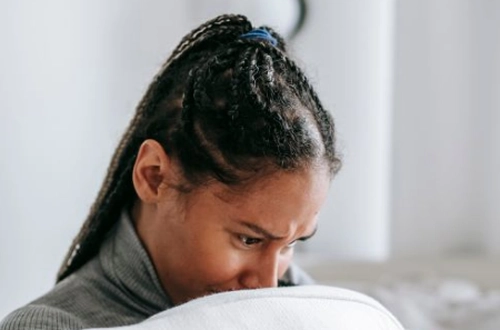
The night I ended up in urgent care
It was a Tuesday. Nothing special had happened. I was sitting on my couch watching a show, and suddenly my heart started slamming against my ribs. My chest felt tight. My hands went numb. I thought I was having a heart attack.
My husband drove me to urgent care. They ran an EKG, took blood, and checked everything. The doctor came back and said, “Your heart is fine. Your blood work looks normal.” Then he paused and asked, “How old are you?” I said forty‑three. He nodded and said, “Have you noticed any other changes lately? Sleep, mood, your cycle?”
I’m glad I got checked, because chest tightness, numbness, and a racing heart are not symptoms I wanted to guess about.
That was the first time anyone suggested that what I was experiencing might be related to perimenopause. I didn’t even know that word. I thought perimenopause was just hot flashes. No one told me it could feel like panic attacks and dread.
That night started my own research. I read studies, joined online groups, and talked to other women. What I found was both frustrating and comforting. Frustrating because so little is said about this. Comforting because I wasn’t alone.
Symptoms I didn’t realize were connected
Looking back, I had signs for at least a year before the panic attack. I just didn’t connect them.
- Sleep started falling apart. I’d wake up at 3 or 4 a.m. with my mind already racing. Sometimes I couldn’t fall back asleep at all.
- I became irritable in ways that felt out of character. Small things – a dish left in the sink, a question asked twice – would make me snap. Then I’d feel awful right after.
- Brain fog became normal. I’d walk into a room and forget why. I’d lose words mid‑sentence. I thought I was getting dementia.
- My period became unpredictable. Sometimes it came early, sometimes late, sometimes heavy, sometimes light. I never knew what to expect.
- The anxiety didn’t feel like worry. It felt like a raw, physical dread. Like something bad was about to happen, even when everything was fine.
If you’re experiencing several of these together, especially around your cycle, you might be going through the same thing I did.
What helped me (a lot, but not overnight)
I didn’t find one magic cure. I found a handful of small things that, when I did them consistently, made the anxiety quieter.
1. I started tracking my symptoms
I downloaded a simple period tracker app and started noting when I felt anxious, when I slept badly, and where I was in my cycle. Within a few weeks, a clear pattern emerged. My worst anxiety always hit in the week or two before my period. Just seeing that pattern on paper made me feel less crazy. It wasn’t a personal failure. My body had a pattern, and hormones seemed to be part of it.
2. I changed how I moved my body
I used to do intense workouts. During this phase, they made my anxiety worse, probably because they spiked my cortisol even more. I switched to daily walks, gentle yoga, and strength training a few times a week. It didn’t feel like “enough” at first, but my nervous system calmed down.
3. I stopped fighting 3 a.m. wake‑ups
For months, I’d lie there trying to force myself back to sleep. That never worked. Instead, I started getting up, going to the living room, and reading a boring book for twenty minutes. Then I’d go back to bed. Often I’d fall asleep. Not always. But the pressure was gone.
4. I cut way back on caffeine and alcohol
This one hurt. I loved my morning coffee and evening glass of wine. But both were clearly making my anxiety worse. I switched to half‑caff in the morning and tea at night. Within two weeks, my heart palpitations dropped significantly.
5. I used a simple breathing technique
When I felt that rush of panic, I started doing a technique called “physiological sigh”: two quick sniffs in through my nose, then one long exhale through my mouth. A friend taught me this. It sounds too simple to work, but it often stopped the spiral within a minute.
6. I talked to a therapist who understood this life stage
I found a therapist who specialized in women’s health. She didn’t tell me to “relax.” She helped me see that my anxiety wasn’t a personality flaw; it was a biological response. That shift alone made me feel less ashamed.
One woman in an online group wrote that she stopped driving on highways because she was terrified she’d panic behind the wheel. Another said she thought she had early dementia because she kept forgetting words mid‑sentence. Hearing those stories reminded me I wasn’t alone.
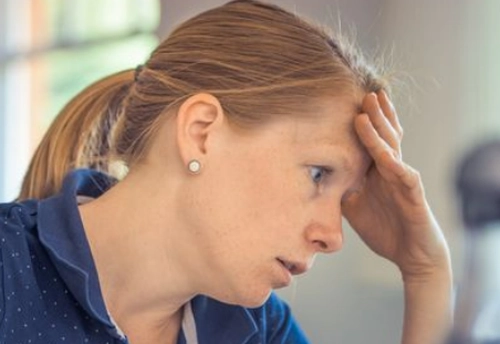
When I decided to talk to my doctor
For a while, I tried to manage everything with lifestyle changes. And a lot of it helped. But there were still days when the anxiety was too loud. I couldn’t sleep. I couldn’t focus at work. I was avoiding social situations.
So I made an appointment with my gynecologist. I told her exactly what I was experiencing. She listened. She didn’t dismiss me. We talked about what I had already tried and what else might be worth exploring. She explained that treatment looks different for every woman, depending on symptoms, health history, and risk factors. For me, the next step was not medication right away. It was refining my daily habits and working with a therapist who understood this life stage.
That conversation alone made a difference, because someone finally confirmed that I wasn’t imagining things.
What I still struggle with
I still have days where the anxiety sneaks up on me. Usually when I’m tired, stressed, or close to my period.
The difference now is that I don’t panic about the panic.
I know what it is. I have tools. I trust that it will pass.
If it doesn’t, I remind myself: this is temporary. My body is not broken. It’s just adjusting.
The bottom line
If you’re a woman in your 40s who suddenly feels anxious, irritable, exhausted, and not like yourself, please know that you’re not alone. You’re not broken. Your body is going through a major transition that affects your mood, your sleep, and your stress levels.
What helped me was tracking my symptoms, changing my daily habits, finding a therapist who understood this phase, and having an honest conversation with my doctor, not for a prescription, but for validation and guidance. What helps you might look different. But the most important thing I learned was to stop blaming myself.
Some nights I still wake up at 3 a.m. But now, instead of thinking “something is wrong with me,” I make tea, take a breath, and remind myself: my body is changing, not betraying me. I still have anxious moments. But they don’t run my life anymore. And if you’re in the middle of it right now, I want you to know that it can get better. Not overnight. But it can.
A few things people usually wonder
Is anxiety common in women over 40?
Yes. Many women experience increased anxiety in their 40s, though the reasons vary. Stress, sleep disruption, hormonal shifts, perimenopause, health worries, and life pressure can all play a role. You are not alone.
Can perimenopause cause anxiety or panic attacks?
Perimenopause may contribute to anxiety for some women, especially when combined with sleep disruption and cycle changes. Hormonal fluctuations can affect mood and stress regulation. If you’re noticing a pattern, tracking your symptoms and discussing them with a doctor can help.
How do I know if my anxiety is hormonal or regular stress?
Look at whether your symptoms track with your cycle, sleep quality, hot flashes, or other perimenopause signs (irritability, brain fog, period changes). Keeping a log of your symptoms for a few weeks and then talking with your doctor can be very helpful. Don’t try to diagnose yourself.
When should I see a doctor for anxiety after 40?
If your symptoms are new, sudden, or severe – especially if you have chest pain, trouble breathing, fainting, or thoughts of self‑harm – seek medical attention right away. Also consider seeing a doctor if anxiety is interfering with your sleep, work, relationships, or ability to function day to day.
What helps anxiety in women over 40?
Strategies that help many women include symptom tracking, improving sleep habits, reducing caffeine and alcohol, gentle exercise (walking, yoga), breathing techniques, therapy with a provider familiar with perimenopause, and having an honest conversation with a doctor about possible treatment options.
Why do I wake up anxious at 3 a.m.?
Early morning waking with racing thoughts can be linked to stress, sleep cycles, hormone changes, blood sugar shifts, alcohol use, or anxiety rumination. Keeping a log of when this happens and what you ate, drank, or did the day before may help you spot patterns. Discuss it with your doctor if it persists.