You are already running late. Then you cannot find your keys. Your heart starts pounding. Your jaw clenches. You snap at no one in particular. By the time you find them (on the kitchen counter, exactly where you left them), you have already ruined your own morning.
Or maybe it is a notification ping when you are already overwhelmed. A dirty dish left in the sink. A partner who asks “what is wrong?” in a tone that somehow makes everything worse.
I have had days where a single spoon made me cry. Not because the spoon mattered. Because my stress bucket was already full, and that spoon was the last drop.

If this sounds familiar, you are not broken. You are not “too sensitive.” You are just a human running low on margin. The good news is that you can train yourself to catch these tiny triggers before they turn into big explosions.
Here is what I have learned, from my own kitchen floor and from a bit of psychology, about why small things set us off, and what actually helps.
The “Micro-Anger” Quick Relief List: How to Stop Overreacting in Under 60 Seconds
When you feel that sudden spike over something tiny, do not try to think of a strategy. Just glance at this list. These things take less than 60 seconds.
| If this happens… | Try this first… | Why it sometimes works |
| You cannot find your keys / phone / wallet | Stop searching. Take 5 slow breaths. Then look again. | Panic narrows your vision. Calming down first helps you actually see. |
| Someone leaves a mess (again) | Leave the room. Go to the bathroom or step outside. | Distance lowers emotional intensity. You can respond later. |
| A notification pings while you are busy | Turn the phone face down. Say “not now” out loud. | Naming the choice gives you back a tiny sense of control. |
| You feel a hot wave of rage over something small | Squeeze something hard (a pillow, a stress ball, the edge of the counter). | Physical pressure can bleed off some of the angry energy. |
| You want to snap at someone | Count to five in your head. Do not say anything. Just breathe. | A short pause can interrupt the automatic reaction. |
Keep this list on your phone or fridge. When you are already annoyed, you will not remember “what to do.” A quick glance helps.
Why Do Tiny Triggers Cause Such Big Reactions?
Let me break down what is happening.
Most of the time, the real cause is not the trigger itself. It is what has been piling up underneath.
The stress bucket (a real psychology concept). Imagine your emotional capacity as a bucket. Every stressor adds a drop: traffic, a rude email, lack of sleep, hunger, a deadline. By the time the spoon appears, your bucket is already near the top. That one small drop makes everything spill over. Many therapists use the “stress bucket” model to explain emotional overload.
Lack of small releases. Many of us swallow tiny frustrations all day to “be nice” or “not make a big deal.” But ignored annoyances do not disappear. They accumulate in your body. Then one tiny thing pulls the trigger, and all that stored tension comes out at once.
Unmet needs disguised as annoyance. Often, the real issue is not the dirty dish. It is exhaustion, hunger, feeling unappreciated, or needing a break. But those needs feel too big or vulnerable to name, so your brain attaches the anger to something small and safe to fight about.
Learned patterns. Some of us grew up watching adults explode over small things. Or we learned that frustration only gets attention when it is loud. Your brain is just following an old script. That script can be rewritten.
A Real Example: The Spoon That Broke Me
Here is how this played out in my own kitchen.
Last month, I walked into the kitchen and saw a dirty spoon in the sink. My husband had left it there. I felt a wave of rage so intense I wanted to throw it against the wall. My heart was racing. My face was hot.
I almost yelled. But I had been trying to get better at this, so I paused. I left the kitchen. I stood in the hallway for thirty seconds. Then I asked myself: “What is this really about?”
The answer was not the spoon. I had slept badly. I was hungry. I had felt unappreciated all week. The spoon was just the drop that made the bucket spill.
So I did not yell. I ate a snack, drank some water, and came back. Ten minutes later, I calmly said: “Hey, can you please rinse your spoon next time? I am really tired today.” He said sorry. No fight. No shame.
That does not always happen. Sometimes I still snap. But that time, the pause worked.
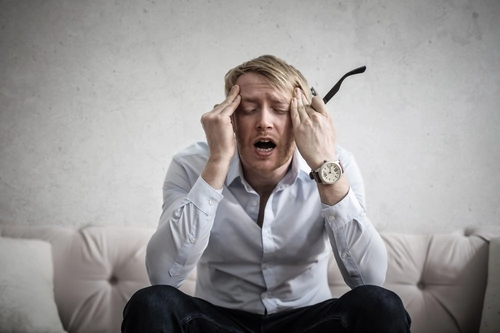
4 Ways to Train Your Emotional Micro-Adjustment Muscle
You cannot stop the initial spike. But you can train yourself to react a little less explosively over time. These are small daily practices, not big therapy sessions.
1. Do the “Is This Really About the Spoon?” Check to Stop Overreacting
Quickly identify the real need behind your frustration before you react.
When you feel that spike, ask yourself quickly: “What is this actually about?” Exhaustion? Hunger? Feeling ignored? Just naming the real cause lowers the intensity. This redirects your brain from blame to problem-solving.
2. Use Small Daily Releases to Prevent Emotional Overflow
Let out tiny frustrations before they pile up into a big explosion.
Before you explode, let out small frustrations in small ways. Complain to a friend for 30 seconds. Write down one annoying thing in a notes app. Sigh loudly in the car. Little releases keep your stress bucket from overflowing.
3. The 5-Second Pause to Interrupt Automatic Anger
Insert a tiny gap between the trigger and your response to regain control.
When you feel the urge to snap, wait five seconds. Count in your head. Do not say anything. Just breathe. That tiny gap can change your response from automatic to chosen.
4. The “Repair Fast” Habit to Stop the Shame Spiral
Apologize quickly when you overreact to prevent long-term relationship damage.
When you do overreact (and you will), apologize quickly. “I am sorry I snapped. That was not about you. I am just exhausted.” Repairing fast stops the shame spiral and models good behavior for others.
A Quick Look at Common Tiny Triggers and What Is Really Going On
| Tiny trigger | What is often underneath | A small shift that sometimes helps |
| Lost keys / wallet / phone | Feeling out of control + running late | Stop searching. Breathe. Retrace your steps slowly. |
| Dirty dishes left out | Feeling unappreciated or doing more than your share | Say “I need help with this” instead of “you never help.” |
| Loud chewing / breathing | Sensory sensitivity + already overstimulated | Move to another room or put in one earbud. |
| Partner asking “what is wrong?” | Feeling pressured to perform an explanation | Say “I do not know yet. Give me 10 minutes.” |
| Notification ping | Task interruption + decision fatigue | Turn off non-essential notifications. One less drop. |
Frequently Asked Questions About Overreacting to Small Annoyances
1. Why do I overreact to small things so easily?
Your stress bucket is likely already full from other pressures (lack of sleep, hunger, work stress). The small thing is just the last drop. The real cause is not the trigger; it is the pile underneath.
2. How to stop snapping at my partner over minor issues?
Step away first. Leave the room for 60 seconds. Ask yourself: “What am I actually needing right now?” Then come back and say that instead of attacking the behavior.
3. How to calm down quickly when you feel a hot wave of anger?
Leave the room. Name the feeling (“This is anger. I am overwhelmed.”). Then do a physical release: press your feet into the floor, squeeze your hands, or take 5 slow breaths.
What If You Are Overreacting Often?
If tiny triggers set you off multiple times a day, every day, it might be worth talking to a therapist or doctor. Chronic irritability can be a sign of depression, anxiety, or burnout. That is not weakness. It is information.
But for most of us, occasional overreactions are just part of being human. The goal is not to never snap. The goal is to snap a little less often, recover a little faster, and stop piling shame on top of the original feeling.
I still overreact sometimes. Last week, I snapped at my son for leaving his shoes in the hallway. My voice was sharp. His face fell. The shoes were not the issue. I was already overwhelmed by work and sleep deprivation. But in that moment, the shoes became the target.
The difference now is that I apologized faster. “I am sorry I yelled. That was not about the shoes. I have had a hard day. I love you.” It did not erase the moment. But it stopped the shame from spiraling into a whole day of feeling like a bad parent.
You are not overreacting because you are weak. You are overreacting because the pile got too heavy and the last straw was very small. That is not a personality flaw. It is just what happens when humans run low on rest, food, or emotional bandwidth.