Most of us miss the signals. Someone is polite to your face, and you walk away thinking the conversation went well. Then you find out later they cannot stand you. Or you sense something is off but cannot name it, so you ignore it, and six months later the relationship falls apart. The signs were there. You just did not know how to read them.
The problem is not that people are dishonest. It is that dislike rarely announces itself. It hides in micro-expressions, in tone shifts, in the half-second delay before someone answers. Learning to see those signals is not about becoming paranoid. It is about protecting your time and energy from people who are not on your side.
These three books taught me how to read what people are actually communicating, even when their words say something else.
Book One: Say It Right..Every Time. by Miles Carter
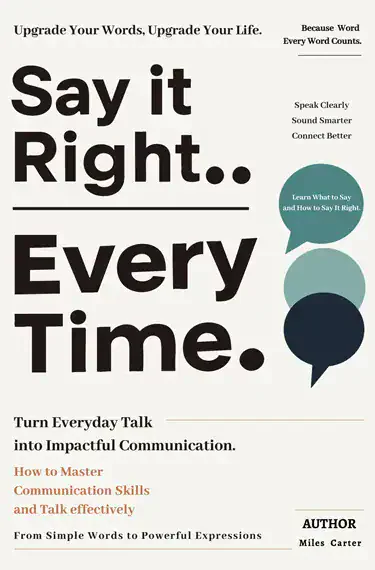
This book is not specifically about reading dislike. It is about communication. But that is exactly why it helped me see what I had been missing. When you understand how to express yourself clearly, you also start noticing when others are not doing that. You hear the hesitation. You catch the passive aggression. You notice the difference between someone who is busy and someone who is avoiding you.
The chapters on boundaries and on disagreeing without distance taught me what healthy communication actually looks like. That gave me a baseline. Once I knew what respect sounded like, I could recognize its absence immediately. The book also has a section on responding to rude comments and handling people who are subtly hostile. That alone made me feel less blindsided.
What I love is that it does not teach you to assume the worst. It teaches you to pay attention. And once you start paying attention, you cannot unsee what was always there.
Book Two: What Every BODY is Saying by Joe Navarro
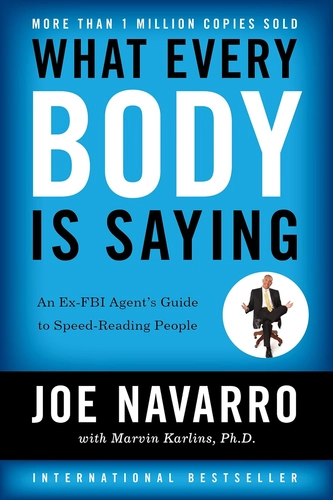
Navarro is a former FBI counterintelligence agent, and this book is his field guide to nonverbal behavior. He argues that the body always tells the truth, even when the mouth does not.
The most useful part for reading dislike is his chapter on comfort and discomfort. Navarro explains that when someone is uncomfortable with you, their body betrays them. They angle their feet away. They create distance. They touch their neck or their face. They block their eyes. These are not random movements. They are limbic responses, hardwired reactions that leak out no matter how hard someone tries to hide them.
I started noticing these signals everywhere. A colleague who always leaned back when I approached. A friend who crossed her arms every time I brought up a certain topic. Small things, but they added up. This book taught me to trust my gut by giving it a vocabulary.
Book Three: The Like Switch by Jack Schafer
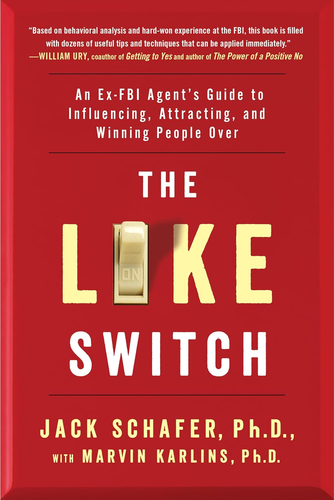
Schafer is also a former FBI agent, and his book is about how to tell whether someone likes you. He breaks down the specific behaviors people display when they are drawn to someone versus when they are repelled.
The most illuminating chapter is about the “friendship formula.” Schafer explains that liking is driven by proximity, frequency, duration, and intensity of interaction. But when those factors are missing, or when someone actively avoids them, that is a signal. He also covers micro-expressions of contempt, disgust, and dismissiveness, the three emotions most closely linked to dislike.
What I appreciated is that he does not just tell you what to look for. He tells you what to do about it. Some relationships can be salvaged with better communication. Others cannot, and knowing when to walk away is a skill worth learning.
Why Start With the First One
What Every BODY is Saying will make you fluent in nonverbal cues. The Like Switch will help you read the specific signals of liking and disliking. Both are excellent. But both are about observation.
Say It Right..Every Time. is about action. It does not just help you see the problem. It gives you the words to respond. Whether that means calling out subtle disrespect, setting a boundary with someone who is cold, or gracefully exiting a conversation with someone who does not want you there.
If you have ever felt confused by someone’s behavior, sensing something was wrong but not knowing what, this is the book that will give you clarity. It costs less than a therapy session. The cost of staying blind to the people who do not wish you well? That is your time, your trust, and sometimes your peace.