I stood in front of the bathroom mirror for eleven minutes. My mouth was doing everything right. Teeth, corners up, the whole performance. But the eyes were flat. Two bored security guards. A little unsettling, honestly. The harder I tried to crinkle them, the worse it looked. That was the counterintuitive lesson. You cannot command the muscles around your eyes. They do not take orders. They respond to feeling. So the real question is not how to move your eyes. It is how to feel something warm for one second before you look at someone.
Quick Ways to Try Today
- Stop squinting on purpose. A forced squint looks tense, not warm.
- Relax your forehead. Tension there kills any softness.
- Before you greet someone, think of one warm memory. A tiny one is enough.
- Let the feeling land in your chest for one beat.
- Then look up and let your mouth follow. The eyes usually handle themselves.
- Practice for two minutes, not twenty. More effort does not equal more warmth.
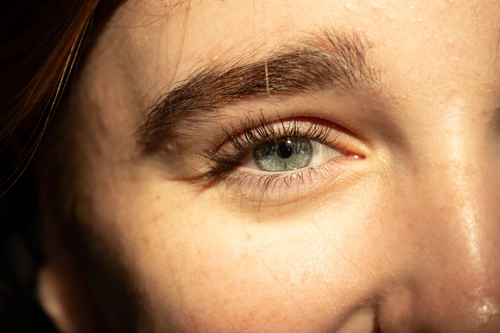
What Does It Mean to Smile With Your Eyes?
The phrase gets thrown around a lot. What it actually describes is a small physical event. The outer corners of the eyes crinkle. The lower lid lifts slightly. The skin folds a little. That is it. That is the whole trick.
A French doctor named Duchenne studied facial expressions in the 1800s. He noticed that genuine smiles involve muscles around the eyes. Fake smiles mostly use the mouth. The eye muscles are harder to control with willpower. They tend to fire when you actually feel something. Warmth. Amusement. Real connection. That is why forcing them often backfires.
How Do You Smile With Your Eyes Without Looking Fake?
I tried the crinkle tip for a week. I looked like I was squinting into the sun while smelling something bad. Someone asked if I had allergies. That was the end of that approach.
What worked instead was changing what I was thinking. Before greeting someone, I pictured a moment that made me laugh. A silly thing someone said. A dog video. Anything real. I held that feeling for one second. Then I looked at the person and let my mouth follow. Most of the time, the eyes took care of themselves.
When a smile is genuine, the eyes go soft. When it is forced, the eyes stay flat. Sad eyes go flat. Happy eyes go soft. The difference is subtle but noticeable.
A Small Trick That Helped Me
Lift your lower eyelids just a tiny bit. Think of the face you make when you taste something sweet. Not a full squint. A whisper of one. Aim for maybe ten percent effort. Too much and you look unhinged. Too little and nothing changes.
I laughed at this tip at first. Then I tried it. It worked better than anything else.
A Simple Warmth Practice
This is the tool I use now. It takes three seconds.
Step one. Before you look at the person, pick one warm memory. It can be tiny. A dog at the door. A friend’s laugh. A good meal.
Step two. Let that feeling land in your chest for one beat.
Step three. Now look up and smile.
That is the whole thing. No eye gymnastics. No mirror drills for hours. Just a quick internal swap.
Why does this work? Because the face follows feelings more than instructions. When you feel warmth, the eye muscles fire on their own. When you fake it, they stay stiff.
I once imagined my eyes looking friendly, and then they became that. That sounds strange. I get it. But I tried it. It kind of works.
When It Still Feels Awkward
Some people struggle with this more than others. If you are on the autism spectrum, or if you have spent years masking, this stuff can feel exhausting. One person told me they cannot even wink. That is fair.
You do not have to master this. You do not owe anyone a performance. But if you want to try, start small. One person. One moment. No pressure.

Does Smiling With Your Eyes Really Matter?
Yes, in small ways. People read faces fast. A warm face invites conversation. A flat face closes doors.
I noticed this with someone I know. She always looks like she is smiling, even when her mouth is neutral. People stop and talk to her constantly. I used to think she was just lucky. Now I think she just has soft eyes.
Can you train soft eyes? I think so. Slowly.
The trick is not forcing it. The trick is finding small moments of real warmth and letting them show.
FAQ
Q: How do you smile with your eyes if you are not actually happy?
You do not have to fake happiness. You just need one warm thought. A memory, a person, a silly moment. Let that feeling sit for a second. The eyes usually follow.
Q: Can people tell the difference between a real and fake smile?
Many people can, yes. Real smiles tend to crinkle the outer corners of the eyes. Fake smiles often stay in the mouth area. The difference is subtle but noticeable.
Q: How long does it take to learn to smile with your eyes?
For some people, a few days of practice. For others, weeks. It depends on how comfortable you are with your own face and feelings. No rush.
Q: Is smiling with your eyes the same as squinting?
Not quite. A squint is tight and tense. A smiling eye is soft and relaxed. The lower lid lifts a little, but the forehead stays smooth.
Q: What if I try and it feels unnatural?
That is normal. You are asking your face to do something new. Start with one person you trust. Let yourself feel warmth first, then let your face follow. It gets easier with time.
One Last Thing
I still check the mirror sometimes. Old habit. But I stopped counting the minutes. The other day I caught my own reflection mid-laugh at something silly. My eyes were crinkled. My mouth was open. I looked ridiculous.
I looked warm, too.
That is the whole thing, I think. You cannot force it. You just have to mean it, even for a second.
References
- American Psychological Association. The science of smiling. apa.org.
- Duchenne, G. B. (1862). Mécanisme de la physionomie humaine. Archives Générales de Médecine.
- Ekman, P. (2003). Emotions Revealed: Recognizing Faces and Feelings to Improve Communication and Emotional Life. Holt Paperbacks.