At 2:47 a.m., my brain is not looking for peace. It is looking for a task. That is the part I got wrong for years. I thought the goal was to calm down. So I breathed slowly, counted to four, played soft music, and lay very still. None of it worked. Slowing my body down gave my thoughts more room to run. What finally broke the spiral was Sudoku. A medium puzzle. Not because puzzles are magical, but because my brain could not panic and solve a puzzle at the same time. Anxiety at night does not want a solution. It wants a job. The job should be boring, bounded, and slightly rewarding.
Quick Things to Try Tonight
- Put your feet against the wall while lying in bed. Ten minutes.
- Open a medium puzzle game. Sudoku, solitaire, crossword.
- Walk around the block with headphones. Notice one small detail outside.
- Suck on a strong mint or sour candy.
- Fold a few clothes or wipe one counter.
- Keep a folder of funny photos for the worst moments.
The Counterintuitive Rule: Do Not Aim for Calm
Aim for occupied. Calm is often a side effect, not a command. If you tell an anxious brain to relax, it may treat that as another performance review. Instead give it a small task with a clear ending. Medium difficulty. Too easy, and the mind wanders. Too hard, and frustration takes over. The sweet spot is something that requires just enough attention to crowd out rumination.
Why Night Makes Anxiety Louder
Daytime has noise. At night, silence takes over. No emails, no errands, no small interruptions. Thoughts grow teeth. A tired brain also has less ability to reframe. So do not debate. Do not search symptoms. Do not read news. Those are fuel. I learned this the hard way. Symptom searching at midnight feels like problem solving, but it is actually pouring gasoline on a small fire.
Distraction Is Not Avoidance If You Use It Right
Some people say distraction is avoidance. I disagree, with a condition. Distraction at 3 a.m. is not the same as avoiding your life at 3 p.m. At night you are not solving. You are surviving until morning. That counts. The goal is not to never feel anxious. The goal is to not let one wave become the whole night. Use distraction as a bridge, not a permanent home.
What Actually Works for Me
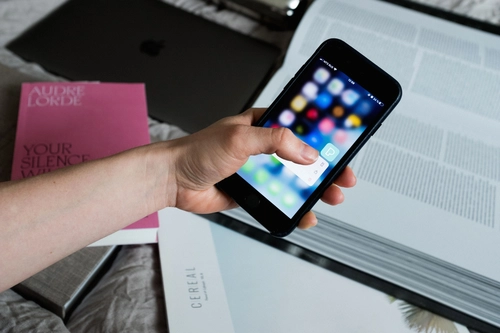
Sudoku. Medium. Ten to forty minutes. My mind does not go blank. It just goes elsewhere. Solitaire, cross-stitch games, match games, virtual pet apps. The pattern is the same: clear goal, low stakes, small reward. Hands and eyes busy. Not all scrolling is distraction. Short videos can feed emotion and keep you awake. Choose tasks with an endpoint. If you finish a puzzle, you know you finished. If you scroll, there is no finish line.
The Walk and Talk Method
Exercise helps, but not because it is magical. The body cannot panic and walk at the same time. A twenty minute walk with a podcast. My rule: no thinking about the thing. When my mind drifts there, I drag it back to the podcast. It feels ridiculous. It works anyway. If you cannot walk, stretch. If you cannot stretch, stand and shake your hands for thirty seconds. Lower the bar until it is possible.
Sensory Reset for Racing Thoughts
When thinking is too loud, use your senses.
- Touch: press your feet into the mattress. Squeeze a pillow.
- Taste: suck on a mint or sour candy.
- Sound: play a familiar show or podcast at low volume.
- Sight: look at one object and describe its details.
Anxiety needs attention. Split attention several ways, and it cannot hold on as tight.
Cleaning as a Small Win
Folding laundry, wiping counters, organizing a drawer. Not because cleaning is virtuous. Because hands get busy, and the brain follows. There is a visible result. A small completed thing. The mess comes back. Anxiety comes back. But you get a calmer hour. That counts.
A Table for Different Nights
| Night feels like | Try first |
|---|---|
| Mind racing | Medium puzzle or solitaire |
| Body tense | Feet up the wall |
| Sad and heavy | Familiar comfort show |
| Restless | Short walk |
| Panicky | Mint, cold water, sensory reset |
FAQ
Q: How do I distract myself at night when I need to sleep?
Keep it boring and low light. A puzzle on the dimmest setting, feet against the wall, or a familiar show. New shows wake the brain up. Old ones let it rest.
Q: Is distraction just avoidance?
Distraction is for the moment. Dealing with the root is for daytime. You cannot solve your life at 3 a.m. You can get to morning. That is enough for now.
Q: What if nothing works?
Go smaller. A mint. One puzzle. Cold water on your wrists. Some people need physical sensation more than a mental task. Give it ten honest minutes. If you are still spiraling, switch to something else. The switch itself is a distraction.
Q: How long should I try a distraction before giving up?
Ten minutes. Then switch. Do not judge it as a cure. Judge it as a way to move from panic to okay, and from okay to sleep.
One Last Thing
It is 2:47 a.m. somewhere. If you are lying in the dark, jaw tight, do not try to force calm. Give your brain a boring job. Put your feet up the wall. Open a medium puzzle. The night is long, but it is not endless. Morning will come, and so will you.
References
- Anxiety and Depression Association of America. Tips to Manage Anxiety and Stress.
- Headspace. How Distraction Can Help Manage Anxious Thoughts.
- Kissen, Debra. The Panic Workbook for Teens. New Harbinger Publications.