My eyes open before the alarm even goes off. Before I can remember my own name, my chest is tight, my heart is pounding, and a wave of dread rolls over me like cold water. By 9 PM that same night? I am on the couch, calm as a house cat, wondering who that terrified person was twelve hours earlier. If you are searching for why you wake up feeling anxious every morning, I want you to know: I have been that person. For almost two years, mornings were the worst part of my day.
Quick Calm-Down Actions for Tomorrow Morning
- Drink a full glass of water before you check your phone.
- Step outside or open a window for two minutes of daylight.
- Name three things you can see, hear, and touch.
- Delay your first coffee by 30 minutes.
- Eat something small, even if you feel queasy.

Why Do Mornings Feel So Much Worse Than Nights?
Here is what clicked for me after months of confused searching. Your body runs on a daily rhythm, and part of waking up involves a natural surge of stress hormones. It is your internal alarm system, designed to get you moving. The problem? If your baseline stress is already high, that normal surge feels like a siren instead of a nudge.
I remember sitting on the edge of my bed at 6:10 AM, phone in hand, reading stories from people who described the exact same loop. Panic at sunrise. Peace at sunset. Repeat. I actually teared up. That was my life.
A few things can make this worse. Caffeine too early. Dehydration. A blood sugar crash overnight. Alcohol. Even a stressful job waiting for you at 9 AM. One person described a two-hour commute to a job they dreaded, and their mornings were unbearable. When they finally switched jobs, the morning panic eased a lot.
What Actually Helped Me Stop Waking Up in a Panic
I tried everything. Cold showers. Journaling. Staring at the ceiling doing breathing exercises while my heart raced. Some of it helped a little. What helped most was building a buffer between waking up and thinking.
Here is my routine now, and I will be honest, it took about three weeks before I noticed a real shift:
Water first. I keep a glass by my bed. Dehydration makes that wired feeling worse.
No phone for 15 minutes. Scrolling email at 6 AM is like pouring gasoline on a spark.
Move my body. A five-minute walk, even just to the mailbox and back.
Eat within 45 minutes. Even half a banana. Low blood sugar mimics panic.
Save caffeine for later. I wait at least 30 minutes. Sometimes 60.
Does it cure it? No. But most mornings now, the panic is a 3 instead of a 9. And a 3 is livable.
A Two-Minute Reset That Changed My Mornings
I gave this a name because it helped me remember it when my brain was foggy. Here is how it goes.
The moment you wake up and feel that rush, you do not fight it. You say, out loud if you can: “This is my body waking up. It is uncomfortable. It is not dangerous.”
Then you do two minutes of slow breathing. In through the nose for four counts. Hold for four. Out for six. Repeat.
Why does this work? Because slow exhales tell your nervous system the threat is over. I know it sounds too simple. I rolled my eyes too. But after ten days of doing it consistently, I noticed I could fall back asleep sometimes instead of lying there spiraling.
One thing I would add: if you have tried all of this and mornings are still unbearable, please talk to a doctor. There is no shame in getting more support.
Why Does Anxiety Hit Harder in the Morning Than at Night?
I have thought about this a lot. At night, I am tired. My defenses are down. I am not bracing for anything. The day is over, and there is nothing left to face.
In the morning, everything is ahead of me. The full weight of the day lands all at once. My brain starts scanning for problems before I have even sat up.
A few things made this worse for me:
- Checking my phone immediately after waking
- Lying in bed rehearsing the day
- Skipping breakfast
- Going to bed later than I meant to
When I started treating the first 30 minutes of my day as a protected zone, the mornings got less brutal. Not perfect. Less brutal.
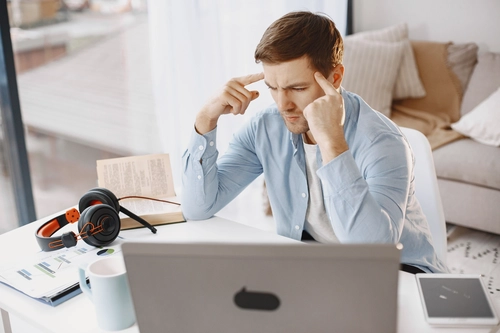
A Three-Minute Morning Reset
This is the one thing I still do every single day.
Minute one: Sit up. Feet on the floor. Drink water. Do not think about the day yet.
Minute two: Breathe slowly. In through your nose for four counts. Out through your mouth for six. Repeat.
Minute three: Say one true thing out loud. “I am safe.” “This feeling will pass.” “I have gotten through this before.”
That is it. Three minutes. No app. No special equipment.
Does it fix everything? No. But it gives me a landing pad before the panic takes over. Some mornings I still feel awful. But I feel awful while moving forward instead of lying frozen in bed.
Does This Ever Get Better?
Yes. Slowly. And not in a straight line. Some weeks are great. Some weeks the 6 AM dread comes back with a vengeance, and I feel like I am starting over. I once read about someone who dealt with it for decades. That scared me at first. But she also said she had found ways to manage it and still live a full life.
That is the thing. You do not need mornings to be perfect. You need them to be manageable.
FAQ
Q: Why do I wake up feeling anxious every morning but feel fine at night?
A: Your body releases waking-up hormones in the early hours. If your overall stress is high, that normal spike feels like a panic attack. By evening, those hormones have settled, which is why nights feel calmer.
Q: Can dehydration make morning anxiety worse?
A: Absolutely. Many people wake up mildly dehydrated, and that alone can make your heart race and your head feel off. A glass of water before anything else is one of the simplest things to try.
Q: Is morning anxiety a sign something is seriously wrong?
A: Not usually. It is common and uncomfortable, but it is not dangerous. That said, if it is severe or getting worse, a doctor can help you figure out what is going on.
Q: How long does morning anxiety usually last?
A: It varies. Some people notice improvement in a few weeks with small changes. Others take months. Be patient with yourself and track what helps.
Q: What should I do the moment I wake up anxious?
A: Drink water. Get out of bed. Step into daylight if you can. Save the phone for later. Name the feeling out loud: “This is the morning spike. It passes.”
Q: Can I stop waking up anxious without medication?
A: Some people find that routine, daylight, movement, and cutting caffeine make a real difference. Others need more support. Both paths are valid. Talk to a professional if it is not improving.
One Last Thing
Tomorrow morning, your eyes will open and that familiar wave may hit. You will feel alone. You will feel like the only person in the world whose body betrays them at sunrise. You are not. I am there too, drinking my water, breathing slowly, waiting for the sun to do its slow work. Mornings are hard. But they end. They always end.
References
- American Psychological Association. (n.d.). Stress effects on the body. Retrieved from apa.org.
- Harvard Health Publishing. (n.d.). Understanding the stress response. Retrieved from health.harvard.edu.
- Bourne, E. J. (2011). The Anxiety and Phobia Workbook. New Harbinger Publications.