It’s 2 AM. Your body is exhausted, but your mind is still running. You replay a conversation from yesterday, then jump to a meeting next week, then imagine a worst-case scenario that hasn’t happened—and probably never will.
You try to stop. You tell yourself to just relax. But the harder you push, the louder the thoughts get.
If this sounds familiar, you’re not broken. You’re stuck in a loop—and loops can be broken.
What is overthinking and anxiety?
Overthinking is the habit of repeatedly analyzing the same thoughts, decisions, or events without making progress. It feels like problem-solving, but it’s actually rumination—a mental treadmill that keeps you exhausted without moving you forward.
Anxiety is your body’s fear response. It’s what happens when your brain perceives a threat—real or imagined—and floods you with worry, tension, and the urge to control everything.
They feed each other. Anxiety makes you overthink. Overthinking makes you more anxious. Together, they steal your sleep, your focus, and your peace.
The goal isn’t to never feel anxious or to never think deeply. The goal is to stop letting those thoughts and feelings run your life. You can’t always control what pops into your head—but you can control what you do next.

How controlling overthinking and anxiety can help you
Many people think control means suppression—just push the thoughts away. That doesn’t work. What you resist persists.
Real control is about response. It’s the ability to notice a anxious thought, pause, and choose how to react instead of being dragged into the spiral. When you build that skill, you think more clearly, sleep better, make decisions with less fear, and protect your relationships from unnecessary strain. You don’t become emotionless. You become free.
Tip 1: Explore what’s really behind your overthinking and anxiety
Anxiety is often a messenger. But the message isn’t always on the surface.
You’re not really agonizing over that email. You’re afraid of being judged. You’re not really worried about the meeting. You’re afraid of failing. You’re not really overthinking a text message. You’re afraid of being rejected or abandoned.
Ask yourself: What am I really afraid of right now?
Common roots:
- Fear of failure or making the wrong decision
- Fear of being judged, criticized, or rejected
- Fear of losing control
- Fear of being “too much” or “not enough”
- Unprocessed past experiences—especially from childhood
If you grew up in an environment where mistakes were punished or emotions were dismissed, overthinking may have been a survival strategy. It kept you safe then. It’s not keeping you safe now.
Clues there’s more beneath the surface:
- You seek reassurance but never feel reassured.
- You worry most about things you can’t control.
- You have a harsh inner critic that never rests.
- You feel responsible for other people’s emotions.
When you name the real fear, the surface worry starts to lose its grip.
Tip 2: Be aware of your warning signs
Overthinking and anxiety don’t appear out of nowhere. They build. And they show up in your body before your thoughts catch up.
Physical signs:
- Racing heart or tight chest
- Shallow breathing
- Knots in your stomach
- Clenched jaw or shoulders
- Restlessness—can’t sit still
- Trouble concentrating
- Feeling “on edge” for no clear reason
Mental signs:
- Replaying the same scenario more than twice without new insight
- Asking “what if” questions that have no answer
- Needing constant reassurance
- Feeling paralyzed about making decisions
- Noticing that thinking makes you more anxious, not less
Learn your personal early-warning signs. The sooner you notice them, the sooner you can interrupt the loop.
Tip 3: Identify your triggers
Anxiety and overthinking are often set off by predictable situations. Knowing your triggers helps you prepare—and sometimes avoid unnecessary mental strain.
Common triggers:
- Uncertainty or ambiguity
- Conflict, criticism, or feedback
- Deadlines and high expectations
- Social situations where you feel evaluated
- Lack of sleep, too much caffeine, or skipped meals
- Endless scrolling and news consumption
- Being alone with your thoughts at night
Keep a mental note—or a journal—of when your anxiety spikes. Look for patterns. What happened right before? Who was involved? How were you feeling physically?
You’re not doing this to avoid life. You’re doing it to meet your triggers with a plan instead of panic.
Tip 4: Learn ways to cool down quickly
When anxiety rises, logic goes offline. You need an emergency brake.
- Breathe: Inhale for 4 counts, hold for 4, exhale for 6. Repeat five times.
- Name it: Say, “I’m overthinking right now. This is my brain trying to protect me, but it’s not helping.”
- Ground yourself: Name five things you can see, four you can touch, three you can hear, two you can smell, one you can taste.
- Write it down: Get the worry out of your head and onto paper. Then ask: Is this a fact or a fear?
- Move your body: Stand up, stretch, walk around. Physical movement burns off stress hormones.
Give yourself a reality check:
- What can I actually control right now?
- What’s the most likely outcome—not the worst-case?
- If a friend felt this way, what would I tell them?
- Have I gained any new information in the last 10 minutes of thinking?
Tip 5: Find healthier ways to respond
You can’t stop anxious thoughts from appearing. But you can change how you respond to them.
- Set a “worry window”: Give yourself 15 minutes a day to worry. When anxiety shows up outside that window, tell yourself, “Not now. I’ll deal with you later.”
- Limit reassurance-seeking: Asking others for constant validation feeds the loop. Practice sitting with uncertainty.
- Take one small action: Anxiety thrives on avoidance. Sending the email, making the call, or writing the first sentence breaks the spell.
- Challenge “what if”: Replace “What if it goes wrong?” with “What if it goes fine? What if I handle it?”
- Practice self-compassion: Talk to yourself like you’d talk to someone you love. Harsh self-criticism only fuels anxiety.
Tip 6: Stay calm by taking care of yourself
Your physical state directly affects your anxiety level. When you’re run down, everything feels threatening.
- Sleep: 7–9 hours. Anxiety and insomnia feed each other.
- Exercise: Even a 20-minute walk reduces tension and improves mood.
- Eat regularly: Blood sugar crashes mimic anxiety symptoms.
- Limit caffeine and alcohol: Both can heighten anxiety and disrupt sleep.
- Rest intentionally: Not just scrolling—real rest. Reading, nature, music, quiet.
- Set boundaries: Protect your time and energy. You don’t have to say yes to everything.
Try this: At the end of each day, write down one thing you did well—no matter how small. Over time, this trains your brain to notice progress, not just threats.

Tip 7: Use humor and perspective
Anxiety takes itself very seriously. Sometimes the best way to loosen its grip is to lighten up—not dismiss your feelings, but question their scale.
Ask yourself:
- Will this matter in five years?
- Have I survived something like this before? How did it turn out?
- If my worry were a movie character, what would they sound like?
You can also use gentle self-deprecating humor: “Ah yes, my brain’s favorite hobby—running the same scenario 47 times with no new information.”
Humor doesn’t mean you don’t care. It means you’re not letting fear write the whole story.
Tip 8: Recognize if you need deeper help—and where to turn
If overthinking and anxiety are affecting your sleep, relationships, work, or ability to function, it’s time to seek professional support. Therapy—especially cognitive-behavioral therapy (CBT)—is highly effective for both anxiety and rumination.
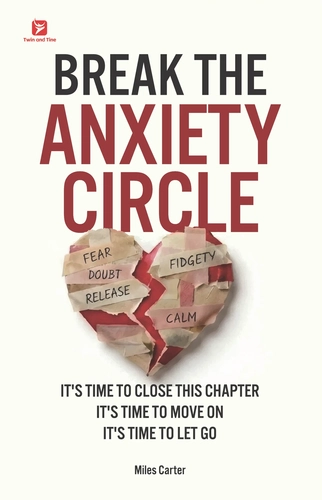
And if you want a structured, self-paced way to break the cycle—consider Miles Carter’s Break the Anxiety Circle.
This book is written for people trapped in the overthinking loop—people exhausted from anxiety, people-pleasing, and emotional exhaustion. It doesn’t offer vague advice. It walks you through:
- Chapter 1: Loving yourself—so you stop searching for worth in others’ approval
- Chapter 2: Releasing the past—so old regrets stop fueling present fear
- Chapter 3: Taming emotional reactions—so you respond with awareness instead of panic
“Action is the antidote to anxiety. For your own sanity, let things be.”
That’s the shift. You don’t have to fix every thought. You don’t have to control every outcome. You just have to take the next small step—and let the rest unfold.
If your anxiety traces back to childhood wounds—abandonment, neglect, or feeling “not enough”—Miles Carter’s Let It Unfold offers a 15-week healing journal with daily exercises for self-acceptance, mindfulness, growth, inner shadows, and gratitude. It’s gentle, practical, and step-by-step.
You are not causing your anxiety on purpose. But you can become the person who breaks the cycle. Not by blaming yourself, but by understanding yourself. Not by silencing your mind, but by changing your relationship to it.
Start with one small shift today. Notice one anxious thought. Breathe. Choose your next step.
You are not your thoughts. You are the one who can learn to respond to them—with awareness, compassion, and courage.